IIT Mandi Palampur campus: Lease for 550 kanals sealed, 1,400-kanal plan set

Synopsis
The Himachal Pradesh government has formally sealed the lease for 550 kanals of land in Palampur for IIT Mandi's new campus, with a total footprint of 1,400 kanals planned once forest clearances come through. For a region long defined by Kangra tea, an IIT campus could be its most transformative economic development in decades.
Key Takeaways
A formal lease deed for approximately 550 kanals has been executed between the Himachal Pradesh government and IIT Mandi for the new Palampur campus .
An additional 800 kanals will be handed over after forest clearance, bringing the total campus area to approximately 1,400 kanals .
Preliminary construction surveys have already been completed by NIT Hamirpur .
IIT Mandi Registrar Kumar Sambhav Pandey reaffirmed commitment to completing the facility within the stipulated timeframe.
The campus is expected to boost education, employment, and technological innovation in Kangra district .
The lease process between the Himachal Pradesh government and IIT Mandi for the construction of a new campus in Palampur, Kangra district, has been officially concluded, a senior state official announced on Saturday, 29 August. A formal lease deed has been executed for approximately 550 kanals, marking a pivotal step toward establishing a premier technical institution in the hill state.
Key Developments in the Land Lease
Chief Minister's Principal Advisor for Digital Technology, Governance and Innovation, Gokul Butail, made the announcement in Palampur. He confirmed that an additional 800 kanals will also be leased and handed over to IIT Mandi once the required forest clearance procedures are completed. The proposed campus will span a total area of approximately 1,400 kanals, making it a substantial institutional footprint for the region.
Preliminary campus construction surveys have already been carried out by NIT Hamirpur, indicating that groundwork planning is well underway. Butail credited the state government's decisive actions for clearing the path to establish what he described as an institution of national importance.
What the Institute Said
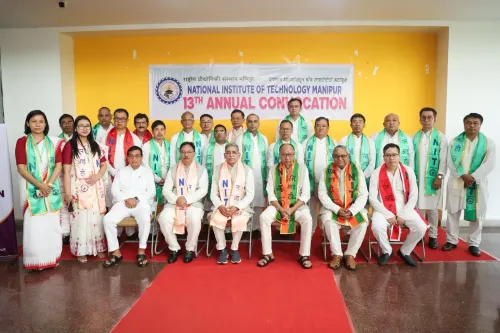
IIT Mandi Registrar Kumar Sambhav Pandey, who was present at the event, reaffirmed the institute's commitment to building a state-of-the-art facility within the stipulated timeframe. He acknowledged the collaborative efforts of Butail in facilitating the swift conclusion of the land lease process. Also present were Municipal Corporation Commissioner Netra Meti, Tehsildar Sajan Bagga, and ITI Mandi Principal Ajesh Kumar.
Impact on Kangra District and Regional Economy
Officials expressed optimism that the new campus would significantly accelerate local education, generate employment opportunities, and drive technological innovation in the Kangra district. Palampur, already globally recognised for its Kangra tea — an orthodox variety registered under the Geographical Indications of Goods (Registration and Protection) Act, 1999 — stands to gain a new identity as an emerging hub of higher education and research.
This comes amid a broader push by Himachal Pradesh to attract institutions of national repute to its lesser-developed hill districts, where youth outmigration for education and employment remains a persistent challenge.
Historical Context of Palampur
Palampur's heritage is deeply intertwined with tea cultivation, introduced in the foothills of the Kangra valley in the mid-19th century. Camellia tea planted by the British in 1849 gained such renown that Kangra tea won a gold medal at a London exhibition in 1886. A devastating earthquake in 1905, however, destroyed many tea gardens and factories, prompting most European planters to leave. The region has since been seeking new economic anchors — and an IIT campus could prove to be one of the most consequential in its post-independence history.
With forest clearance procedures still pending for the remaining 800 kanals, the pace of those approvals will determine how quickly full-scale construction can begin.
Point of View
Not a construction start — the remaining 800 kanals are still pending forest clearance, which in Himachal Pradesh has historically been a slow-moving process. The real test is whether IIT Mandi can break ground on a meaningful portion of the campus before political cycles shift priorities. Palampur's selection is symbolically significant, but without a hard construction timeline and accountability on the forest clearance front, this risks becoming another announcement that outlasts its momentum.
NationPress
30 Aug 2026
Frequently Asked Questions
What is the IIT Mandi Palampur campus project?
It is a new IIT Mandi campus planned in Palampur, Kangra district, Himachal Pradesh, with a total area of approximately 1,400 kanals. A formal lease deed for the first 550 kanals has been executed, with an additional 800 kanals to follow after forest clearances.
How much land has been leased for the IIT Mandi Palampur campus?
A lease deed for approximately 550 kanals has been formally executed. An additional 800 kanals will be leased and handed over to IIT Mandi once necessary forest clearance procedures are completed.
What is the current status of construction?
Preliminary campus construction surveys have been completed by NIT Hamirpur. Full-scale construction is yet to begin, pending the handover of the remaining land after forest clearance.
Who announced the lease completion and who was present?
Chief Minister's Principal Advisor Gokul Butail announced the completion in Palampur on 29 August. IIT Mandi Registrar Kumar Sambhav Pandey, Municipal Corporation Commissioner Netra Meti, Tehsildar Sajan Bagga, and ITI Mandi Principal Ajesh Kumar were also present.
How will the IIT Mandi campus impact Palampur and Kangra district?
Officials say the campus will accelerate local education, create employment opportunities, and drive technological innovation, potentially transforming the regional economy of Kangra district. Palampur currently draws global recognition for Kangra tea; an IIT campus would add a significant new economic and educational dimension.