Himachal Pradesh Sets Groundbreaking MSP for Reservoir Fish
Synopsis
In a historic move, Himachal Pradesh's government has implemented a minimum support price for reservoir fish, aiming to protect fishermen from market volatility and enhance their income. This initiative promises to transform the fisheries economy in the state.
Key Takeaways
Minimum Support Price: Rs 100 per kg for reservoir fish.
Subsidy: Up to Rs 20 per kg if auction price dips below MSP.
Royalty Reduction: From 15% to 1% for this fiscal year.
Beneficiaries: Over 6,000 fishermen will benefit.
Production Growth: Increased from 549.35 metric tons to 818.02 metric tons.
Shimla, April 12 (NationPress) In a groundbreaking initiative, the Himachal Pradesh government, under the leadership of Chief Minister Sukhvinder Singh Sukhu, has introduced a minimum support price (MSP) for fish sourced from reservoirs, marking a historic first.
This measure is designed to shield fishermen from the uncertainties of market pricing and ensure a stable income. The established composite MSP for reservoir fish is set at Rs 100 per kg. Furthermore, should the auction price dip below this threshold, the government will offer a subsidy of up to Rs 20 per kg through the direct benefit transfer system, as stated in an official announcement made on Sunday.
This approach aims to guarantee fair compensation and bolster transparency, with subsidies being directly deposited into the bank accounts of qualifying fishermen.
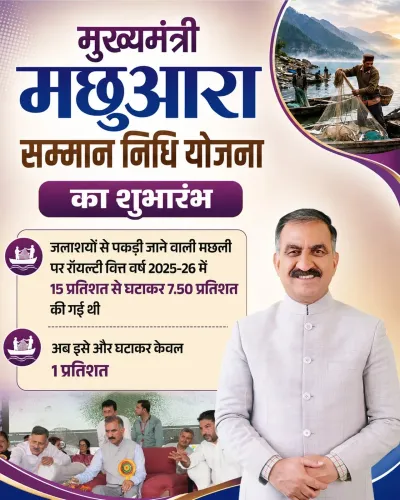
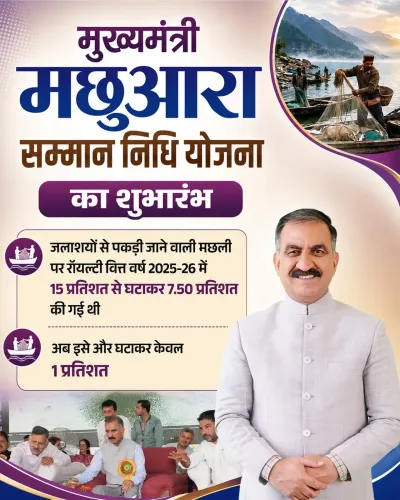
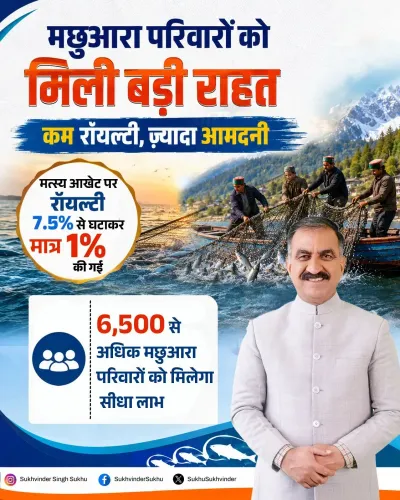
Additionally, the Chief Minister has introduced a significant reduction in the royalty fees for fish caught in reservoirs. Previously, the royalty was cut from 15 percent to 7.5 percent, and it has now been further decreased to just 1 percent for this fiscal year. This decision is anticipated to provide direct benefits to over 6,000 reservoir fishermen by alleviating their financial strain and enhancing their overall income.
Himachal Pradesh is home to five major reservoirs: Gobind Sagar (Bilaspur and Una), Pong Dam (Kangra), Ranjit Sagar, Chamera (Chamba), and Kol Dam (Bilaspur). The silver carp is the predominant species found in Gobind Sagar, Kol Dam, Ranjit Sagar, and Chamera reservoirs, while Pong Dam is known for its singhara fish.
Other notable species include rohu, catla, mrigal, common carp, and grass carp. Thanks to targeted policy initiatives and consistent efforts, including the annual stocking of advanced fingerlings (70-100 mm), reservoir fish production has seen remarkable growth. Production escalated from 549.35 metric tons in 2022-23 to 818.02 metric tons in 2025-26, indicating strong positive progress in this sector.
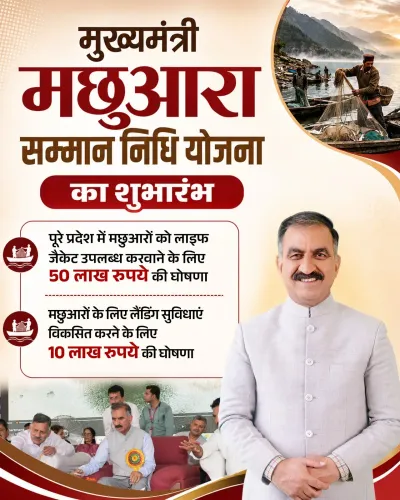
The government anticipates that these progressive policy measures will significantly fortify the reservoir fisheries economy, promote sustainable fishing practices, and enhance the involvement of fishing communities in reservoir-related activities. It is also focused on expanding fisheries infrastructure, refining marketing systems, and creating improved livelihood opportunities for fishermen and fish farmers.
The state has also experienced notable growth in total fish production, which rose from 19,019 metric tons in 2024-25 to 20,005 metric tons in 2025-26. This increase underscores the beneficial effects of ongoing developmental efforts within the fisheries sector and highlights the growing role of fisheries in rural employment and the state's economy.
Point of View
The introduction of a minimum support price for reservoir fish in Himachal Pradesh represents a significant development in agricultural policy aimed at protecting vulnerable communities. This measure not only addresses market volatility but also aims to enhance the overall economic landscape for fishermen, promoting sustainability and community engagement in fisheries.
NationPress
19 Sept 2026
Frequently Asked Questions
What is the minimum support price for reservoir fish in Himachal Pradesh?
The minimum support price for reservoir fish has been set at Rs 100 per kg.
How will subsidies be provided to fishermen?
If the auction price falls below Rs 100 per kg, fishermen will receive a subsidy of up to Rs 20 per kg via direct benefit transfer.
What is the new royalty rate for fish harvested from reservoirs?
The royalty rate has been reduced to just 1 percent for this fiscal year.
How many fishermen will benefit from this initiative?
Over 6,000 reservoir fishermen are expected to directly benefit from these measures.
What has been the impact on fish production in Himachal Pradesh?
Fish production in reservoirs has increased significantly, from 549.35 metric tons in 2022-23 to 818.02 metric tons in 2025-26.