CM Himanta Hails Modi's IIT, IIM, AIIMS Expansion Drive
Synopsis
Assam Chief Minister Himanta Biswa Sarma praised PM Narendra Modi's post-2014 expansion of IITs, IIMs and AIIMS on 21 July 2026, stating that Assam has been a major beneficiary of the drive to build a future-ready workforce through accessible premier education.
Key Takeaways
Assam CM Himanta Biswa Sarma credited PM Narendra Modi with an 'unprecedented expansion' of IITs, IIMs, and AIIMS since 2014 .
The number of IITs in India grew from 16 to 23 after 2014 through new green-field campuses.
New AIIMS campuses, including one in Guwahati, Assam , received cabinet approval between 2015 and 2019 .
Additional IIMs were established in 2015-16 in cities beyond traditional metro locations.
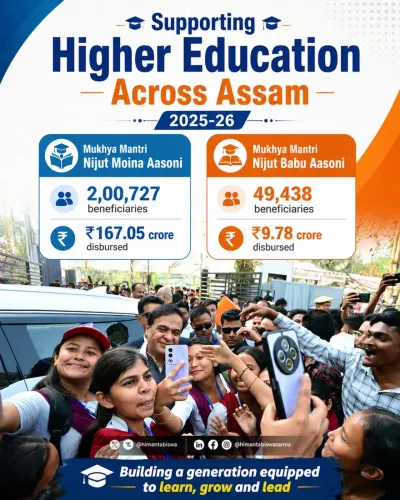
Sarma described Assam as a 'major beneficiary' of the central government's higher-education expansion drive.
Budget allocations for 2026-27 and potential new campus announcements for the Northeast are the next markers to watch.
Assam Chief Minister Himanta Biswa Sarma on Tuesday, 21 July 2026, credited Prime Minister Narendra Modi's long-term vision for an unprecedented expansion of premier central institutions — IITs, IIMs, and AIIMS — since 2014, calling Assam a 'major beneficiary' of the drive to build a future-ready workforce through accessible higher education.
Context
Sarma's post, a reply to his own handle @himantabiswa, described Modi's approach as rooted in a 'long-term vision to build a future-ready workforce through accessible premier education.' The Chief Minister specifically highlighted the expansion of IITs, IIMs, and AIIMS as the instruments of that vision, and positioned Assam prominently among the states that have gained from the policy.
The remarks come as the BJP-led government in New Delhi continues to project the post-2014 expansion of centrally funded institutions as a signature achievement in human-capital formation, particularly for non-metro and Northeastern states that had historically been underserved by premier higher-education infrastructure.
Policy Backdrop
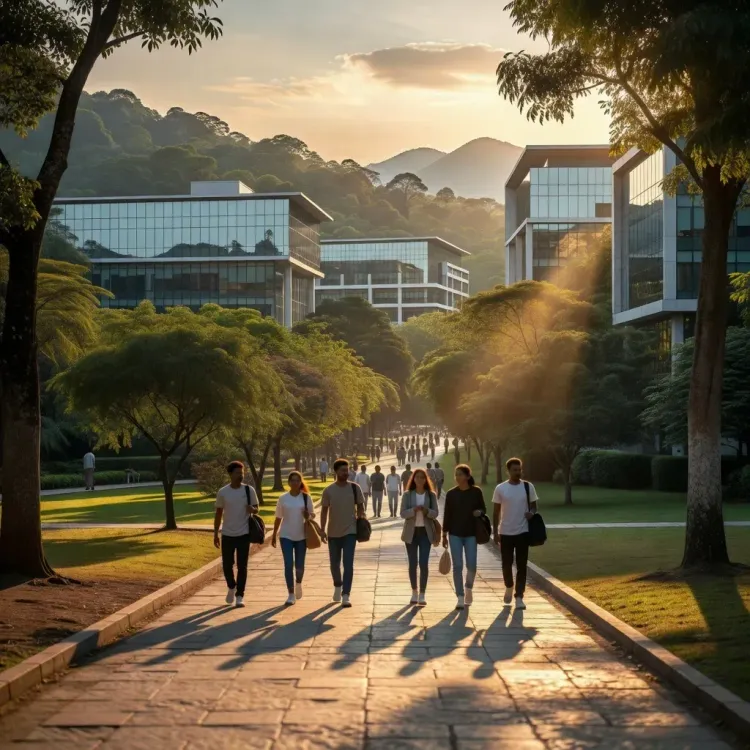
Since 2014, the Union government has added several new campuses to India's network of premier institutions. The number of IITs grew from 16 to 23 through new green-field campuses approved across multiple states, while additional IIMs were established in 2015-16 in cities outside the traditional metro locations. AIIMS campuses, including one in Guwahati, Assam, received cabinet approval between 2015 and 2019, extending world-class medical education and healthcare infrastructure to the Northeast.
The Ministry of Education framed these additions under an 'expansion of access' mandate, combining new green-field campuses with capacity upgrades at older institutes. IIT Guwahati, one of the older and most prominent institutes in the region, has served as an anchor institution for Assam and the wider Northeast even before the post-2014 wave of expansion.
Stakeholders and Impact
The primary beneficiaries of the expansion are students from Assam and the broader Northeast, who previously had to travel to metros such as Mumbai, Chennai, or Delhi for access to premier engineering, management, and medical education. Proximity to such institutions reduces both the financial burden on families and the 'brain drain' effect that has long characterised the region's talent landscape.
For Sarma, highlighting Assam's gains also serves a political purpose: it reinforces the BJP's narrative of developmental governance in a state the party has held since 2016 and where it secured a second consecutive term in 2021. As convenor of the North-East Democratic Alliance (NEDA), Sarma has consistently positioned the Northeast's development as a collective regional achievement under central government stewardship.
What's Next
Attention will now turn to Union and state budget allocations for 2026-27 to see whether fresh announcements on additional seats, new campuses, or upgraded facilities in Assam are forthcoming. Any new central approvals for higher-education infrastructure in the Northeast would further validate the narrative Sarma is building around Modi's education expansion record.
With competitive entrance examinations growing more intense and demand for quality higher education rising across India's Tier-2 and Tier-3 cities, the pace and quality of institutional expansion — not merely its scale — will increasingly define how voters and students assess the policy's real-world impact.
Point of View
Tying regional development gains directly to Modi's personal vision. The framing of Assam as a 'major beneficiary' is strategically significant: it lets the Chief Minister claim credit for federal investments without having to detail state-level spending. The education expansion narrative has been a durable BJP talking point since 2014 because it offers tangible, verifiable infrastructure — buildings, campuses, seats — as evidence of delivery. Going forward, the credibility of this narrative will hinge on outcomes data: graduate employment rates, research output, and seat-utilisation figures at the newer Northeast campuses.
NationPress
20 Oct 2026
Frequently Asked Questions
How many new IITs were set up after 2014 in India?
The number of IITs in India grew from 16 to 23 after 2014, with six new campuses approved in 2015-16 as part of the Union government's expansion of access to premier engineering education.
Does Assam have an AIIMS campus?
Yes. An AIIMS campus in Guwahati, Assam received cabinet approval between 2015 and 2019 as part of the post-2014 drive to extend premier medical education infrastructure to the Northeast.
Why did Himanta Biswa Sarma praise Modi's education policy?
Assam CM Himanta Biswa Sarma stated on 21 July 2026 that PM Modi's long-term vision for accessible premier education has led to an unprecedented expansion of IITs, IIMs and AIIMS since 2014, with Assam being a major beneficiary.
What is NEDA and what is Himanta Biswa Sarma's role in it?
NEDA — the North-East Democratic Alliance — is a BJP-led political alliance of parties in India's Northeastern states. Himanta Biswa Sarma , Assam's Chief Minister, serves as its convenor.
Which new IIMs were set up after 2014 in India?
Several new IIMs were established in 2015-16 in states and cities outside the traditional metro locations as part of the Union government's 'expansion of access' mandate for premier management education.