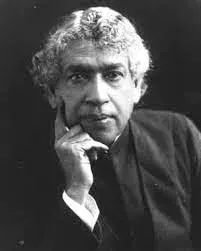
Jagadish Chandra Bose remembered by Himanta Sarma
Synopsis
Assam Chief Minister Himanta Biswa Sarma remembered Jagadish Chandra Bose on his death anniversary, highlighting the scientist's research into radio waves, microwave optics and plant responses.
Key Takeaways
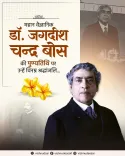
Assam Chief Minister Himanta Biswa Sarma paid tribute to Jagadish Chandra Bose on his death anniversary on 23 November .
In a post on X, Sarma highlighted Bose's research into radio waves, microwave optics and plant physiology.
Jagadish Chandra Bose was born on 30 November 1858 in Mymensingh , in present-day Bangladesh .
Bose conducted experiments demonstrating the transmission of electromagnetic waves.
His plant research included the use of instruments such as the crescograph to study measurable responses to external stimuli.
Jagadish Chandra Bose was remembered by Assam Chief Minister Himanta Biswa Sarma on Monday, 23 November, as the chief minister paid tribute to the scientist on his death anniversary. In a post on X, Sarma highlighted Bose's work on radio waves, microwave optics and plant physiology, and his influence on researchers in India and abroad.
Sarma described Bose's achievements as a contribution to the global advancement of knowledge. He said the scientist's pioneering work had given the world a new perspective on science and continued to inspire young scientific minds.
Research across physics and plant science
Bose worked across physics, biology and plant science during the colonial era. His research covered both electromagnetic waves and the responses of plants to their surroundings, bringing together fields that are often studied separately.
He was a pioneer in the investigation of radio and microwave optics and conducted experiments demonstrating the transmission of electromagnetic waves. His work came when scientific understanding of wireless communication was still developing.
In plant physiology, Bose challenged conventional perceptions about plant life through experiments and instruments designed to observe plant responses. His research demonstrated that plants react to external stimuli and that those reactions can be measured.
The crescograph and plant responses
Among the instruments associated with Bose's research was the crescograph. It formed part of his experimental approach to studying plants and their measurable reactions to changes in their environment.
The plant research was one part of a broader scientific career that also included work on radio waves and microwave optics. Together, those areas illustrate the range of subjects covered by Bose's investigations.
In his tribute, Sarma pointed to that range of research as well as its continuing influence. The chief minister said Bose's work remained an inspiration for young scientific minds both in India and abroad.
Life and scientific legacy
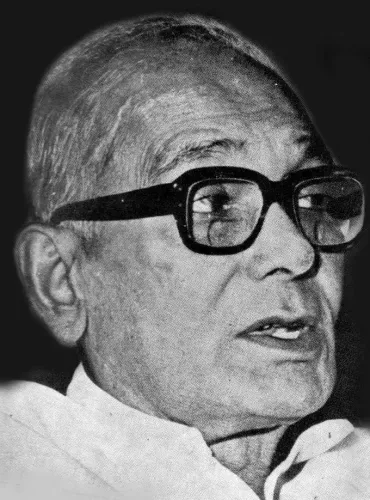
Bose was born on 30 November 1858 in Mymensingh, in present-day Bangladesh. He became one of the foremost Indian scientists of the colonial era and received international recognition for his interdisciplinary research.
He was also among the earliest Indian scientists to conduct advanced experimental research when colonial-era barriers restricted opportunities for Indian researchers. His work helped establish India's presence in the global scientific community.
The anniversary tribute draws attention to a legacy that spans more than one scientific discipline. Bose's experiments in electromagnetic waves and plant responses remain part of the account of India's scientific heritage, alongside the instruments he used to investigate the natural world.
His work will continue to provide a point of reference for students and researchers interested in the history of experimental science.
Point of View
Spanning both electromagnetic research and plant physiology. Remembering that legacy is most meaningful when it also directs attention to the conditions researchers need to pursue independent experimental work. His experience under colonial-era barriers makes access to scientific opportunity a relevant part of that conversation.
NationPress
23 Nov 2026
Frequently Asked Questions
What did Himanta Biswa Sarma say about Jagadish Chandra Bose?
Assam Chief Minister Himanta Biswa Sarma paid tribute to Jagadish Chandra Bose on his death anniversary and highlighted his contributions to science. In a post on X, he said Bose's work continued to inspire young scientific minds in India and abroad.
What was Jagadish Chandra Bose known for?
Jagadish Chandra Bose was known for research into radio waves, microwave optics and plant physiology. He conducted experiments on electromagnetic wave transmission and studied how plants respond to external stimuli.
What is the crescograph associated with Jagadish Chandra Bose?
The crescograph was an instrument associated with Bose's research into plants. His experiments demonstrated that plants exhibit measurable responses to their surroundings.
Where and when was Jagadish Chandra Bose born?
Jagadish Chandra Bose was born on 30 November 1858 in Mymensingh, in present-day Bangladesh.
Why does Jagadish Chandra Bose's work matter?
Bose's work contributed to research on electromagnetic waves and plant responses at a time when scientific understanding of wireless communication was still developing. He also conducted advanced experimental research despite colonial-era barriers facing Indian researchers.