CM Himanta's Assam Flood Relief: A 'People First' Bottom-Up Approach
Synopsis
Assam CM Himanta Biswa Sarma has outlined a 'People First' bottom-up framework for the state's 2026 flood relief, where each affected family's losses are individually assessed to ensure targeted, need-based assistance rather than blanket distribution.
Key Takeaways
Assam CM Himanta Biswa Sarma announced on August 4, 2026 that flood relief is being delivered on a 'People First' principle.
The model uses a bottom-up approach — individual family loss assessments determine the quantum of aid, not top-down allocations.
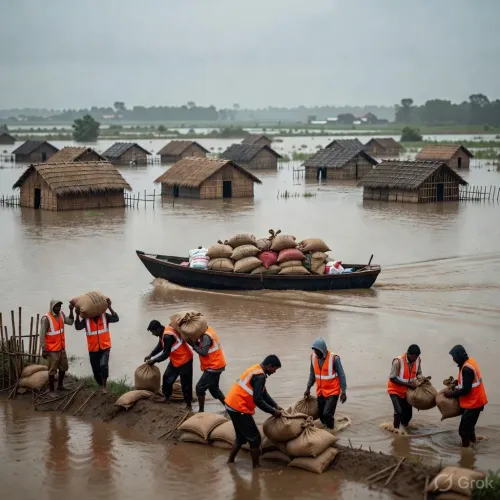
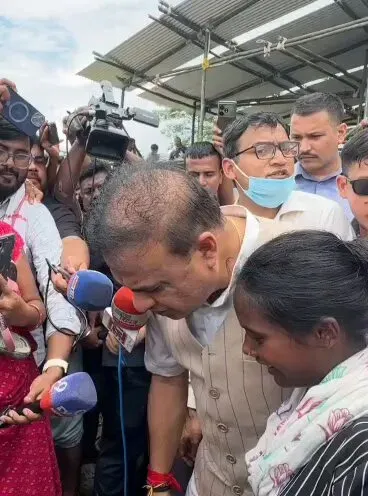
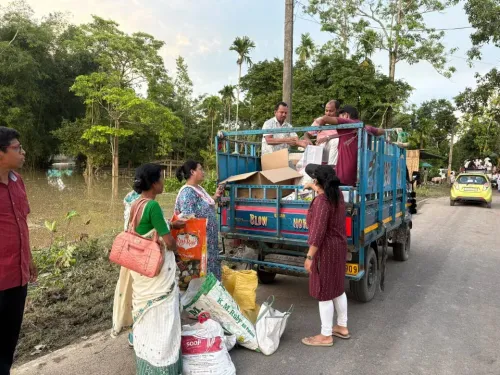
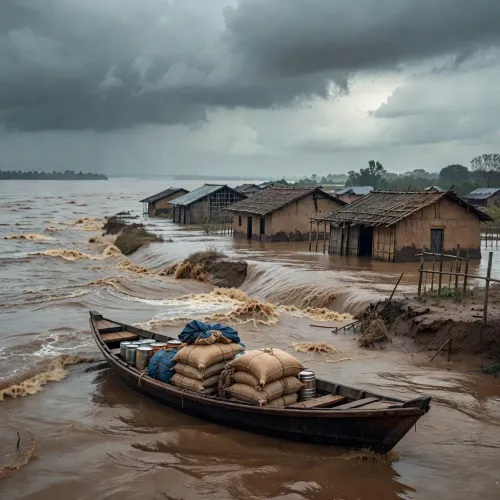
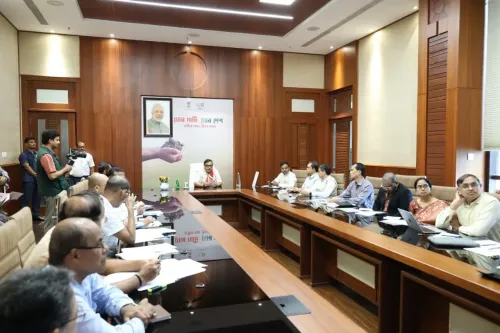
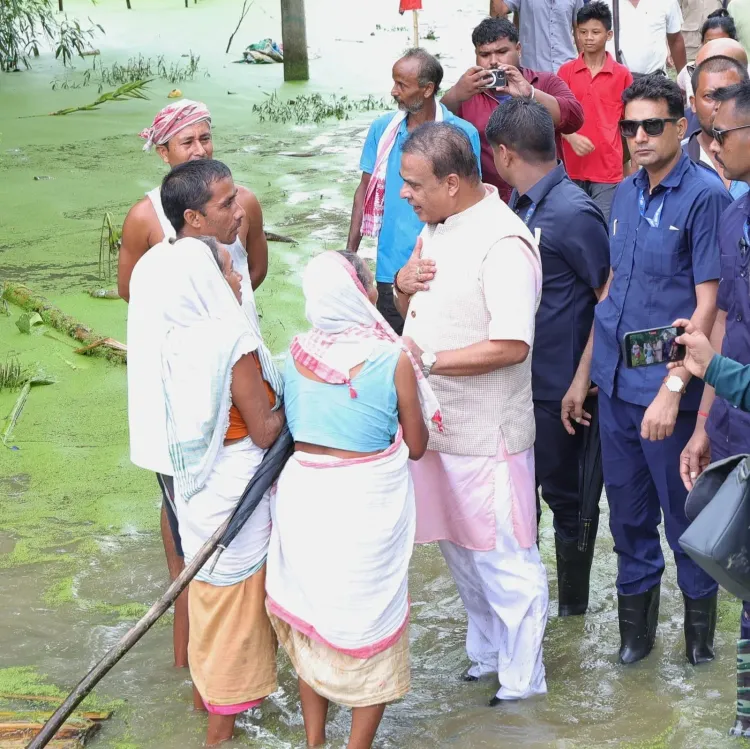
The Chief Minister stated: 'Every family's loss is being assessed with care so that assistance reaches them based on their individual needs.' Four images shared with the post indicate on-ground documentation or relief operations are already in progress.
Assam is one of India's most flood-prone states, with the Brahmaputra and its tributaries causing large-scale annual displacement.
The approach sets a high accountability bar — success would require trained field staff, tamper-proof documentation, and fast disbursal at scale.
When floodwaters recede, the real test begins — not in the rescue boats, but in the relief registers. Assam Chief Minister Himanta Biswa Sarma on Tuesday, August 4, 2026, outlined the state's flood relief philosophy: every affected family assessed individually, assistance calibrated to actual loss, no blanket distribution.
What 'People First' Means on the Ground
The Chief Minister described the #AssamFloodResponse framework as rooted in a 'People First' principle — a bottom-up model where relief flows from individual need assessments rather than top-down allocations. 'Every family's loss is being assessed with care so that assistance reaches them based on their individual needs,' Sarma stated, signalling a departure from one-size-fits-all relief camps.
The bottom-up approach, as articulated, means field-level data on each household's losses drives the quantum of aid — a method that, if executed well, targets the genuinely devastated over the merely inconvenienced. Four images accompanying the post suggest on-ground documentation or relief operations are already underway.
Why Assam's Annual Flood Crisis Demands Precision
Assam is one of India's most flood-prone states, with the Brahmaputra and its tributaries inundating vast swathes of the Brahmaputra Valley and Barak Valley every monsoon season. The state's geography — low-lying floodplains flanked by hills — means displacement runs into hundreds of thousands in a bad year, and relief logistics are chronically strained.
A needs-based, bottom-up relief model is the administrative answer to a recurring criticism: that flood relief in India often reaches the politically connected or the geographically accessible, not the most devastated. Sarma's framing positions this cycle's response as a systemic correction.
The Accountability Test Ahead
The proof, of course, will be in the implementation. Individual loss assessments at scale require trained field staff, tamper-proof documentation, and fast disbursal pipelines — none of which are trivial in a state navigating active flooding. The announcement sets a high bar that the administration has now publicly committed to meeting.
If the model delivers, it could become a template for disaster relief across India's northeast. If it falters, the gap between the stated principle and the ground reality will be the story.
Point of View
Bottom-up relief model is a direct political and administrative response to a long-standing critique of Indian disaster relief: that aid gravitates toward the accessible rather than the most affected. By publicly committing to individual household assessments, the Assam government has created a measurable accountability standard for this flood season. This framing also fits a broader BJP governance narrative of 'last-mile delivery' — whether in welfare schemes or disaster response. The real test is whether field capacity matches the ambition of the stated framework.
NationPress
19 Sept 2026
Frequently Asked Questions
What is Assam's 'People First' flood relief approach?
It is a bottom-up relief model announced by CM Himanta Biswa Sarma in which each flood-affected family's individual losses are assessed before aid is disbursed, ensuring assistance is proportional to actual need rather than distributed uniformly.
How is Assam distributing flood relief in 2026?
According to CM Sarma, Assam is conducting individual family-level loss assessments to determine the quantum of aid each household receives, moving away from blanket or camp-based distribution.
Why does Assam flood every year?
Assam's geography — low-lying floodplains fed by the Brahmaputra and its tributaries — makes it one of India's most flood-prone states, with monsoon inundation displacing hundreds of thousands annually.
What did Himanta Biswa Sarma say about Assam flood relief?
On August 4, 2026, CM Sarma stated that the Assam flood response is based on the principle of 'People First', with every family's loss being assessed individually so that relief reaches people based on their specific needs.
What challenges does bottom-up flood relief face in Assam?
Implementing individual household assessments at scale during active flooding requires trained field personnel, reliable documentation systems, and fast disbursal mechanisms — all of which are logistically demanding in a flood-affected state.