Is the Hindu Organisation Seeking Exclusive Access in Bhojshala on Basant Panchami?
Click to start listening
Synopsis
As the conflict over the Bhojshala-Kamal Maula complex intensifies with Basant Panchami coinciding with a Friday, the Hindu Front for Justice seeks exclusive access for Hindus to perform rituals. This legal battle raises questions about religious rights and the historical significance of the site.
Key Takeaways
- Bhojshala-Kamal Maula complex dispute highlights religious tensions.
- Basant Panchami falls on a Friday in 2026, intensifying the conflict.
- The Hindu Front for Justice seeks exclusive access for worship.
- Legal implications involve historical claims and rights.
- Heightened security measures are in place in Dhar.
Bhopal, Jan 18 (NationPress) The ongoing conflict surrounding the Bhojshala-Kamal Maula complex in Dhar, Madhya Pradesh, has escalated as Basant Panchami aligns with a Friday on January 23, 2026.
The Hindu Front for Justice has submitted an urgent petition to the Supreme Court requesting “exclusive” access for Hindus to conduct the Goddess Saraswati Puja throughout January 23.
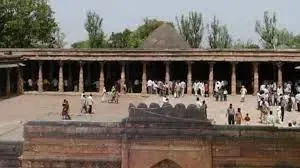
This site, classified as a protected monument by the Archaeological Survey of India (ASI), is regarded by Hindus as an ancient temple dedicated to Goddess Vagdevi (Saraswati), built by the Parmar king Raja Bhoja in the 11th century, while Muslims identify it as the Kamal Maula Mosque.
The petition demands a prohibition on any member of the Muslim community from offering namaz (prayer) that day, along with stringent security arrangements from the ASI and the state government, and a swift hearing of the principal case that awaits judgment in the apex court.
This application underscores a significant ambiguity in the ASI's order from April 7, 2003, which permits Hindus to worship every Tuesday and on Basant Panchami, while allowing Muslims to pray on Fridays from 1 p.m. to 3 p.m. However, the order does not address instances when Basant Panchami falls on a Friday, as it does this year.
Hindu organizations assert that Basant Panchami is deeply sacred in Sanatan Dharma, marking the birth anniversary of Goddess Saraswati, typically observed by continuous worship at the site. They argue that overlapping religious observances have historically resulted in chaos, conflicts, and even communal violence on such rare occasions.
The plea further contends that allowing Friday prayers without clarifying the religious status of the monument violates the Ancient Monuments and Archaeological Sites and Remains (AMASR) Act. It stresses the long-standing tradition of Hindu worship at the complex and claims that the ASI's arrangement infringes upon exclusive rights to conduct puja on this significant day.
The broader dispute originates from historical claims; Hindus maintain that the structure was initially a center for Vedic learning and a Saraswati temple before its supposed destruction and conversion during medieval invasions, while Muslims uphold continuous worship at the mosque named after Maulana Kamaluddin Chishti.
On July 22, 2024, the Madhya Pradesh High Court declined to advance WP No. 10497/2022 related to the Bhojshala dispute, referencing the Supreme Court's interim order from April 1, 2024. The bench opted not to consider the ASI report or issue any operative orders.
The matter will be discussed only after the Supreme Court reaches a final decision or issues further directives.
With the main case—challenging the site's religious identity and ASI survey results—already pending in the Supreme Court (alongside other Places of Worship Act cases), this new petition highlights rising demands in light of the calendar overlap.
Local authorities in Dhar have stepped up security, deploying thousands of personnel to avert any untoward incidents on January 23.
Point of View
The situation surrounding the Bhojshala-Kamal Maula complex encapsulates a deep-rooted conflict that intertwines issues of faith, history, and communal harmony. While both Hindu and Muslim communities assert their claims, it is essential to approach this matter with sensitivity and a commitment to dialogue. The resolution of such disputes requires careful consideration of historical contexts and respect for diverse beliefs.
NationPress
18/01/2026
Frequently Asked Questions
What is the Bhojshala-Kamal Maula complex?
The Bhojshala-Kamal Maula complex is a historical site in Dhar, Madhya Pradesh, claimed by Hindus as an ancient temple dedicated to Goddess Saraswati and by Muslims as the Kamal Maula Mosque.
What is the significance of Basant Panchami?
Basant Panchami is a festival that celebrates the birth of Goddess Saraswati, marking a time for devotees to engage in worship and rituals dedicated to the goddess of knowledge.
What is the status of the legal dispute?
The legal dispute is ongoing, with the Supreme Court hearing a plea for exclusive access for Hindus on Basant Panchami, which raises questions about religious rights and historical claims.
How have local authorities responded to the dispute?
Local authorities in Dhar have increased security measures, deploying thousands of personnel to prevent any potential unrest on January 23.
What does the ASI's order state?
The ASI's order allows Hindus to worship on Tuesdays and Basant Panchami while permitting Muslims to pray on Fridays, but it does not clarify situations where both events coincide.