HP CM Office announces ₹52 lakh aid for 1,500 fisher families

Synopsis
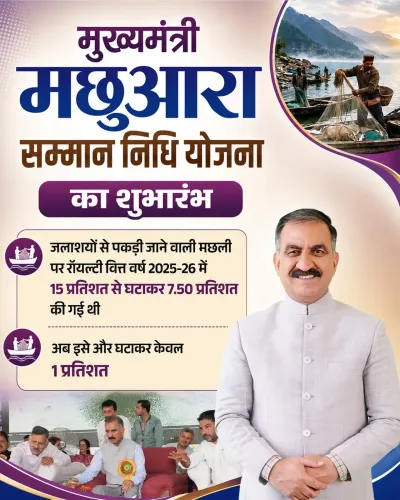
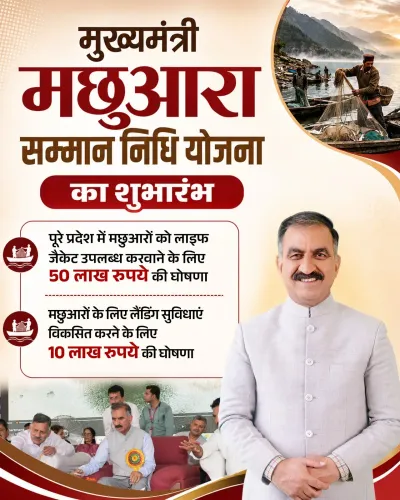
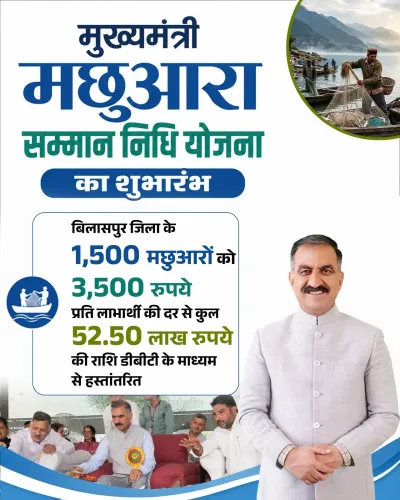
The Chief Minister's Office of Himachal Pradesh announced on 12 August 2026 that ₹52 lakh will be transferred via DBT to approximately 1,500 fishermen families who lose income during the state's seasonal two-month fishing ban imposed to protect fish stocks.
Key Takeaways
₹52 lakh announced for direct transfer to approximately 1,500 fishermen families in Himachal Pradesh.
The relief targets the annual two-month fishing ban period during which families earn no income from fishing.
Funds will be routed through the Direct Benefit Transfer (DBT) mechanism directly into beneficiaries' bank accounts.
The seasonal ban is imposed to protect fish stocks during breeding periods in HP's rivers and reservoirs.
The announcement was made by the Chief Minister's Office of Himachal Pradesh on 12 August 2026 .
When the rivers go quiet and nets stay folded for nearly two months, Himachal Pradesh's fishing families face a lean season that no amount of hard work can fix. On Wednesday, 12 August 2026, the Chief Minister's Office of Himachal Pradesh announced that ₹52 lakh would be transferred directly into the bank accounts of approximately 1,500 fishermen families to tide them through the annual fishing ban period — using the Direct Benefit Transfer (DBT) mechanism.
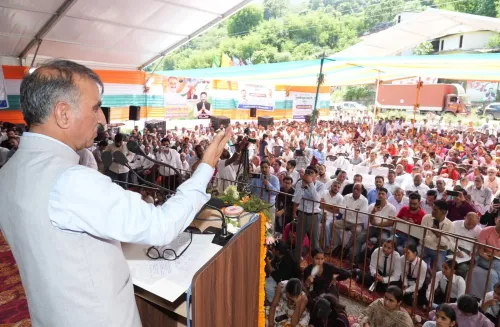
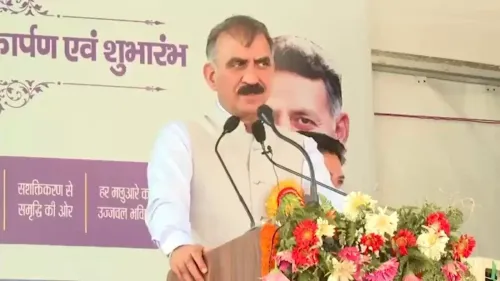
In the announcement, the Chief Minister's Office stated: 'I am glad that approximately 1,500 fishermen families in this region are being provided financial assistance by the government during the period when fishing cannot be carried out for nearly two months. Today I announce the transfer of ₹52 lakh into the accounts of these families through DBT.'
Why the ban exists — and who pays the price
Himachal Pradesh's rivers and reservoirs sustain a modest but vital inland fishery. State authorities impose seasonal fishing bans during breeding periods — typically lasting 60 to 90 days — to protect fish stocks and ensure long-term ecological balance. The ban is ecologically sound. For the families whose livelihoods depend entirely on the catch, however, it is a period of no income and mounting expense.
This is precisely the gap the current disbursement targets. With no alternative income source during the closed season, fishermen in Himachal's hill districts are among the more economically vulnerable workers in the unorganised sector.
DBT as the delivery backbone
The Direct Benefit Transfer scheme, launched by the Government of India in 2013, was designed to eliminate middlemen and plug leakages in welfare delivery by wiring money straight to verified bank accounts. Routing the ₹52 lakh disbursement through DBT means each of the 1,500 families receives their share without it passing through administrative layers — a model that has become standard practice for lean-season fishing support across Indian states.
Several state governments have adopted similar closed-season relief frameworks as part of broader social-security nets for unorganised-sector workers, recognising that conservation mandates must not translate into household crises for the communities most directly affected.
What comes next for HP's fishing communities
The immediate question is implementation: whether all 1,500 families have active, seeded bank accounts to receive the transfer without friction, and how quickly the funds clear. The longer arc — whether Himachal Pradesh builds this into a recurring budget line rather than an ad hoc announcement — will determine whether this is a durable safety net or a one-season measure.
For now, ₹52 lakh is moving toward families who have been waiting out the silence on the water. That is the headline that matters most to them.
Point of View
Forest closures — into welfare obligations toward the communities most burdened by them. Routing relief through DBT signals a preference for auditable, leakage-resistant delivery over older, intermediary-dependent channels. The political calculus is straightforward: fishing communities are a compact, identifiable constituency, and lean-season transfers are a low-cost, high-visibility intervention. The durability test, however, is whether Himachal Pradesh institutionalises this as a budget line or leaves it subject to annual discretion.
NationPress
26 Sept 2026
Frequently Asked Questions
Why is there a fishing ban in Himachal Pradesh?
Himachal Pradesh imposes a seasonal fishing ban during fish breeding periods — typically lasting around two months — to protect fish stocks in the state's rivers and reservoirs and ensure long-term ecological sustainability.
How much money will HP fishermen families receive?
The Chief Minister's Office announced a total disbursement of ₹52 lakh to be shared among approximately 1,500 fishermen families affected by the seasonal fishing ban.
How will the money be transferred to fishermen in Himachal Pradesh?
The ₹52 lakh will be transferred directly into beneficiaries' bank accounts using the Direct Benefit Transfer (DBT) mechanism, bypassing intermediaries to reduce leakages.
What is DBT and how does it work for welfare schemes?
Direct Benefit Transfer (DBT) is a Government of India initiative launched in 2013 that routes subsidies and welfare payments straight into verified bank accounts of beneficiaries, cutting out middlemen and improving delivery efficiency.
Is this fishing relief scheme permanent in Himachal Pradesh?
The current announcement covers this season's relief, but whether Himachal Pradesh will make this a permanent budget provision for future fishing ban periods has not been confirmed. Rollout and continuity details are being watched.