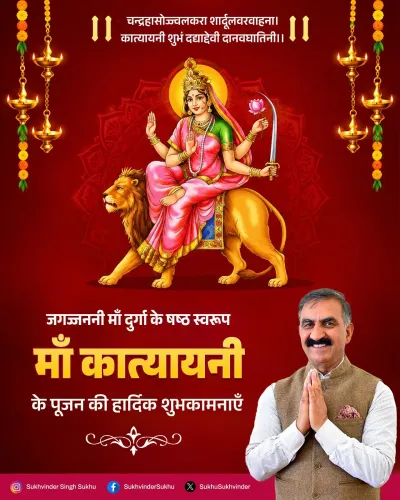
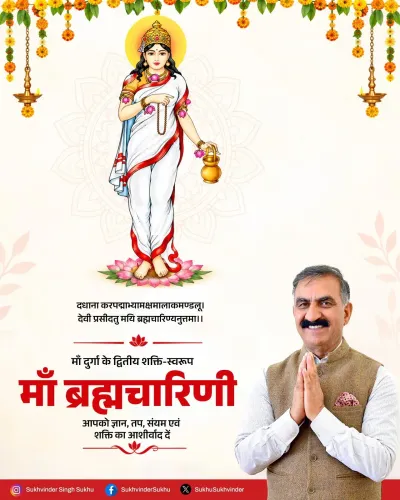
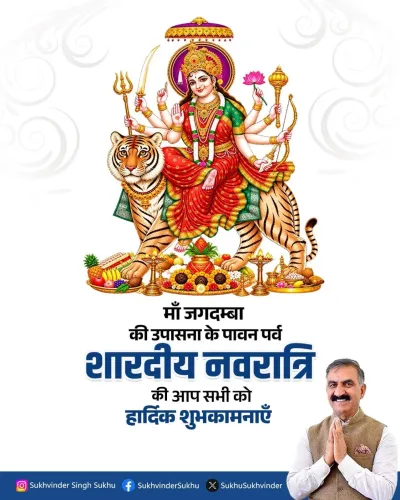
HP CM Sukhu greets devotees on Maha Ashtami
Synopsis
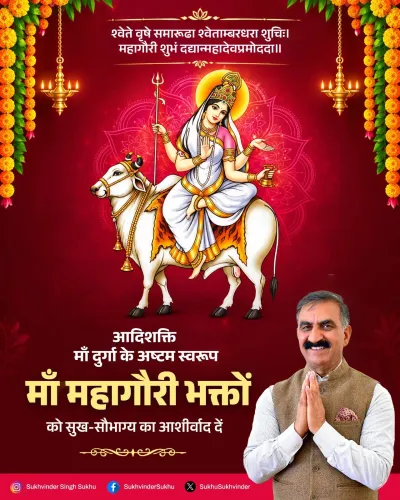
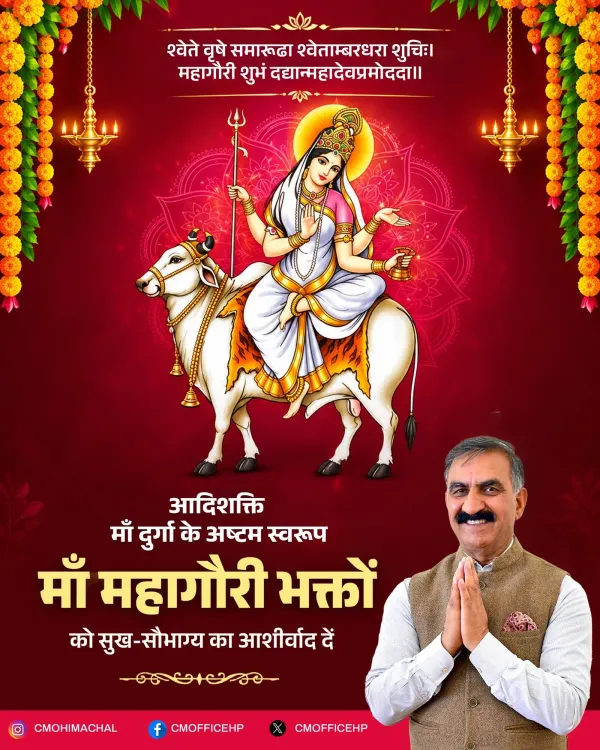
Himachal Pradesh Chief Minister Sukhvinder Singh Sukhu greeted devotees on Maha Ashtami, the eighth day of Navratri, invoking Maa Mahagauri's blessings for peace, purity, and prosperity — a gesture that resonates deeply in a state defined by its ancient Shakti shrines.
Key Takeaways
CM Sukhvinder Singh Sukhu posted a Navratri greeting on 18 October 2026 marking Maha Ashtami .
The message saluted Maa Mahagauri , the eighth form of Adi Shakti Maa Durga, associated with purity, peace, and fearlessness.
The CM prayed for sukh-samridhi — happiness and prosperity — for all devotees of Himachal Pradesh.
Himachal Pradesh hosts major Shakti shrines including Jwala Ji , Naina Devi , and Chintpurni , making Navratri culturally central to the state.
Indian state chief ministers routinely issue devotional messages during Navratri to connect with the state's religious and cultural identity.
On the eighth and most auspicious day of Navratri, Chief Minister Sukhvinder Singh Sukhu invoked the blessings of Maa Mahagauri — the eighth form of Adi Shakti Maa Durga — for peace, purity, and fearlessness for all devotees of Himachal Pradesh.
The Chief Minister's Office of Himachal Pradesh shared the message on Sunday, 18 October 2026, posting the Sanskrit salutation 'ॐ देवी महागौर्यै नमः' (Om Devi Mahagauryai Namah) alongside a prayer that Maa Mahagauri's grace bring happiness and prosperity into every believer's life.
Maa Mahagauri and the significance of Ashtami
Ashtami, the eighth night of Navratri, holds special reverence in the Hindu calendar. Maa Mahagauri is worshipped as a symbol of complete purity and serenity — her white complexion and calm countenance representing the dissolution of darkness. CM Sukhu's message captured this spirit, praying that devotees be granted 'sukh-samridhi' (happiness and prosperity) and perpetual well-being.
Himachal's deep roots in Shakti worship
Himachal Pradesh is home to some of India's most celebrated Shakti shrines — from Jwala Ji in Kangra to Naina Devi in Bilaspur and Chintpurni in Una — making Navratri one of the state's most widely observed festivals. Lakhs of pilgrims travel to these temples during the nine-day festival each year, and the state government has historically extended patronage for festival arrangements, security, and cultural programming at these sites.
For Chief Ministers in hill states with such a dense concentration of Shakti temples, Navratri greetings carry a weight that goes beyond ritual social-media courtesy — they connect directly with a pilgrimage economy and a deeply felt local religious identity.
Point of View
A Congress leader governing a BJP-leaning Hindu-majority hill state, visible engagement with Shakti worship traditions serves both cultural and political purposes. The gesture aligns with a broader pattern of Congress-governed states actively reclaiming Hindu cultural messaging to avoid ceding that terrain to the opposition. What matters beyond the symbolism is whether such messaging is followed by concrete state support for temple infrastructure and cultural tourism — the 'what to watch' that will define whether this is ritual or policy.
NationPress
18 Oct 2026
Frequently Asked Questions
Who is Maa Mahagauri and why is she worshipped on Ashtami?
Maa Mahagauri is the eighth of the nine forms of Goddess Durga worshipped during Navratri. She is associated with purity, serenity, and the removal of suffering, and Ashtami — the eighth night — is considered the most auspicious day of the festival for her worship.
Who is Sukhvinder Singh Sukhu?
Sukhvinder Singh Sukhu is a Congress leader who has served as the Chief Minister of Himachal Pradesh since December 2022. He leads the state government from Shimla.
Which are the famous Shakti temples in Himachal Pradesh?
Himachal Pradesh is home to several celebrated Shakti shrines, including Jwala Ji in Kangra, Naina Devi in Bilaspur, and Chintpurni in Una. These temples draw lakhs of pilgrims during Navratri every year.
What is the significance of Navratri in Himachal Pradesh?
Navratri is one of the most widely observed festivals in Himachal Pradesh due to the state's deep traditions of Shakti worship and its many historic Durga temples. The festival supports a significant pilgrimage economy across the state.
Why do Indian chief ministers post Navratri greetings on social media?
Indian state chief ministers routinely share devotional messages during major Hindu festivals like Navratri to connect with voters' cultural and religious identity and to maintain visibility during significant public occasions.