HP CMO Joins Folk Dance With Women of Kaza
Synopsis
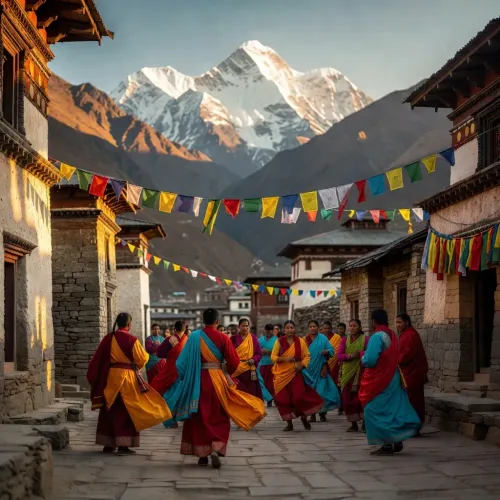
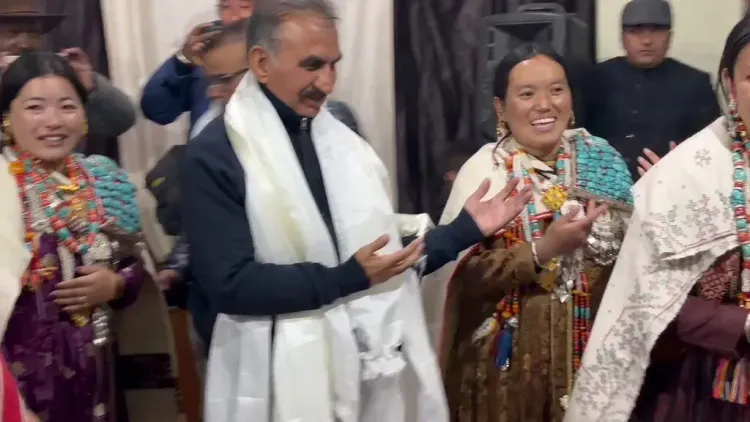
The Chief Minister's Office of Himachal Pradesh joined Mahila Mandal women in traditional folk dance at an old age home in Kaza, Spiti Valley, celebrating the timeless folk songs and dances passed down through generations in the Himalayan region.
Key Takeaways
The Chief Minister's Office of Himachal Pradesh participated in traditional folk dance at a vriddhashram in Kaza, Lahaul and Spiti on October 14, 2026 .
The event was organised with the local Mahila Mandal , a village-level women's group that preserves and performs folk traditions in Spiti Valley.
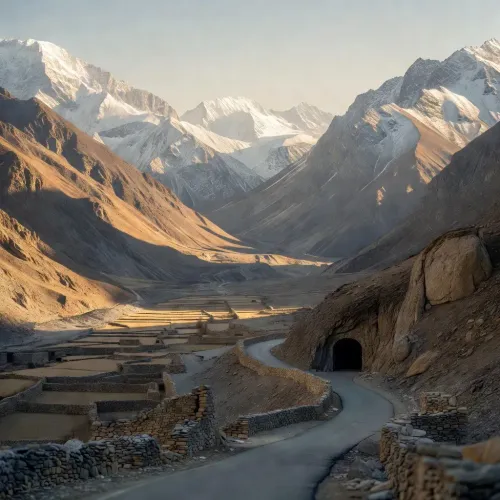
Kaza is one of India's most remote high-altitude towns, situated at roughly 3,800 metres in Lahaul and Spiti district.
The CMO's post reflected on folk culture as a distinct identity — 'the naturalness and beauty of these traditions, passed down through generations, remain just as vibrant today.' State leadership in Himachal Pradesh has made regular participation in local cultural programmes a feature of outreach visits to tribal and remote areas.
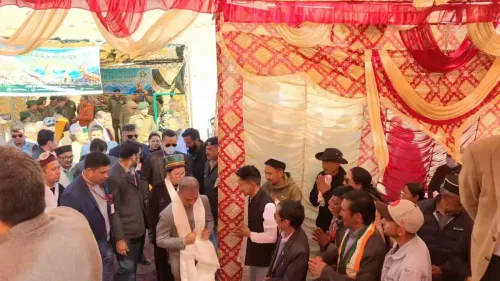
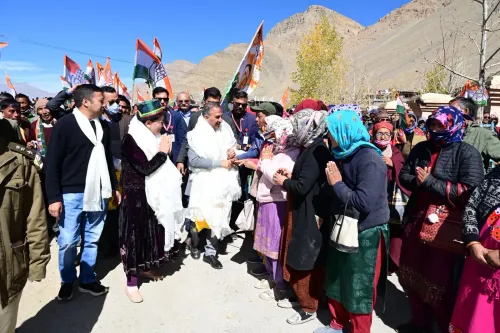
High in the Spiti Valley, where traditions outlast centuries, the Chief Minister's Office of Himachal Pradesh shared a moment on Wednesday, October 14, 2026 that felt less like a government visit and more like a reunion — a traditional folk dance performed alongside the women of a local Mahila Mandal at an old age home in Kaza.
The post captured participation in a traditional dance alongside the women's group at the vriddhashram (old age home) in Kaza, accompanied by a reflection: 'Lok sanskriti, lokgeet aur nritya apni alag pehchaan rakhte hain' — 'Folk culture, folk songs and dance hold an identity of their own. The naturalness and beauty of these traditions, passed down through generations, remain just as vibrant today.'
Kaza's living cultural tradition
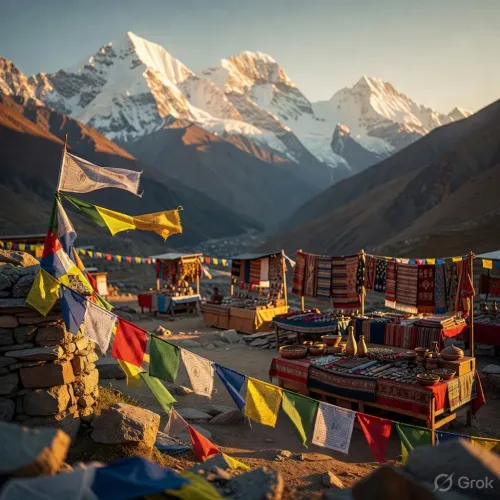
Kaza, the headquarters of Lahaul and Spiti district, sits at roughly 3,800 metres above sea level — one of the most remote inhabited towns in India. Its culture carries deep Buddhist influences alongside older Himalayan folk traditions that have survived geographic isolation for generations. The Mahila Mandals of the Spiti Valley are among the primary custodians of these folk forms, organising performances and community events that keep songs and dances alive and local.
Old age home, folk dance, and the point where welfare meets culture
The choice of venue — an old age home — gives the occasion a particular resonance. The elderly residents of such institutions are often the last living repositories of oral folk traditions: the songs nobody wrote down, the steps passed only hand to hand. A folk performance at a vriddhashram is not merely entertainment; it is a living dialogue between the keepers of memory and the community that inherits it.
State leadership in Himachal Pradesh has made a consistent practice of joining local cultural programmes during visits to the tribal areas of Lahaul and Spiti, weaving public outreach into cultural participation rather than keeping them separate. The gesture signals a broader state emphasis on safeguarding Himalayan folk heritage in districts that often fall outside mainstream cultural policy conversations.
In the valleys of Spiti, tradition does not need a stage or a spotlight — it only needs someone willing to step in and dance.
Point of View
State visibility at local cultural events serves a dual purpose: welfare outreach and a quiet assertion that intangible heritage belongs in the policy frame. The venue — an old age home — sharpens the symbolism, since the elderly are precisely the generation whose knowledge of oral traditions is most at risk of being lost without active community engagement. Whether this translates into structured preservation programmes or remains at the level of goodwill visits is the question Himachal Pradesh's cultural policy must eventually answer.
NationPress
14 Oct 2026
Frequently Asked Questions
Where is Kaza located in Himachal Pradesh?
Kaza is the administrative headquarters of Lahaul and Spiti district in Himachal Pradesh, situated at an altitude of roughly 3,800 metres in the Spiti Valley, making it one of the most remote towns in India.
What is a Mahila Mandal?
A Mahila Mandal is a village-level women's collective common across Himachal Pradesh that organises community welfare activities, including the preservation and performance of local folk songs and dances.
What did the HP CMO post about Kaza?
On October 14, 2026, the Chief Minister's Office of Himachal Pradesh posted about joining women of the local Mahila Mandal in a traditional folk dance at an old age home in Kaza, reflecting on the enduring beauty of generational folk traditions.
Why is folk culture important in Spiti Valley?
Spiti Valley's folk culture, shaped by Buddhist influences and centuries of Himalayan isolation, carries oral traditions — songs, dances and rituals — that exist nowhere else. Mahila Mandals and community events are among the few active mechanisms keeping these traditions alive.
Does the Himachal Pradesh government promote folk culture in remote areas?
Yes, state leadership in Himachal Pradesh regularly participates in local folk and cultural programmes during visits to remote and tribal areas such as Lahaul and Spiti, treating cultural engagement as part of broader public outreach in these regions.