HP CM Office Credits GI Tag Push to Heritage Drive
Synopsis
The Chief Minister's Office of Himachal Pradesh on 1 July 2026 attributed a fresh GI tagging success to three and a half years of sustained heritage conservation efforts under CM Sukhvinder Singh Sukhu, highlighting gains in product authenticity protection and market value for local artisans and producers.
Key Takeaways
The Chief Minister's Office of Himachal Pradesh announced a GI tag success on 1 July 2026 , crediting the current government's heritage promotion drive.
The post cites three and a half years of continuous efforts toward conservation, promotion and propagation of Himachal's traditional heritage.
GI certification is expected to protect product authenticity and identity while raising market demand and prices for certified goods.
Himachal Pradesh already holds GI tags for Kullu shawls, Kangra tea and Chamba Rumal , among others.
The legal basis for GI protection in India is the Geographical Indications of Goods (Registration and Protection) Act, 1999 , administered by the GI Registry under DPIIT .
Primary beneficiaries are traditional artisans and local producers who gain legal protection against counterfeit goods and access to premium pricing.
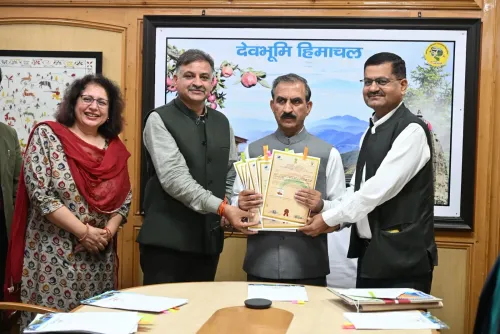
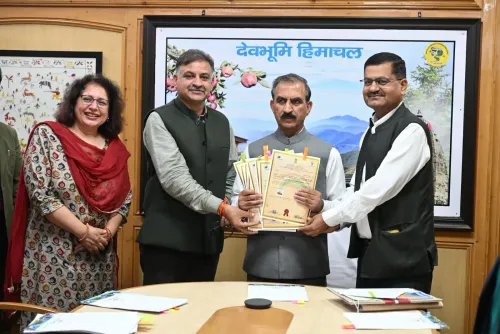
The Chief Minister's Office of Himachal Pradesh on Wednesday, 1 July 2026, credited the state government's sustained efforts over the past three and a half years toward preserving, promoting and propagating Himachal's traditional heritage as the driving force behind a recent Geographical Indication (GI) tagging success. The announcement, made via the official CMO account on X, underscored how GI recognition is expected to safeguard the authenticity of regional products while boosting their market demand and value.
Context
The CMO post, written in Hindi, states: 'यह सफलता पिछले साढ़े तीन वर्षों में हमारी सरकार द्वारा हिमाचल की पारंपरिक विरासत के संरक्षण, संवर्धन और प्रचार-प्रसार के लिए किए गए निरंतर प्रयासों का परिणाम है' — translated: 'This success is the result of the continuous efforts made by our government over the last three and a half years for the conservation, promotion and propagation of Himachal's traditional heritage.' The office further noted two direct benefits of the GI tag: the authenticity and identity of products will be protected, and market demand and prices will rise.
Chief Minister Sukhvinder Singh Sukhu, who has led the state since December 2022, has positioned cultural heritage protection as a pillar of the Congress-led government's rural economic agenda. The three-and-a-half-year timeline cited in the post aligns with the tenure of the current administration.
Policy Backdrop
India's framework for GI protection rests on the Geographical Indications of Goods (Registration and Protection) Act, 1999, a central legislation administered by the Geographical Indications Registry under the Department for Promotion of Industry and Internal Trade (DPIIT). The Act enables artisans and producer communities to secure intellectual property rights over products whose quality or reputation is linked to a specific geographic origin.
Himachal Pradesh already holds GI tags for several iconic products — including Kullu shawls, Kangra tea and Chamba Rumal — placing it among the states that have actively leveraged the GI mechanism to protect craft traditions. Across India, states have increasingly pursued GI registrations for handicrafts, textiles and agricultural produce as a tool to combat imitation goods and channel premium pricing back to original producers.
Stakeholders and Impact
The primary beneficiaries of a GI tag are traditional artisans and local producers whose livelihoods depend on the authenticity and reputation of their craft or produce. Once a product is GI-certified, only those operating within the defined geographic region and adhering to specified production methods can legally market goods under that tag, directly curbing counterfeit products that undercut genuine producers.
For Himachal Pradesh, where mountain handicrafts and agri-produce form a significant part of the rural economy, enhanced GI coverage can translate into better export prospects and stronger domestic retail positioning. Higher market prices for certified goods can improve incomes for weaver communities, tea growers and other producer groups who have historically faced margin pressure from mass-market imitations.
What's Next
The state government is expected to announce further GI applications and potentially introduce dedicated marketing or branding schemes to amplify the commercial benefits of newly certified Himachali products. Observers will watch whether the administration pairs GI recognition with e-commerce tie-ups or buyer-seller platforms that give certified producers direct market access. The broader success of such initiatives will depend on how effectively certification is communicated to consumers willing to pay a premium for authentic regional goods.
Point of View
High-visibility policy instrument for state governments seeking to demonstrate intellectual property stewardship without large fiscal outlays. Himachal Pradesh's incremental expansion of its GI portfolio fits a broader national pattern where hill and northeastern states are racing to formalise heritage claims before rival producers or intermediaries dilute brand value. The real test will be whether certification translates into measurable income gains for producers, or remains primarily a reputational and political asset for the administration.
NationPress
30 Sept 2026
Frequently Asked Questions
What is a GI tag and why does it matter for Himachal Pradesh?
A GI (Geographical Indication) tag is a legal certification under the Geographical Indications of Goods (Registration and Protection) Act, 1999, that links a product's quality or reputation to its specific geographic origin. For Himachal Pradesh, it protects traditional products like Kullu shawls and Kangra tea from imitation and helps producers command higher market prices.
Which Himachal Pradesh products already have GI tags?
Himachal Pradesh holds GI tags for several products including Kullu shawls, Kangra tea and Chamba Rumal. The state has been steadily expanding its GI portfolio under successive governments.
What did the Himachal Pradesh CM Office announce on 1 July 2026?
The Chief Minister's Office of Himachal Pradesh posted on X on 1 July 2026 attributing a GI tag success to three and a half years of continuous efforts by the Sukhu government to conserve, promote and propagate the state's traditional heritage.
How does a GI tag benefit local artisans and farmers?
A GI tag gives certified producers the exclusive legal right to market goods under the protected name, preventing counterfeit products from undercutting them. It also signals quality to buyers, enabling producers to charge premium prices and improving rural incomes.
Which body grants GI tags in India?
GI tags in India are granted by the Geographical Indications Registry, a statutory body functioning under the Department for Promotion of Industry and Internal Trade (DPIIT), Government of India.