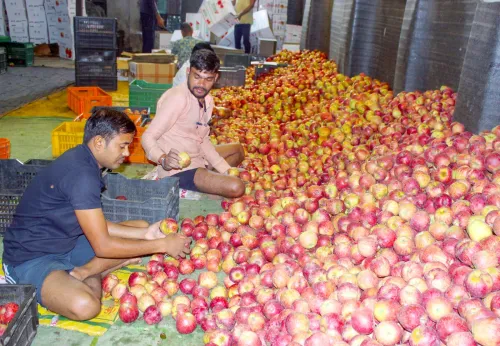
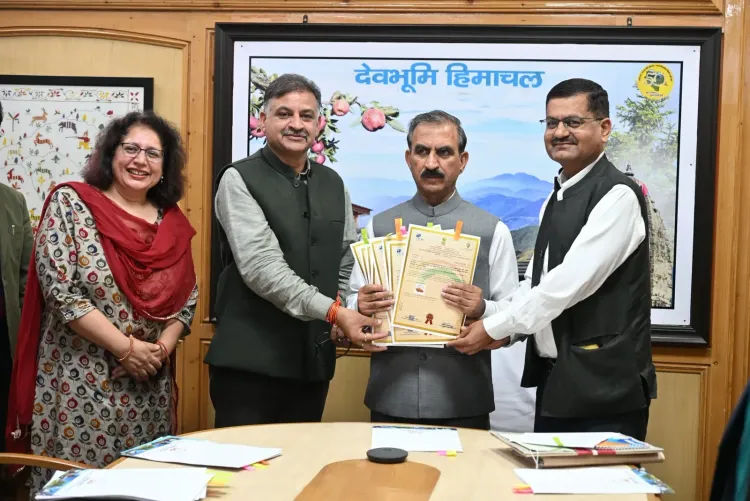
CM Sukhu: HP Gets GI Tags for 8 Traditional Products
Synopsis
Himachal Pradesh CM Sukhvinder Singh Sukhu announced GI registration for eight traditional products — including Kinnauri Apple, Spiti Sea Buckthorn and Chamba Metal Art — taking the state's total HIMCOST-facilitated GI tags to 17. Four more products are in the pipeline.
Key Takeaways
Eight new GI tags were granted to Himachal Pradesh traditional products, covering agriculture, food, craft and jewellery categories.
The newly registered products include Spiti Sea Buckthorn (Chhарma) , Saluni White Maize , Chamba Metal Art , Sirmauri Loia , Kinnauri Cap , Mandi Sepu Badi , Kinnauri Apple , and Kinnauri Jewellery .
Himachal Pradesh now has 17 GI-registered products facilitated through the state agency HIMCOST .
GI tags are expected to protect product authenticity, raise market prices, create employment and strengthen the rural economy.
The state is pursuing four additional GI registrations: Pangi Bhot Barley , Chamba Chukh , Bharmour Plectranthus Honey , and Sirmaur Ginger .
Kinnaur district accounts for three of the eight new tags, the highest share among all districts in this batch.
Himachal Pradesh Chief Minister Sukhvinder Singh Sukhu announced on 1 July 2026 that eight traditional products from the state have received Geographical Indication (GI) registration, bringing the total number of GI-tagged Himachal products facilitated through the state nodal agency to 17.
Context
The eight newly registered products span the state's diverse geography and cultural heritage. They are: Spiti Sea Buckthorn (Chhарma), Saluni White Maize, Chamba Metal Art, Sirmauri Loia (a traditional woollen fabric), Kinnauri Cap, Mandi's Sepu Badi (a fermented lentil delicacy), Kinnauri Apple, and Kinnauri Jewellery. Sukhu stated in his post: 'pradesh ke samajik, arthik, sanskritik aur krishi mahatv vale aath paramparagat utpadon ko bhougolik sanketak (GI) panjikaran prapt hua hai' — 'eight traditional products of social, economic, cultural and agricultural importance to the state have received Geographical Indication registration.'
All 17 GI registrations have been secured through HIMCOST — the Himachal Pradesh Council for Science, Technology and Environment — which serves as the state's nodal agency for intellectual property facilitation of traditional goods.
Policy Backdrop
GI registration in India is governed by the Geographical Indications of Goods (Registration and Protection) Act, 1999, which provides legal protection to region-specific products and prevents unauthorised use of their identity. Himachal Pradesh has a long track record in this space: Kullu Shawl received GI status in 2004, Kangra Tea in 2005, and Chamba Rumal in 2007.
The current batch of eight tags represents one of the largest single additions to the state's GI portfolio and covers a wider range of categories — from high-altitude agriculture and processed food to metal craft and jewellery. Sukhu credited the achievement to 'continuous efforts over the last three-and-a-half years by our government for the conservation, promotion and propagation of Himachal's traditional heritage.'
Stakeholders and Impact
The GI tags are expected to directly benefit traditional artisans, apple growers in Kinnaur, sea-buckthorn farmers in Spiti, and rural food producers in Mandi and Saluni. According to Sukhu's post, the registrations will protect the authenticity and identity of the products, increase market demand and price realisations, generate new employment opportunities, and strengthen the rural economy.
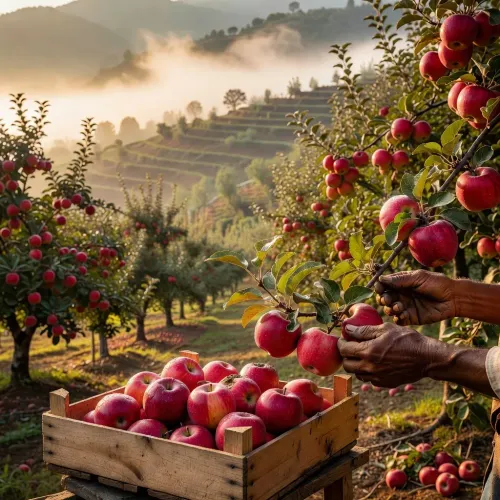
Kinnaur district alone accounts for three of the eight new tags — the Kinnauri Apple, Kinnauri Cap, and Kinnauri Jewellery — reflecting the district's concentrated cultural and agricultural distinctiveness. GI status allows producers to market their goods with a certified geographic identity, typically commanding a price premium over unregistered equivalents.
What's Next
The state government has indicated it is actively pursuing GI registration for four additional products: Pangi Bhot Barley, Chamba Chukh (a traditional condiment), Bharmour Plectranthus Honey, and Sirmaur Ginger. If successful, these would push Himachal Pradesh's GI tally past 20 products through HIMCOST alone.
Broader outcomes — including measurable price premiums for newly tagged products and employment figures attributable to GI status — are expected to become clearer as market data accumulates over the coming seasons. The state's expanding GI portfolio positions Himachal Pradesh as one of the more active hill states in leveraging intellectual property frameworks to protect and monetise its Himalayan heritage.
Point of View
With the Sukhu government using GI registration as a dual instrument — cultural preservation and rural economic uplift — ahead of what are likely to be competitive electoral cycles. Securing eight tags in a single announcement, particularly for high-visibility products like Kinnauri Apple and Spiti Sea Buckthorn, allows the administration to demonstrate tangible policy delivery to geographically dispersed and economically distinct constituencies. The move also fits a broader national pattern of hill and northeastern states racing to formalise traditional knowledge claims before market intermediaries erode the geographic distinctiveness of their produce. The four pending applications signal that this is a sustained programme rather than a one-off milestone, though the real test will be whether GI status translates into measurable price premiums and income gains for the artisans and farmers it is designed to protect.
NationPress
30 Sept 2026
Frequently Asked Questions
Which 8 products got GI tag in Himachal Pradesh in 2026?
The eight products are Spiti Sea Buckthorn (Chhарma), Saluni White Maize, Chamba Metal Art, Sirmauri Loia, Kinnauri Cap, Mandi Sepu Badi, Kinnauri Apple, and Kinnauri Jewellery, as announced by CM Sukhu on 1 July 2026.
How many GI tags does Himachal Pradesh have in total?
Himachal Pradesh now has 17 GI-registered traditional products facilitated through HIMCOST, the state's nodal agency for science, technology and environment.
What is HIMCOST and what role does it play in GI registration?
HIMCOST is the Himachal Pradesh Council for Science, Technology and Environment. It serves as the state's nodal agency that prepares and files GI applications for traditional Himalayan products under India's GI Act of 1999.
What are the benefits of GI tag for Himachal Pradesh products?
A GI tag protects a product's authenticity and geographic identity, typically raises its market price, prevents imitation, creates employment for local producers, and strengthens the rural economy of the producing region.
Which Himachal Pradesh products are next in line for GI registration?
The state government is actively pursuing GI registration for Pangi Bhot Barley, Chamba Chukh, Bharmour Plectranthus Honey, and Sirmaur Ginger, according to CM Sukhu's announcement.