HP CM Office Opens 1,800 Police Posts for Youth
Synopsis
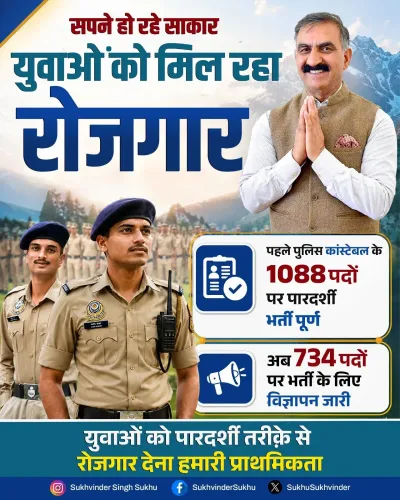
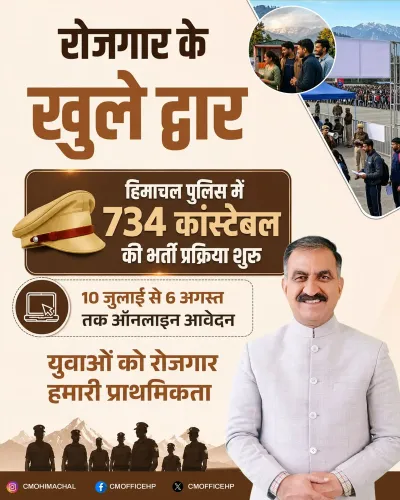
The Chief Minister's Office of Himachal Pradesh announced on 2 June 2026 that recruitment for 1,000 police posts has been completed and hiring for 800 more is under way, framing the drive as a direct response to youth unemployment and despair in the state.
Key Takeaways
The Chief Minister's Office of Himachal Pradesh announced new police recruitment on 2 June 2026 .
Recruitment for 1,000 Himachal Pradesh Police posts has recently been completed.
Hiring for 800 additional posts is currently in progress.
The combined intake across both drives totals 1,800 police personnel .
The government cited youth unemployment and 'an atmosphere of despair' among young people as the driving motivation.
The drive aligns with a broader pattern of hill-state governments using uniformed-service hiring to counter youth out-migration.
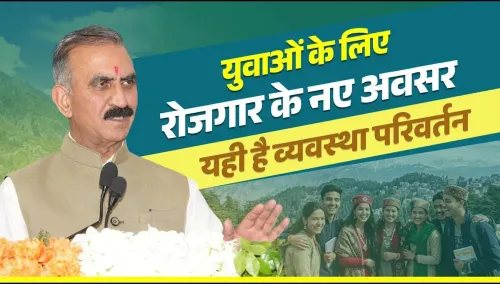
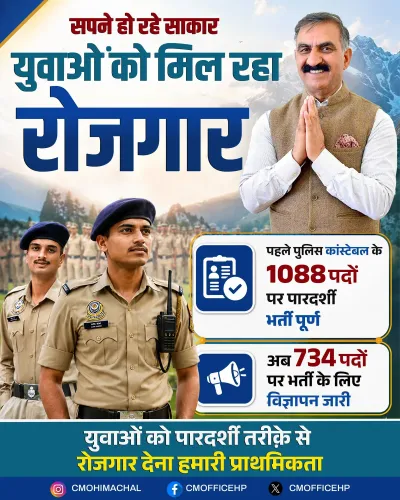
The Chief Minister's Office of Himachal Pradesh announced on Tuesday, 2 June 2026 that the state government is opening new avenues of employment in the Himachal Pradesh Police, citing the need to channel youth energy and talent rather than let it go to waste due to lack of opportunity. The office stated that a recruitment drive for 1,000 posts has recently been completed, while hiring for 800 additional posts is currently under way.
Context
The post, a reply from the @CMOFFICEHP account, addressed what it described as a prevailing atmosphere of disappointment among young people — 'जिससे उनमें निराशा का माहौल है' (meaning 'which has created an atmosphere of despair among them'). The government framed the police recruitment drive as a direct response to youth unemployment, stating: 'युवाओं की ऊर्जा, प्रतिभा और सामर्थ्य को अवसरों के अभाव में व्यर्थ नहीं जाने दिया जा सकता' — 'The energy, talent, and capability of youth cannot be allowed to go to waste for lack of opportunities.'
Policy Backdrop
Himachal Pradesh, like many hill states, faces a persistent challenge of educated youth migrating out of the state in search of employment. The state government under Chief Minister Sukhvinder Singh Sukhu, who has led the administration since December 2022, has sought to address this through targeted public-sector hiring in uniformed services.
Indian state governments have periodically used police recruitment drives as a dual-purpose instrument — strengthening law enforcement capacity while simultaneously generating stable public-sector jobs. Such drives are typically announced in batches to manage large applicant pools and align with budgetary allocations for salaries and training infrastructure.
Stakeholders and Impact
The primary beneficiaries of the drive are unemployed youth and police aspirants across Himachal Pradesh. The completion of recruitment for 1,000 posts and the ongoing process for 800 more together represent a combined intake of 1,800 personnel into the state police force.
For the Himachal Pradesh Police itself, the induction of fresh recruits is expected to bolster its operational strength across the state's challenging mountainous terrain, where maintaining adequate personnel deployment has historically been a logistical concern.
What's Next
Attention will now turn to the publication of final merit lists for the 800 ongoing posts, as well as any additional vacancy notifications that the state government may issue in other departments. Observers will also watch the forthcoming state budget discussions for provisions related to police modernisation and further recruitment cycles.
The government's framing of this drive as a response to youth despair signals that employment generation in public services is likely to remain a central political and policy priority for the Sukhu administration heading into the next electoral cycle.
Point of View
Distinguishing the current dispensation from its predecessor. With Himachal Pradesh facing persistent out-migration of educated youth, uniformed-service hiring is one of the few levers a state government can pull quickly without requiring large capital expenditure. The batched approach — 1,000 completed, 800 ongoing — also suggests a managed rollout designed to sustain political visibility over multiple news cycles. Whether the 1,800 posts make a measurable dent in the state's youth unemployment figures will ultimately determine how durable this narrative proves to be.
NationPress
16 Oct 2026
Frequently Asked Questions
How many Himachal Pradesh Police posts are being filled in 2026?
The Himachal Pradesh government has announced a total of 1,800 posts: recruitment for 1,000 posts has recently been completed, and hiring for 800 additional posts is currently under way.
Who announced the Himachal Pradesh Police recruitment drive?
The announcement was made by the Chief Minister's Office of Himachal Pradesh via its official account on 2 June 2026.
Why is the Himachal Pradesh government recruiting in the police force?
The government stated that youth energy and talent cannot be wasted due to lack of opportunity, citing an atmosphere of despair among young people as the reason for opening new employment avenues in the police.
Who is the Chief Minister of Himachal Pradesh in 2026?
Sukhvinder Singh Sukhu is the Chief Minister of Himachal Pradesh, having led the state government since December 2022.
What should HP police job aspirants watch for next?
Aspirants should watch for the publication of final merit lists for the ongoing 800 posts and any further vacancy notifications from the Himachal Pradesh government.