HP CM Office: North India's First Natural Farming Lab Opens in Hamirpur

Synopsis
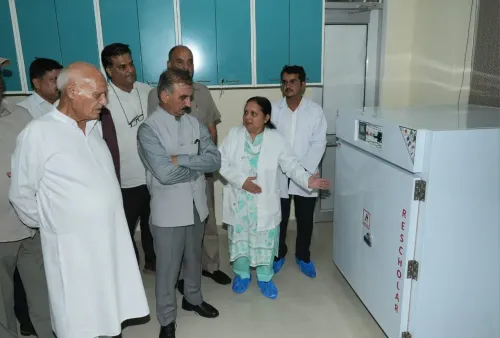
North India's first natural farming laboratory has been established in Hamirpur, Himachal Pradesh, at a cost of ₹8.5 crore. The facility, announced by the Chief Minister's Office, will test food quality and give farmers and consumers verifiable data on produce grown through natural methods.
Key Takeaways
North India's first natural farming laboratory has been set up in Hamirpur, Himachal Pradesh .
The lab was built at a cost of ₹8.5 crore .
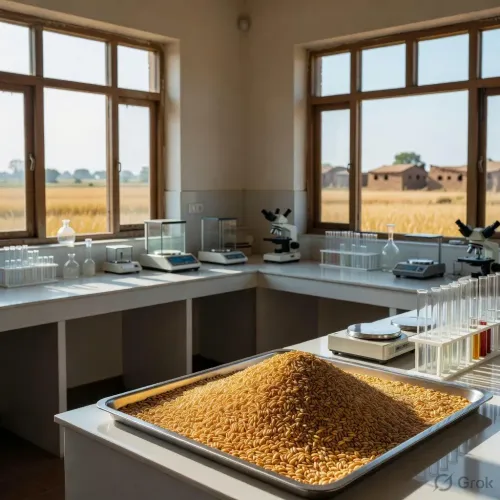
The facility will enable scientific testing of food quality, backing natural farming claims with verifiable data.
The announcement was made by the Chief Minister's Office of Himachal Pradesh on August 14, 2026 .
Key beneficiaries include farmers practising natural methods and consumers seeking quality assurance.
The lab fits a wider national pattern of states investing in testing infrastructure to support reduced-chemical agriculture.
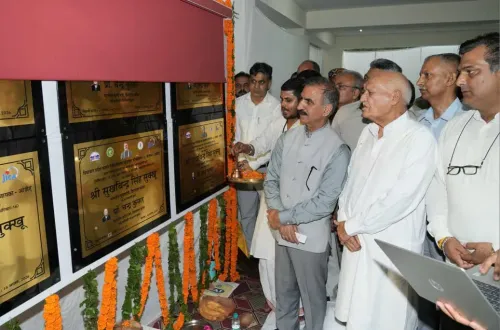
A milestone for sustainable agriculture in the hills — North India's first dedicated natural farming laboratory has been established in Hamirpur, Himachal Pradesh, built at a cost of ₹8.5 crore. The Chief Minister's Office of Himachal Pradesh announced the facility on Friday, August 14, 2026, framing it as a tool that will finally give people an accurate, scientific picture of what is on their plate.
The CMO's post stated: 'Nort India ki pehli prakritik kheti ki lab Hamirpur mein sthapit ho gayi hai' — 'North India's first natural farming lab has been established in Hamirpur.' At ₹8.5 crore, the facility is designed to test food quality and give farmers and consumers hard data on what their produce actually contains, moving natural farming claims from the realm of marketing into verifiable science.
Hamirpur's Role in Himachal's Natural Farming Push
Hamirpur district sits in the lower hills of Himachal Pradesh — a state that began pushing natural farming in the late 2010s as part of a broader sustainable agriculture strategy. The state government has consistently positioned such firsts as a way to differentiate Himachal's produce in national and regional markets. A dedicated testing lab is the infrastructure backbone that makes those claims credible: without it, 'natural' is just a label.
The lab addresses a gap that has long frustrated both farmers and buyers. Growers who invest in chemical-free methods have had little way to formally certify or quantify the quality advantage of their produce. Consumers, equally, have had to take claims on faith. A state-funded testing facility changes that equation — and positions Himachal Pradesh as the first state in the north to close the loop between natural farming practice and food quality verification.
What the Lab Means for Farmers and Consumers
Across India, state governments have been building testing and certification infrastructure to back reduced-chemical agriculture with data rather than aspiration. Himachal Pradesh's move fits squarely into that national pattern — but being first in the north carries real competitive weight. Produce certified through the lab could command premium pricing, open new markets, and strengthen the state's identity as a source of clean food.
The immediate stakeholders are the farmers already practising natural methods who now have a formal channel to validate their work, and the consumers — in Himachal and beyond — who gain an independent check on quality. The broader watch point is how quickly the lab's testing services become operational at scale, and whether the results feed back into state agricultural policy in any concrete way.
A ₹8.5 crore lab is only as powerful as the policy it informs. The harder question — and the more interesting one — is what Himachal Pradesh does with the data it starts generating.
Point of View
Because it shifts the conversation from policy intent to measurable outcome. If the lab's testing services scale quickly and its data feeds back into procurement and certification policy, this could become a template other hill states replicate. The political dividend is real too: on the eve of Independence Day, the announcement ties sustainable agriculture to a broader narrative of self-reliant, clean development.
NationPress
28 Sept 2026
Frequently Asked Questions
Where has North India's first natural farming lab been set up?
The lab has been established in Hamirpur district, Himachal Pradesh , as announced by the Chief Minister's Office of Himachal Pradesh.
What is the cost of the Hamirpur natural farming laboratory?
The laboratory was built at a cost of ₹8.5 crore , according to the Chief Minister's Office of Himachal Pradesh.
What will the natural farming lab in Hamirpur do?
The lab is designed to scientifically test food quality, giving farmers and consumers accurate, verifiable data on produce grown through natural farming methods.
Why is Himachal Pradesh investing in natural farming infrastructure?
Himachal Pradesh has promoted natural farming since the late 2010s as part of a sustainable agriculture push, and the lab provides the testing backbone needed to certify and validate chemical-free produce claims.
Who benefits from the Hamirpur natural farming laboratory?
The primary beneficiaries are farmers practising natural methods — who can now formally verify their produce quality — and consumers who gain an independent check on the food they buy.