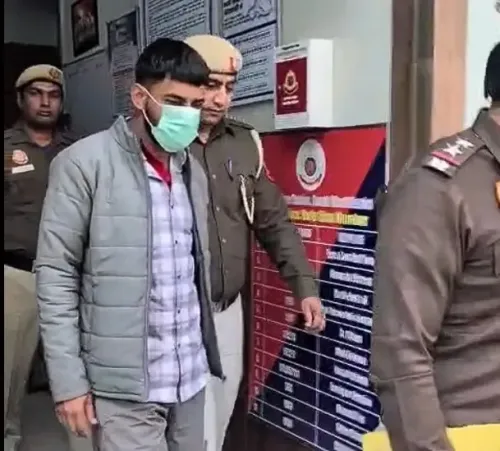
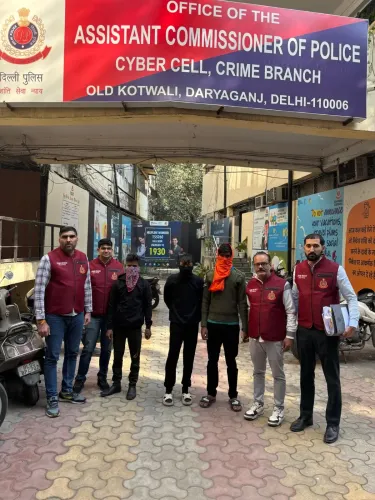
Hyderabad Police arrest two in digital arrest scam; retired man loses ₹29 lakh

Synopsis
A 63-year-old Hyderabad retiree lost over ₹29 lakh after fraudsters posed as CBI and ED officials, threatened arrest, and demanded 'verification' transfers. Two accused have now been nabbed for running mule accounts and laundering the money through cryptocurrency — but the alleged mastermind remains on the run.
Key Takeaways
Hyderabad Cybercrime Police arrested Mohd Ashfaq Hussain and Ahmed Najeeb Uddin in connection with a digital arrest scam.
A 63-year-old retired employee lost ₹29,17,668 after being threatened by fraudsters impersonating CBI , ED , and Delhi Police officials starting 3 March 2025 .
The accused allegedly used mule bank accounts and Cash Deposit Machines (CDMs) to layer and conceal the stolen funds.
Funds were allegedly converted into USDT cryptocurrency and sold online to complete the laundering cycle.
Third accused Sachin , a Bengaluru resident and alleged mastermind, remains absconding .
Case registered under IT Act Sections 66(C) and 66(D) and multiple sections of the BNS .
Hyderabad Police have arrested two individuals in connection with a digital arrest fraud in which a 63-year-old retired employee was duped out of ₹29,17,668 after fraudsters impersonated officials from the Delhi Police, the Central Bureau of Investigation (CBI), and the Enforcement Directorate (ED). The arrests were confirmed on Sunday, 18 October 2026 by Hyderabad Cybercrime Police.
Who Was Arrested
The two accused — Mohd Ashfaq Hussain and Ahmed Najeeb Uddin, both residents of Hyderabad — were apprehended for their roles in arranging mule bank accounts, withdrawing fraudulently obtained funds, and routing money through multiple accounts to obscure the trail. They also allegedly facilitated transactions in USDT (a digital currency) in coordination with cyber fraudsters and earned commissions for their participation.
A third accused, identified only as Sachin, a resident of Bengaluru, remains at large, according to police.
How the Scam Unfolded
According to Additional Commissioner of Police (Crimes and SIT), Hyderabad City, M. Srinivasulu, the victim first received calls from unknown persons on 3 March 2025, claiming to be senior officials from national law enforcement agencies. The callers falsely alleged that the retired employee was implicated in a money laundering case involving ₹6.8 crore and threatened him with imminent arrest.
To lend credibility to their claims, the fraudsters sent forged official documents and told the victim that his Aadhaar details and fingerprints had been misused in the alleged crime. They then extracted his personal and banking information and pressured both the victim and his daughter to transfer funds under the guise of 'verification', promising a full refund. Crucially, the fraudsters instructed the family to maintain strict secrecy, invoking national security concerns.
Believing the threats to be genuine, the complainant and his daughter transferred a combined ₹29,17,668. When the promised refund never materialised, the retired employee realised he had been defrauded and filed a police complaint.
The Money Trail: Mule Accounts and Cryptocurrency
Police investigations revealed that the accused Sachin — who made contact with Ashfaq and Najeeb through WhatsApp after they reportedly faced financial difficulties — orchestrated a layered laundering scheme. Sachin's plan involved routing the stolen funds through multiple bank accounts via Cash Deposit Machines (CDMs) to make tracing difficult for investigating agencies.
As per the scheme, Ashfaq collected bank account credentials from Najeeb and passed them to Sachin. The fraudulently obtained money was then transferred into those accounts. Ashfaq and Najeeb subsequently withdrew the funds via cheques and redeposited the cash through CDMs. Sachin allegedly used these deposited amounts to purchase USDT cryptocurrency and sold it online in exchange for Indian rupees, completing the laundering cycle.
Legal Sections Invoked
A case has been registered against the accused under Sections 66(C) and 66(D) of the Information Technology Act, as well as Sections 111(2)(b), 318(4), 319(2), 336(3), 338, and 340(2) of the Bharatiya Nyaya Sanhita (BNS). This is among several recent digital arrest cases to surface in Hyderabad, reflecting a growing nationwide pattern in which retired or elderly individuals are targeted through elaborate impersonation tactics.
What Happens Next
Police are actively pursuing the absconding accused Sachin from Bengaluru. Authorities have reiterated that no legitimate government agency — including the CBI or ED — conducts arrests or investigations over video or phone calls, and have urged citizens to report suspicious calls immediately rather than comply with financial demands.
Point of View
Forged documents, secrecy demands, and crypto-layering to extract and launder money before victims realise they have been defrauded. What is striking here is not the fraud itself but the multi-city coordination: a Bengaluru handler directing Hyderabad mules, with USDT as the exit ramp. Law enforcement's ability to trace crypto exits remains limited, and until exchanges are compelled to enforce real-time reporting of suspicious USDT transactions, this laundering route will keep scaling. The case also underlines a persistent gap: elderly and retired individuals, who often have fixed deposits and lump-sum savings, remain disproportionately targeted because they are less likely to query the legitimacy of official-sounding calls.
NationPress
18 Oct 2026
Frequently Asked Questions
What is a digital arrest scam?
A digital arrest scam is a cyber fraud in which criminals impersonate law enforcement officials — such as CBI, ED, or police officers — and falsely threaten victims with imminent arrest over phone or video calls. Victims are coerced into transferring money under the pretence of 'verification' or bail, and are often told to maintain secrecy in the name of national security.
How much did the Hyderabad retiree lose in this case?
The 63-year-old retired employee and his daughter together transferred a total of ₹29,17,668 to fraudsters who posed as Delhi Police, CBI, and ED officials. The transfers began after the victim was falsely implicated in a money laundering case involving ₹6.8 crore.
How did the accused launder the money?
The accused allegedly routed the stolen funds through mule bank accounts using Cash Deposit Machines (CDMs) across multiple accounts to obscure the money trail. The funds were then reportedly converted into USDT cryptocurrency by the absconding accused Sachin and sold online for Indian rupees.
Who are the accused and what is their current status?
The two arrested accused are Mohd Ashfaq Hussain and Ahmed Najeeb Uddin, both residents of Hyderabad. A third accused, Sachin from Bengaluru, who allegedly coordinated the scheme via WhatsApp, remains absconding and is being actively pursued by police.
How can citizens protect themselves from digital arrest fraud?
Police have clarified that no legitimate government agency — including the CBI or ED — conducts arrests, investigations, or demands money transfers over phone or video calls. Citizens receiving such calls should immediately report them to their nearest cybercrime police station or the national helpline without transferring any funds.