IANS Year Ender 2025: Will India Conquer Naxalism?
Click to start listening
Synopsis
As India approaches the projected end of Naxalism by March 2026, significant progress is evident in the battle against this insurgency. With a record number of surrenders and a reduction in violence, the government's strategies are reshaping the narrative in affected regions. Will this trend continue into the new year?
Key Takeaways
- Significant reduction in Naxalite violence across India.
- Record number of surrenders in 2025.
- Successful government initiatives in infrastructure development.
- Coordination between central and state forces has improved.
- Ongoing vigilance against urban spread of Naxalite ideology.
New Delhi, Dec 27 (NationPress) Union Home Minister Amit Shah has asserted that the threat posed by Naxalites will be eradicated by March 2026. The developments of 2025 indicate that security forces are on track to eliminate this menace ahead of the Home Minister's deadline.
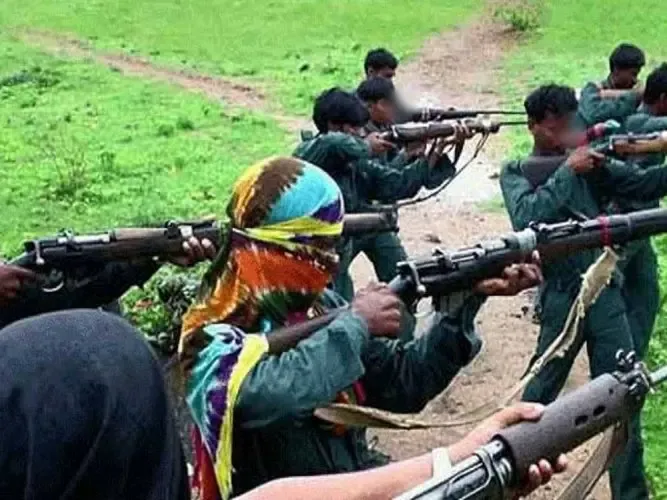
Throughout the year, numerous operations conducted by security forces resulted in both the deaths and significant surrenders of Naxalites. Notably, surrenders outnumbered deaths, indicating that many Naxalites are beginning to realize that their ideology is misguided.
In 2025 alone, there were 258 Naxalite surrenders in Chhattisgarh and Maharashtra. Remarkably, in the second week of October, a record-breaking 170 Naxalites surrendered in Chhattisgarh. Additional surrenders followed, totaling 258.
Since the BJP's rise to power in Chhattisgarh in 2024, 2,100 Naxalites have surrendered, while 1,785 have been arrested and 477 were killed. Furthermore, the year 2025 marked a critical milestone with Abujhmad and North Bastar being declared free of Naxals.
Back in 2013, Chhattisgarh had 126 districts affected by Naxalite violence; this number has now dramatically dropped to just three: Sukma, Bijapur, and Narayanpur.
Currently, only 11 districts nationwide remain impacted by Naxalism. According to the Ministry of Home Affairs, by October 2025, 312 Naxalites had been neutralized, including a CPI (Maoist) General Secretary and eight members of the Polit Bureau/Central Committee. Additionally, 836 arrests were made, and 1,639 Naxalites surrendered, all of whom have reintegrated into society.
This year also saw the surrender of numerous Naxalites with bounties ranging from ₹1 crore to ₹25 lakh, sending a strong message to lower-ranking cadres and prompting them to also abandon their arms. Officials credit this success to effective coordination between central and state agencies, supported by the freedom granted by the Narendra Modi administration.
Operations are being carried out by the DRG, STF, Central Reserve Police Force (CRPF), and COBRA units, demonstrating a clear command structure. The implementation of the National Action Plan and Policy, which included intelligence-based and community-friendly initiatives, has been instrumental. Initially, gaining the support of local populations was challenging.
However, significant advancements in Naxal-affected regions have shifted perceptions, leading people to acknowledge that supporting Naxalites was futile and that government initiatives, such as improved infrastructure, were more beneficial.
Home Minister Amit Shah stated at a Delhi event that from 2014 to 2024, 12,000 km of roads have been constructed in Naxal-affected areas. Budgets for 17,500 km of roads have been approved, alongside the installation of 5,000 mobile towers at a cost of ₹6,300 crore.
Moreover, 1,060 bank branches and 937 ATMs have been established, along with 5,899 post offices and 850 schools in Naxal-affected regions. Additionally, 186 fully equipped health centers have been created.
During these operations, security forces seized a vast array of arms and ammunition. A major Naxal camp at the Karregutaa Hills on the Telangana-Chhattisgarh border was dismantled, containing an extensive stockpile of weapons and supplies sufficient for two years.
Furthermore, the site housed facilities for manufacturing arms and IEDs. In an operation dubbed Operation Black Forest, 27 hardcore Naxalites were eliminated. Intelligence agencies caution that while the Naxal threat in rural areas is being addressed, the ideology may infiltrate urban centers.
There are ongoing efforts to propagate Naxal ideology in cities, posing a potential new form of Naxalism, where sympathizers could incite violence during protests. Agencies are vigilant against such developments as the Naxal movement is expected to conclude in 2026.
Point of View
It is imperative to highlight that the ongoing efforts against Naxalism demonstrate a strategic and coordinated approach by the government. This comprehensive strategy, encompassing military action and community development, reflects a commitment to restoring normalcy in affected regions. While challenges remain, the shift in local sentiments indicates a growing trust in government initiatives.
NationPress
08/01/2026
Frequently Asked Questions
What is the current status of Naxalism in India?
As of 2025, Naxalism is concentrated in just 11 districts across India, with significant reductions in violence and a record number of surrenders.
How many Naxalites surrendered in 2025?
In 2025, a total of 258 Naxalites surrendered, with notable events in Chhattisgarh and Maharashtra.
What measures are being taken to combat Naxalism?
The government has adopted a National Action Plan, focusing on intelligence-based operations and community engagement to address the root causes of Naxalism.
What infrastructure developments have occurred in Naxal-affected areas?
Over 12,000 km of roads have been built, alongside the establishment of banks, post offices, schools, and health centers in these regions.
What is Operation Black Forest?
Operation Black Forest was a significant operation that resulted in the elimination of 27 hardcore Naxalites and the dismantling of a major Naxal camp in Chhattisgarh.