IIT Jodhpur Innovates Flexible Sensors for Early Cancer Detection

Synopsis
Discover how researchers at IIT Jodhpur are revolutionizing health monitoring with flexible semiconductor devices that promise early disease detection and real-time physiological assessments in challenging environments.
Key Takeaways
Innovative Technology: Development of flexible semiconductor devices for health monitoring.
Real-time Monitoring: Capability to track vital health metrics continuously.
OECT Technology: Enables electrical and biochemical sensing in flexible formats.
Broad Applications: From disease screening to defense monitoring.
Real-World Impact: Aims to enhance accessibility to healthcare diagnostics.
Jaipur, March 19 (NationPress) At the Indian Institute of Technology (IIT) Jodhpur, scientists are pioneering advanced flexible semiconductor devices aimed at enhancing continuous health monitoring, facilitating early disease detection, and conducting physiological assessments in challenging settings.
This research is being spearheaded at the HESTECH (Hybrid Electronic Sensor Technologies) Lab, directed by Dr. Akshay Moudgil, an Assistant Professor in the Department of Electrical Engineering. The focus lies on creating soft, flexible, and intelligent semiconductor devices capable of real-time monitoring of crucial physiological and biochemical signals from the human body.
These innovative wearable sensors are engineered to monitor metrics such as heart rate, muscle activity, body temperature, and skin pressure, ensuring comfort for extended periods of use.
Dr. Moudgil emphasized that this initiative aims to fill a significant void in the realm of accessible, continuous health monitoring, noting that many health issues in India and worldwide are identified too late due to the limited availability of continuous monitoring outside specialized environments.
The objective is to create semiconductor devices that enable comfortable, continuous tracking of bodily signals, which will allow for early detection and prompt intervention.
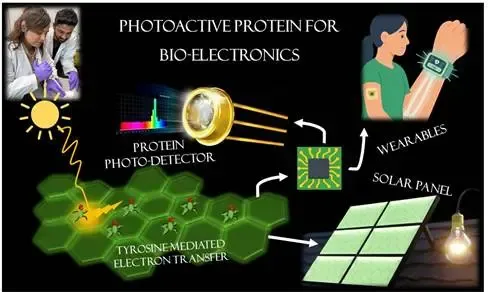
A pivotal aspect of this study is the use of Organic Electrochemical Transistors (OECT), a unique category of semiconductor devices that are well-suited for engaging with biological signals and fluids. In contrast to traditional rigid electronics, platforms based on OECT technology allow both electrical and biochemical sensing in flexible formats.
The HESTECH Lab is focused on designing low-power wearable sensors utilizing biocompatible hybrid semiconductor materials, which can be produced on thin, flexible substrates. This design makes them perfect for skin-conformal devices that facilitate continuous, non-invasive monitoring.
Dr. Moudgil elaborated that the team is investigating whether a single semiconductor platform can simultaneously capture both the electrical activities of the body and the biochemical markers associated with diseases.
With OECT technology, they are developing compact, flexible devices for monitoring heart activity, muscle responses, and disease-related biomarkers.
A significant application of this technology is in early disease screening. The research team is creating biochemical sensors capable of identifying clinically relevant biomarkers in biofluids like saliva, serum, and blood.
In the near future, such portable systems could be instrumental in point-of-care diagnostics in settings such as dental clinics, rural health camps, and mobile healthcare units.
Simultaneously, the lab is advancing wearable sensors for physical health monitoring, including soft ECG patches for cardiac evaluations, EMG sensors for tracking muscle activity, and sensors for pressure and temperature to identify early signs of pressure ulcers in vulnerable patients.
This technology also presents substantial potential for applications in defense and extreme environments. Flexible semiconductor sensors can be integrated into uniforms or wearable patches to monitor physiological stress indicators like cardiac load, dehydration, fatigue, heat stress, and muscle strain during training or operational missions.
Dr. Moudgil highlighted that in defense scenarios, such devices will facilitate real-time physiological monitoring of personnel, leading to improved decision-making, minimized stress-related injuries, and heightened mission preparedness.
He concluded by stating that IIT Jodhpur aims for its innovations to create tangible impacts in the real world, positing that semiconductor-based wearable technologies could lead to a future characterized by continuous, comfortable, and intelligent health monitoring.
With ongoing research and developmental efforts, this technology has the potential to greatly enhance access to diagnostics, promote preventive healthcare, and provide advanced monitoring solutions for both civilian and defense uses.
Point of View
I find the developments at IIT Jodhpur to be a promising leap forward in medical technology. The focus on accessible, continuous health monitoring is crucial, especially in a country where timely diagnosis can significantly alter health outcomes. This research embodies a proactive approach to healthcare that should be supported and expanded.
NationPress
22 Sept 2026
Frequently Asked Questions
What are flexible semiconductor devices?
Flexible semiconductor devices are advanced technology designed to monitor physiological and biochemical signals from the human body in real-time, enhancing health monitoring and early disease detection.
How do these sensors work?
These sensors utilize Organic Electrochemical Transistors (OECT) technology, allowing them to engage with biological signals and fluids efficiently, enabling both electrical and biochemical sensing.
What health metrics can these sensors track?
The sensors can track various health metrics, including heart rate, muscle activity, body temperature, and skin pressure.
What are the potential applications of this technology?
Potential applications include early disease screening, point-of-care diagnostics, and monitoring physiological stress indicators in defense and extreme environments.
What is the significance of this research?
This research aims to bridge the gap in accessible health monitoring, allowing for early detection of health issues and enhancing preventive healthcare.