IIT Jodhpur Researcher Pioneers Future Energy Solutions
Synopsis
Discover how Dr. Shahab Ahmad at IIT Jodhpur is revolutionizing energy technologies with groundbreaking research on advanced materials. This initiative could reshape energy generation and storage methods for a sustainable future.
Key Takeaways
Shahab Ahmad leads innovative research at IIT Jodhpur .
Focus on advanced materials for energy generation and storage.
Exploring metal halide perovskites for solar applications.
Developing high-performance battery technologies.
Creating integrated photo-battery solutions.
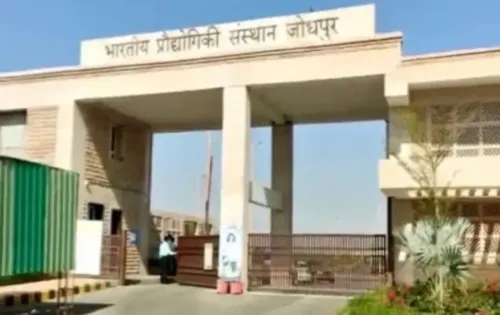
Jaipur, April 15 (NationPress) In a groundbreaking effort to tackle worldwide energy issues, Dr. Shahab Ahmad, an Associate Professor in the Department of Physics at IIT Jodhpur, spearheads innovative research focused on advanced energy materials that could revolutionize future energy generation and storage techniques.
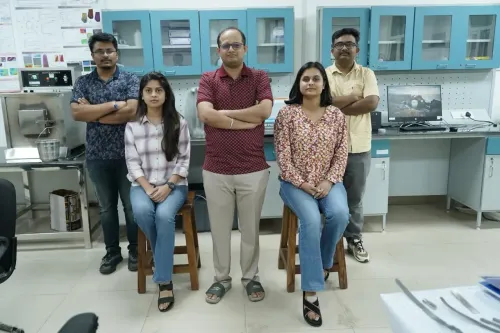
Operating from the Advanced Energy Materials Lab, founded in 2019, Dr. Ahmad and his team are exploring the convergence of physics, materials science, and engineering to create next-generation energy solutions. Their work encompasses highly efficient solar materials and cutting-edge batteries, including systems capable of harvesting and storing solar energy in a single device.
The research is driven by ambitious scientific inquiries: Can high-efficiency solar cells be produced using solution-processable semiconductors? Is it feasible to harvest and store solar energy within one material system? Can traditional batteries be made significantly more powerful than existing technologies? Dr. Ahmad's research is making steady progress toward addressing these vital questions.
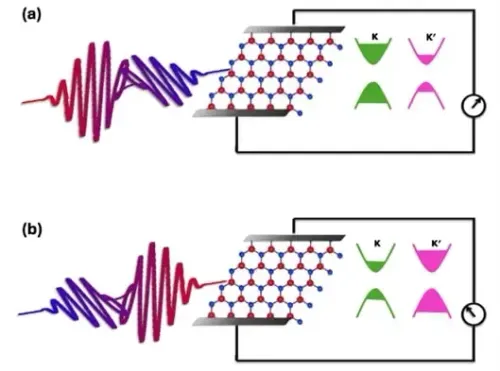
A primary focus of this investigation is on metal halide perovskites, emerging materials that are quickly gaining traction in solar energy and optoelectronic applications. These materials boast exceptional light-absorption capabilities and can be created through cost-effective, solution-based methods, making them ideal for solar cells, photodetectors, LEDs, and laser technologies.
The team at IIT Jodhpur is developing quasi-dimensional perovskites that merge high efficiency with enhanced stability, tackling a significant limitation of conventional bulk-phase perovskites. In light of the growing demand for energy storage in consumer electronics, electric vehicles, and grid applications, Dr. Ahmad's lab is advancing high-performance battery technologies.
Key areas of focus include improving lithium-ion batteries using advanced nanostructured materials, investigating next-generation systems like lithium-sulfur (Li-S) and zinc-ion batteries, and creating flexible batteries suitable for wearable and portable devices. A notable milestone achieved by the team is the development of sulfur cathodes utilizing carbon nanotube-based microstructures, which effectively mitigates the longstanding “shuttle effect” in Li-S batteries, greatly enhancing their efficiency and lifespan.
In a pioneering effort, the laboratory is working on photo-battery compact devices designed to simultaneously harvest solar energy and store it as electrochemical energy. This integrated approach simplifies traditional systems that require separate solar panels and batteries, cutting down on complexity, cost, and weight. This technology holds significant potential for applications in wearable electronics, off-grid IoT devices, sensors, drones, portable systems, and remote operations in space.
Dr. Shahab Ahmad stated, “Our objective is to create energy technologies that are not only efficient but also scalable, affordable, and environmentally sustainable. We aspire to develop solutions that can power remote areas, support portable devices, and lessen reliance on fossil fuels.”
He further highlighted that merging solar energy harvesting and storage into a single platform is both a technological breakthrough and a scientific challenge. As this technology remains in its early stages, it necessitates extensive research in material selection, fabrication methods, and device design for real-world utilization.
Dr. Ahmad's work signifies a crucial advancement toward improving energy security and fostering a sustainable future. By linking fundamental science with practical applications, the research at IIT Jodhpur has the potential to redefine global energy frameworks. With a strong focus on innovation, multidisciplinary collaboration, and societal impact, the Advanced Energy Materials Lab persistently pushes the limits of clean energy technologies, according to officials.
Point of View
Dr. Shahab Ahmad's research at IIT Jodhpur represents a vital progression in sustainable energy technologies. By bridging fundamental science with real-world applications, this initiative has the potential to significantly impact global energy systems and promote greater energy security.
NationPress
7 Oct 2026
Frequently Asked Questions
What is the focus of Dr. Shahab Ahmad's research?
Dr. Shahab Ahmad's research focuses on developing advanced energy materials that could revolutionize energy generation and storage, particularly through the use of metal halide perovskites and high-performance batteries.
What are metal halide perovskites?
Metal halide perovskites are emerging materials known for their exceptional light-absorption properties, making them suitable for applications in solar cells, photodetectors, and other optoelectronic technologies.
How is IIT Jodhpur addressing energy storage challenges?
IIT Jodhpur is developing advanced battery technologies, such as lithium-sulfur and zinc-ion batteries, and exploring innovative solutions like flexible batteries for portable devices.
What is a photo-battery?
A photo-battery is a compact device designed to simultaneously harvest solar energy and store it as electrochemical energy, reducing the need for separate solar panels and batteries.
Why is Dr. Ahmad's work significant?
Dr. Ahmad's research is significant as it aims to create energy solutions that are efficient, scalable, and environmentally sustainable, potentially transforming global energy systems.