Semiconductors and solar energy to drive India's growth: Padma Shri Prof Juzer Vasi
Synopsis
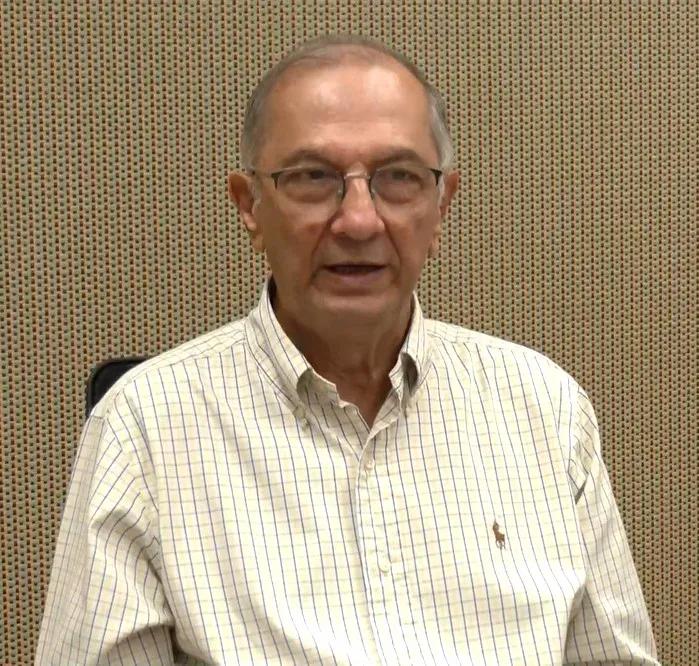
One of India's foremost semiconductor and photovoltaic researchers, Padma Shri Prof Juzer Vasi of IIT Bombay, says India's chip-making push is long overdue — and that semiconductors, solar energy, and AI together form the country's most critical growth frontier. His four-decade career lends rare credibility to the call.
Key Takeaways
Padma Shri Prof Juzer Vasi , Professor Emeritus at IIT Bombay , was conferred the Padma Shri for four decades of work in microelectronics and photovoltaics.
He backed PM Modi 's semiconductor hub initiative, saying India should have pursued chip-making years earlier.
Prof Vasi highlighted semiconductors as critical for defence electronics , where open-market procurement is often restricted.
He said India is emerging as a global leader in solar energy — in both deployment and manufacturing of solar cells and modules.
He urged India to accelerate its AI strategy, citing the country's existing talent base as a competitive advantage.
Padma Shri awardee Professor Juzer Vasi, Professor Emeritus at the Indian Institute of Technology (IIT) Bombay, has called for a decisive national push on semiconductor manufacturing and solar energy as the twin engines of India's economic growth over the coming decades. Speaking on the occasion of receiving the Padma Shri in the field of Science and Engineering, Prof Vasi said both sectors hold transformative potential that India must urgently harness.
A Career Rooted in Microelectronics and Photovoltaics
Prof Vasi has spent over four decades contributing to microelectronics and photovoltaics, with his involvement in semiconductors dating back to the late 1970s. The Padma Shri, one of India's highest civilian honours, recognised this sustained body of work. 'It was very unexpected, but I am honoured to receive it,' he said, describing the recognition as both surprising and deeply gratifying.
Why Semiconductors Are a Strategic Imperative
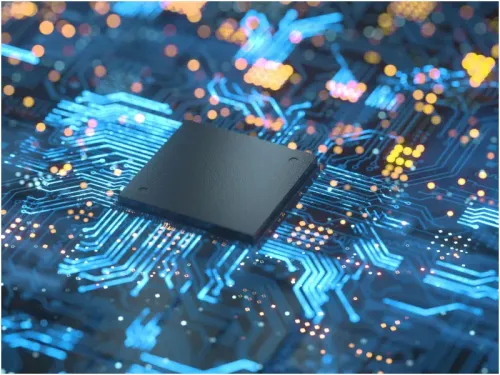
Prof Vasi extended unequivocal support to Prime Minister Narendra Modi's push to make India a global chip-manufacturing hub, while noting that the country should have prioritised this far earlier. 'I'm very happy that now there is a lot of emphasis on semiconductors, and that's happening in a very good way,' he said. He stressed that semiconductors are critical not just for consumer electronics but for defence applications — where supply chains are restricted and open-market procurement is often not feasible. 'Semiconductors are very important in this war situation and for the defence sector as well,' he noted, underlining the need for India to develop its own research base and domestic production lines in chip-making.
India's Rising Profile in Solar Energy
On solar energy, Prof Vasi described it as a sector through which any nation can build genuine energy security — provided it invests in the underlying technology. He pointed to solar modules and semiconductor solar cells as the critical components enabling large-scale energy capture. 'I'm glad to say that India is now emerging as one of the most important solar energy countries in the world, not only in terms of deployment, but also in terms of the manufacturing of solar cells and solar modules,' he said. This aligns with India's broader ambitions to lead the global clean energy transition.
AI Must Not Be Missed, Says Prof Vasi
Looking beyond hardware, Prof Vasi also flagged Artificial Intelligence (AI) as a domain India cannot afford to overlook. He argued that AI will reshape virtually every sector and that India possesses the talent required to compete at the highest level. 'As a country, we should speed up our involvement in AI... We need to have a very good plan on how to emerge as one of the world leaders in AI,' he remarked. This comes amid a global race for AI dominance in which India's deep pool of engineering and data science talent is increasingly seen as a strategic asset.
Prof Vasi's remarks carry particular weight given his decades at the frontier of semiconductor and photovoltaic research — and arrive at a moment when India is committing significant policy and financial capital to both sectors.
Point of View
Not the policy corridor. Yet his admission that India 'should have worked towards this years ago' is also an implicit indictment of the decades of neglect that left the country dependent on imported chips. The solar energy optimism is better grounded: India's manufacturing scale-up in modules is verifiable and accelerating. The AI call, however, risks becoming another aspirational headline unless paired with a concrete national framework — something Prof Vasi himself acknowledged is still needed.
NationPress
13 Oct 2026
Frequently Asked Questions
Who is Prof Juzer Vasi and why was he awarded the Padma Shri?
Prof Juzer Vasi is a Professor Emeritus at IIT Bombay who has spent over four decades in microelectronics and photovoltaics research, with work in semiconductors dating to the late 1970s. He was conferred the Padma Shri in the field of Science and Engineering in recognition of this sustained contribution.
What did Prof Vasi say about India's semiconductor ambitions?
Prof Vasi backed PM Modi's push to make India a chip-manufacturing hub, while saying the country should have prioritised this much earlier. He emphasised that semiconductors are vital for defence electronics, where open-market procurement is often not possible, and called for India to build its own research base and production lines.
How does Prof Vasi assess India's progress in solar energy?
He described India as emerging as one of the world's most important solar energy nations — not just in deployment but also in the manufacturing of solar cells and modules. He stressed that energy security through solar requires investing in the underlying semiconductor technology.
What did Prof Vasi say about Artificial Intelligence?
Prof Vasi said AI will impact virtually every sector and that India must not miss the opportunity. He called for a strong national plan to position India among global AI leaders, citing the country's existing engineering and data science talent as a key advantage.
Why does Prof Vasi's view on semiconductors and defence matter?
Prof Vasi noted that almost all defence electronics require semiconductors, and that some of these components are not readily available on open markets. This makes domestic chip-making a matter of national security, not just economic growth — a dimension often underplayed in mainstream coverage of India's semiconductor policy.