How is Dahod in Gujarat Transforming Early Childhood Education?
Click to start listening
Synopsis
In Gujarat's Dahod, a pioneering program aims to revolutionize early childhood education. By focusing on play-based learning for children aged three to six, the initiative engages young minds and nurtures their cognitive skills for a brighter future. This unique approach could serve as a model for other regions seeking to improve early education.
Key Takeaways
- 85% of brain development happens before age six.
- Dahod’s 'Pa Pa Pagli' Project fosters play-based learning.
- Engages children aged three to six in holistic development.
- Over 3,000 centers involved in the initiative.
- Backed by Unicef India and Gujarat government.
Gandhinagar, Dec 21 (NationPress) It is widely recognized that over 85 percent of a child's total brain development occurs before they reach the age of six. This emphasizes the critical importance of engaging with these formative years to ensure robust brain growth and development as they progress.
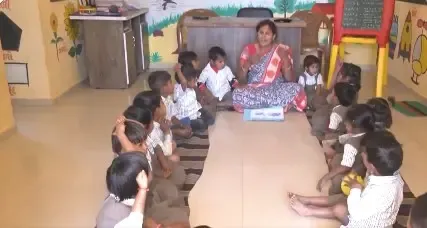
In the Dahod district of Gujarat, forward-thinking measures have been implemented in numerous Anganwadi centers to introduce children to pre-school learning methodologies while nurturing their cognitive skills.
As part of the initiative, children aged three to six are involved in a games-and-class model through the 'Pa Pa Pagli' Project, where Anganwadi staff incorporate various games to impart essential life lessons.
At the Anganwadi center in Jorwani village within Dahod, a solid foundation for a promising future is being built for these youngsters.
The 'Pa Pa Pagli Yojana' presents an innovative approach to teaching children aged three to six through engaging play-based activities.
This initiative allows children to take part in diverse activities alongside their educational pursuits.
Importantly, the 'Pa Pa Pagli' Project stands as a key initiative from the Gujarat government's Women and Child Development department, backed by Unicef India, aiming to enhance the quality of pre-school education in Anganwadis for children aged three to six.
The early childhood education model in Dahod has gained significant popularity.
Anganwadi centers not only provide nutrition and health services but also play a vital role in a child's growth, offering daily training through various games and interactive videos.
Dahod is recognized as a less developed district in Gujarat, facing a high rate of school dropouts.
This initiative has led to a noticeable increase in confidence and learning capabilities among children in over 3,000 Anganwadi centers throughout the district.
This combination of playful learning and pre-school education could serve as a blueprint for other regions to follow.
Point of View
The 'Pa Pa Pagli' initiative in Dahod exemplifies a crucial investment in our future through early childhood education. By harnessing innovative learning methods, this program has the potential to significantly uplift educational standards in underprivileged areas, setting a precedent for national development.
NationPress
22/12/2025
Frequently Asked Questions
What is the 'Pa Pa Pagli' Project?
The 'Pa Pa Pagli' Project is an initiative in Gujarat's Dahod district that focuses on early childhood education through play-based activities for children aged three to six.
Why is early childhood education important?
Early childhood education is vital as it lays the groundwork for cognitive, social, and emotional development in children, particularly since over 85% of brain development occurs before age six.
How many Anganwadi centers are involved in this initiative?
The initiative is implemented in over 3,000 Anganwadi centers across Dahod district.
Who supports the 'Pa Pa Pagli' initiative?
The project is supported by the Gujarat government's Women and Child Development department and Unicef India.
What outcomes have been observed from this initiative?
Significant improvements in children's confidence and learning abilities have been observed as a result of the program.