Sitharaman at G20 Asheville: India pushes EU FTA, World Bank deals
Synopsis
At the G20 in Asheville, Finance Minister Nirmala Sitharaman ran a diplomatic marathon — pressing the EU on a long-pending free trade deal, unlocking a $1.5 billion World Bank financing tranche, pitching a Global Digital Public Infrastructure Hub, and pushing for QR payment interoperability with South Korea. The breadth of the agenda signals India's intent to use every multilateral forum as a lever for economic statecraft.
Key Takeaways
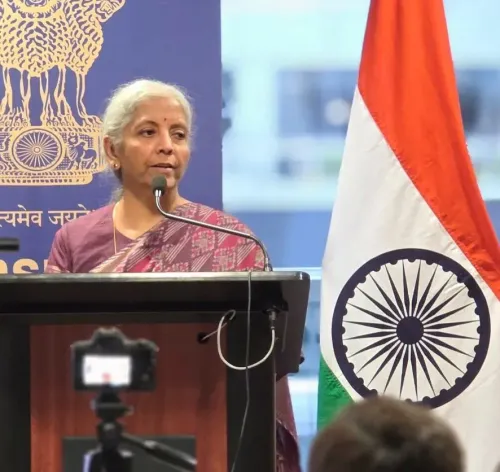
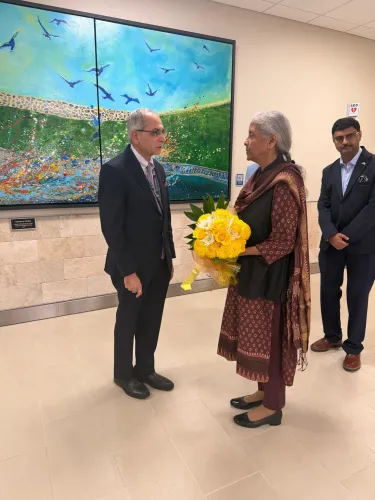
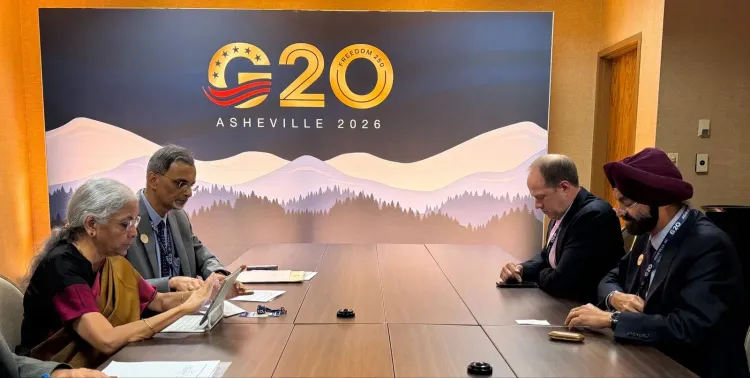
Finance Minister Nirmala Sitharaman held multiple bilateral meetings at the G20 Finance Ministers' Meeting in Asheville, North Carolina on 2 September .
India and the EU reaffirmed commitment to advance the India-EU Free Trade Agreement and Investment Protection Agreement , with cooperation extended to AI , FinTech , and critical minerals .
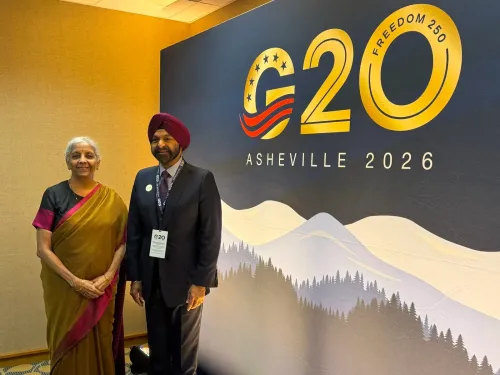
World Bank President Ajay Banga discussed $1.5 billion in Development Policy Financing and the proposed Global Digital Public Infrastructure Knowledge Hub in India.
IMF Managing Director Kristalina Georgieva acknowledged India's strong economic performance; Sitharaman called for better surveillance frameworks for emerging economies.
India and South Korea agreed to advance the India-Korea Finance Ministers' Meeting and explore QR payment interoperability between the two countries.
Sitharaman also held meetings with finance ministers of Russia , Qatar , and Poland covering energy, investment, defence, and multilateral development banks.
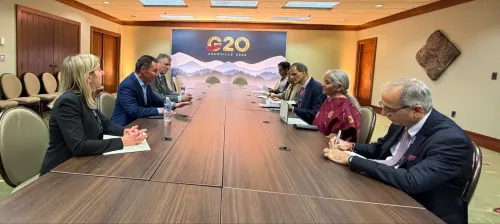
Finance Minister Nirmala Sitharaman used the sidelines of the G20 Finance Ministers and Central Bank Governors Meeting in Asheville, North Carolina, on 2 September to pursue a sweeping agenda of bilateral economic diplomacy — holding back-to-back meetings with the European Union, the World Bank, the International Monetary Fund, South Korea, Russia, Qatar, and Poland to advance investment, supply chain resilience, and technology cooperation.
India-EU: Trade Agreement and Tech Cooperation
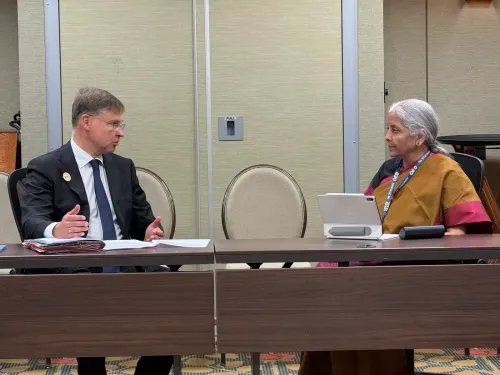
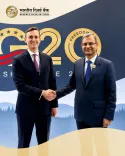
Sitharaman met European Commissioner for Economy and Financial Affairs Valdis Dombrovskis to advance the India-EU Economic and Financial Partnership. Discussions covered the ongoing negotiations for the India-EU Free Trade Agreement and a companion Investment Protection Agreement, with both sides reaffirming their commitment to move the talks forward.
A significant strand of the conversation focused on critical raw materials and diversified supply chains. Sitharaman underscored that India seeks to build processing and value-addition capabilities — not merely secure sourcing access — signalling a more assertive posture in the global critical-minerals race. The two sides also agreed to deepen cooperation in FinTech, artificial intelligence, and generative AI, and to foster closer ties between Indian and European start-ups. Their engagement is additionally structured through the Trade and Technology Council and a macroeconomic dialogue channel.
World Bank: $1.5 Billion Financing and a Digital Hub
In her meeting with World Bank President Ajay Banga, Sitharaman welcomed the speedy processing of $1.5 billion in Development Policy Financing for India. She also acknowledged the International Finance Corporation's support to micro, small and medium enterprises channelled through the Small Industries Development Bank of India (SIDBI).
The two discussed expanding the role of the Multilateral Investment Guarantee Agency (MIGA) in India, with its guarantees potentially deepening corporate, infrastructure, and municipal bond markets while mobilising private capital. Political risk insurance for Indian companies investing abroad and credit enhancement for infrastructure projects were also on the table.
Notably, Sitharaman raised India's initiative — developed in partnership with the World Bank Group — to establish a Global Digital Public Infrastructure Knowledge Hub on Indian soil. The hub could explore technology applications in sectors including agriculture. Tourism destination development under the new India-World Bank Group Country Partnership Framework — combining policy support, infrastructure, private investment, and guarantees — was also discussed.
IMF: Growth Outlook and Surveillance Frameworks
Sitharaman and IMF Managing Director Kristalina Georgieva reviewed the global economic outlook and India's growth trajectory, according to a media statement. Georgieva acknowledged India's strong economic performance and the resilience its economy has built over recent years.
The Finance Minister pressed the case for evidence-based surveillance frameworks that better capture structural shifts in emerging market and developing economies — a long-standing concern among the Global South about how multilateral institutions assess non-Western growth models. The two also discussed IMF initiatives to strengthen institutional capacity, policymaking, and statistical systems.
South Korea, Russia, Qatar, Poland: Bilateral Priorities
Sitharaman's meeting with South Korean Deputy Prime Minister and Finance Minister Koo Yun-cheol centred on investment, critical minerals, and resilient supply chains. Both sides agreed to advance working-level consultations ahead of the India-Korea Finance Ministers' Meeting. India welcomed greater Korean investment in emerging sectors and proposed stronger cooperation through the National Investment and Infrastructure Fund (NIIF). A concessional credit line for infrastructure and green-transition projects was also floated, alongside efforts to make India and South Korea's QR-based payment systems interoperable — a move that could ease transactions for travellers and strengthen commercial ties.
In separate engagements, Sitharaman discussed multilateral development banks with Russian Finance Minister Anton Siluanov, investment and energy cooperation with Qatari Finance Minister Ali bin Ahmed Al Kuwari, and trade, defence, energy security, and emerging technologies with Polish Finance Minister Andrzej Domanski.
The Bigger Picture
The Asheville engagements reflect India's increasingly multi-directional economic diplomacy — simultaneously courting Western institutional capital, deepening ties with East Asian manufacturing partners, and maintaining dialogue with economies such as Russia and Qatar. With the India-EU Free Trade Agreement still under negotiation and global supply chains being actively restructured, the outcomes of these discussions will be closely tracked by industry and investors in the months ahead.
Point of View
Lobbying for a bigger MIGA footprint, and pitching India as the home for a global digital infrastructure hub. Yet the breadth of the agenda also raises a familiar question: can India convert high-level bilateral momentum into signed agreements and disbursed capital? The India-EU FTA has been in negotiation for years, and the gap between ministerial 'commitment' and concluded text remains wide. The critical-minerals push is strategically sound, but Sitharaman's insistence on value-addition over mere sourcing will require domestic processing capacity that does not yet exist at scale. The QR payment interoperability proposal with South Korea is the most immediately actionable item on the list — and the one most likely to show results before the next G20 cycle.
NationPress
3 Sept 2026
Frequently Asked Questions
What did Nirmala Sitharaman discuss at the G20 in Asheville?
Finance Minister Nirmala Sitharaman held a series of bilateral meetings at the G20 Finance Ministers and Central Bank Governors Meeting in Asheville, North Carolina, on 2 September, covering the India-EU Free Trade Agreement, a $1.5 billion World Bank financing package, IMF surveillance frameworks, and investment and supply chain cooperation with South Korea, Russia, Qatar, and Poland.
What is the India-EU Free Trade Agreement and where do negotiations stand?
The India-EU Free Trade Agreement is a broad trade and investment pact under negotiation between India and the European Union, covering market access, regulatory standards, and supply chain resilience. Both sides reaffirmed at Asheville their commitment to advance the negotiations, though no timeline for conclusion was announced.
What was agreed with the World Bank at the G20 meeting?
Sitharaman welcomed the World Bank's speedy processing of $1.5 billion in Development Policy Financing for India and discussed expanding MIGA's role to deepen bond markets and mobilise private capital. The two sides also discussed establishing a Global Digital Public Infrastructure Knowledge Hub in India under the new India-World Bank Group Country Partnership Framework.
What did India and South Korea agree on at the Asheville G20?
India and South Korea agreed to advance working-level consultations for the India-Korea Finance Ministers' Meeting and discussed a concessional credit line for infrastructure and green-transition projects. They also reviewed efforts to make their respective QR-based payment systems interoperable to ease travel and strengthen commercial ties.
Why did Sitharaman stress value-addition in critical minerals talks?
Sitharaman emphasised that India wants to build domestic processing and value-addition capabilities for critical minerals, not merely secure sourcing agreements. This positions India to capture more of the supply-chain value in sectors such as electric vehicles and clean energy, rather than exporting raw or semi-processed materials.