How are India and the EU Strengthening Their Defence and Security Partnership?
Synopsis
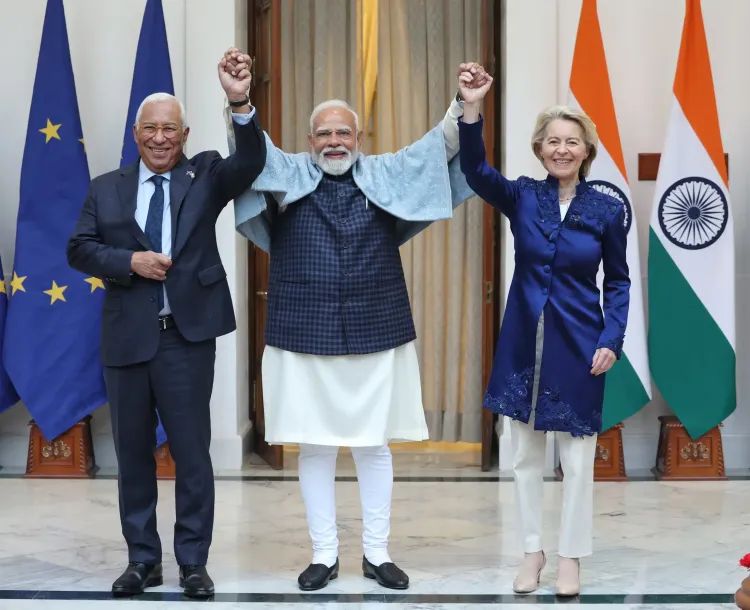
On January 27, PM Modi, Antonio Costa, and Ursula von der Leyen announced a significant escalation in the India-EU Strategic Partnership. Focused on shared values, they pledged to tackle pressing global issues like terrorism, security threats, and climate change, marking a new chapter in international collaboration.
Key Takeaways
Strategic commitment to enhance India-EU relations.
Focus on combating terrorism and security threats.
Emphasis on sustainable development and climate action.
Support for reforming the UN Security Council.
Cooperation on the Indo-Pacific region highlighted.
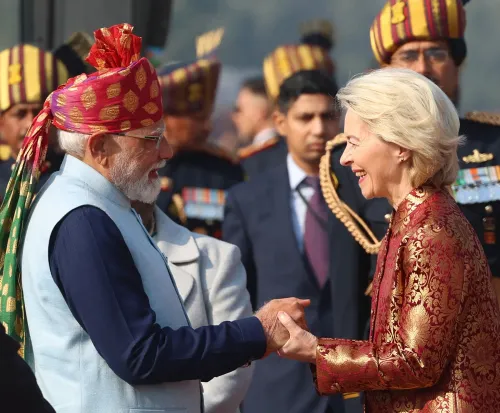
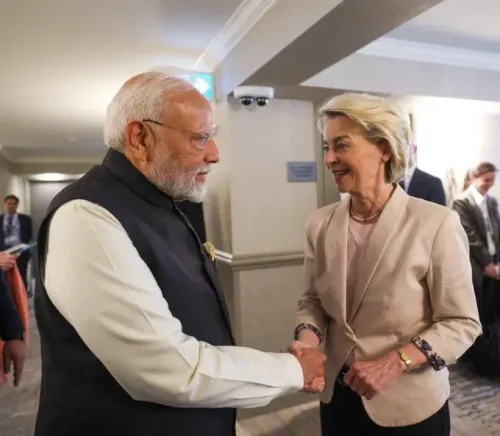
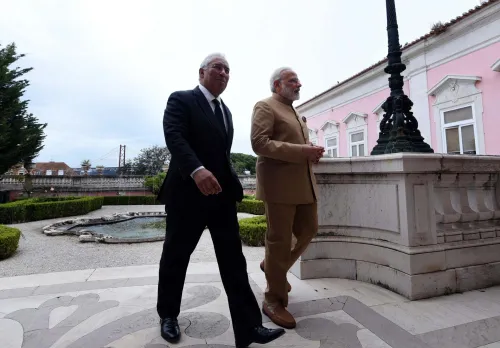
New Delhi, Jan 27 (NationPress) Prime Minister Narendra Modi, European Council President Antonio Costa, and European Commission President Ursula von der Leyen emphasized their determination to elevate the India–EU Strategic Partnership to new heights grounded in shared values and principles such as democracy, human rights, pluralism, the rule of law, and a rules-based international order centered around the UN.
The leaders co-chaired the 16th India–EU Summit in New Delhi, pledging to confront security challenges, foster inclusive and sustainable growth, bolster economic resilience and security, advance climate initiatives, and accelerate progress on the Sustainable Development Goals, as detailed in a Joint Statement released after their extensive discussions.
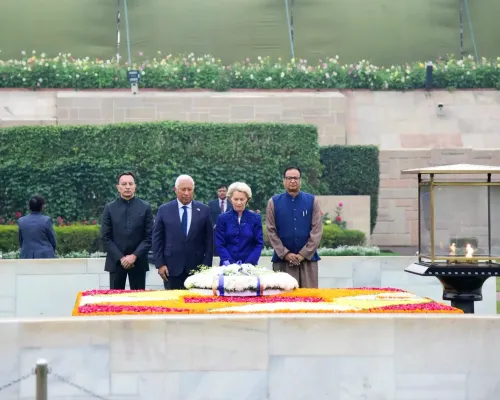
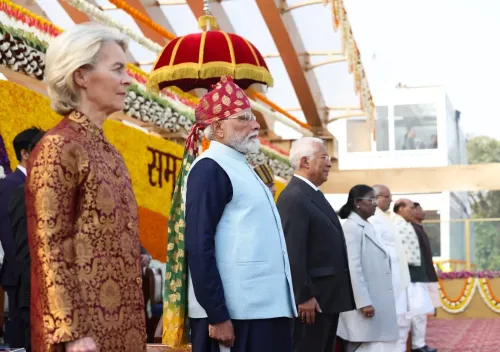
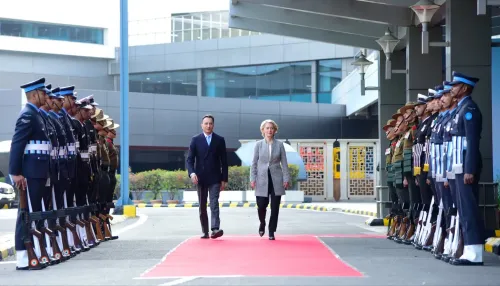
Antonio Costa and Ursula von der Leyen are on a State Visit to India at the invitation of PM Modi as the Chief Guests for the 77th Republic Day. They are accompanied by a high-level delegation, including Kaja Kallas, High Representative for Foreign Affairs and Security Policy, and Maros Sefcovic, Trade Commissioner.
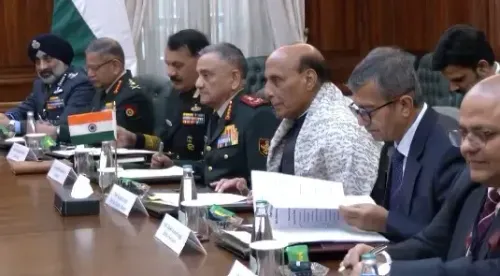
The leaders celebrated the signing of the India–EU Security and Defence Partnership, marking the first comprehensive defence and security framework between the two sides, aimed at enhancing cooperation in areas such as maritime security, defence technology, cyber threats, space, and counter-terrorism. They also addressed the initiation of negotiations on a Security of Information Agreement to facilitate the sharing of classified information and strengthen collaboration in security and defence domains.
They reaffirmed the significance of an effective multilateral system, with the UN at its core, and emphasized the need for a comprehensive reform of the UN Security Council to ensure it is more representative, inclusive, transparent, and accountable, reflecting contemporary geopolitical realities.
According to the Joint Statement, the leaders highlighted the importance of close cooperation on regional and global security issues, recognizing the interconnectedness of security and prosperity in both Europe and the Indo-Pacific.
The sides reiterated their commitment to promoting a free, open, peaceful, and prosperous Indo-Pacific in accordance with international law, including UNCLOS, acknowledging their respective roles in the region. They welcomed the upcoming India-EU Consultations on the Indo-Pacific in New Delhi and anticipated collaborative efforts in the Indo-Pacific Oceans Initiative (IPOI) and within the Indian Ocean Rim Association (IORA) under India's Chairmanship.
On the situation in Ukraine, both sides expressed concern over the ongoing conflict, which continues to inflict significant human suffering and has global ramifications. They reaffirmed their support for achieving a comprehensive, just, and lasting peace in Ukraine through dialogue and diplomacy, grounded in the principles of the UN Charter and international law, including independence, sovereignty, and territorial integrity.
Discussions also covered recent developments of concern in Iran and the surrounding region, emphasizing the importance of dialogue and diplomacy for peaceful resolutions.
The leaders acknowledged the adoption of UN Security Council Resolution 2803 on 17 November 2025, which welcomes the establishment of the Board of Peace and authorizes an International Stabilisation Force as part of the Comprehensive Plan to resolve the Gaza conflict. They urged all parties to fully implement the resolution in accordance with international law and relevant UN Security Council resolutions, reiterating their commitment to efforts toward a just and durable peace and unrestricted humanitarian access.
The leaders condemned terrorism and violent extremism unequivocally and called for coordinated international efforts to combat terrorism comprehensively and sustainably, in alignment with international law. They agreed to enhance cooperation to counter radicalization, combat terrorist financing, promote international anti-money laundering standards, prevent the misuse of new technologies for terrorist activities, and address terrorist recruitment. They condemned recent terrorist attacks in Pahalgam, Jammu and Kashmir, and near the Red Fort in New Delhi.
This marks the first visit by EU leaders as Guests of Honour for the Republic Day, symbolizing the strengthening ties, depth, and dynamism in India–EU relations, and their joint commitment to shaping a resilient multipolar global order that fosters peace, stability, economic growth, and sustainable development.
The visit follows the historic trip of the European Union College of Commissioners led by President von der Leyen to India in February 2025.
Point of View
Showcasing India's proactive approach in addressing global security concerns while enhancing its strategic partnerships. As a national editor in chief, I emphasize the importance of these collaborations in promoting peace and stability in an increasingly interconnected world.
NationPress
10 Sept 2026
Frequently Asked Questions
What is the purpose of the India-EU Security and Defence Partnership?
The India-EU Security and Defence Partnership aims to enhance cooperation on maritime security, defence industry, cyber threats, and counter-terrorism among other areas.
How does this partnership address terrorism?
The partnership includes measures to combat radicalization, finance terrorism, and prevent the misuse of technology for terrorist purposes.
What are the shared values guiding the India-EU partnership?
The partnership is grounded in shared values such as democracy, human rights, pluralism, and the rule of law.
How does this partnership affect the Indo-Pacific region?
The partnership promotes a free, open, peaceful, and prosperous Indo-Pacific, recognizing the interlinked security and prosperity of Europe and the region.
What was discussed regarding the Ukraine conflict?
The leaders expressed concern over the ongoing war in Ukraine, reaffirming their support for a comprehensive peace based on the UN Charter.