Does India Have Grounds to Point Out Pakistan's Treatment of Minorities?

Synopsis
In a powerful statement, India's Ministry of External Affairs rebukes Pakistan's comments on minority violence, highlighting its own dismal record of minority repression. This ongoing diplomatic tension raises questions about moral authority in addressing human rights issues.
Key Takeaways
India's MEA rejects Pakistan's claims on minority violence.
Pakistan's history of minority persecution is highlighted.
Recent statistics show alarming trends in minority treatment in Pakistan.
Diplomatic tensions continue over human rights issues.
Both nations face internal challenges regarding minority rights.
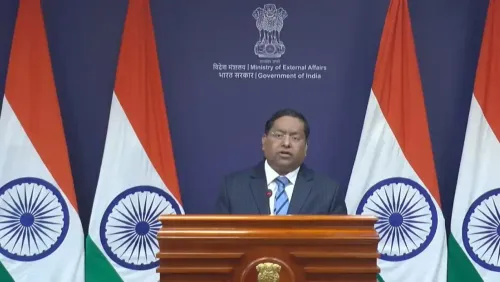
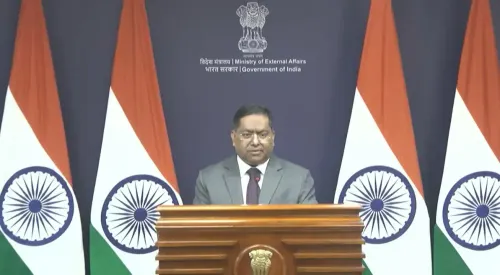
New Delhi, Dec 29 (NationPress) The Ministry of External Affairs (MEA) firmly dismissed Islamabad's comments regarding violence against minorities in India, emphasizing Pakistan's deplorable history of persecuting religious minorities.
"We reject the statements from a nation whose shocking track record in this area is well-documented. The systematic victimization of minorities across various faiths in Pakistan is a recognized reality. No amount of deflection will obscure this truth," declared the MEA in response to the remarks made by the spokesperson of the Pakistani Ministry of Foreign Affairs.
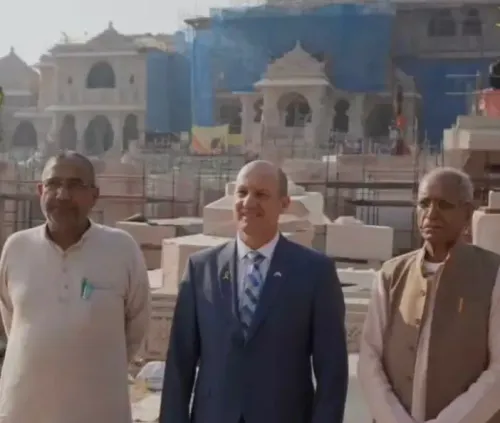
Last month, India criticized Pakistan over its comments regarding flag hoisting at the Ram Janmabhoomi Temple in Ayodhya, making it clear that Islamabad lacks the moral authority to admonish others, given its tainted record of bigotry, oppression, and systematic abuse of its minorities.
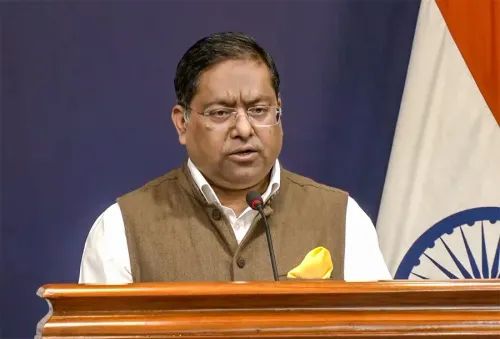
During a weekly media briefing, MEA spokesperson Randhir Jaiswal stated that Pakistan ought to concentrate on its own atrocious human rights situation.
In response to inquiries about the Pakistani Foreign Ministry's comments on the flag hoisting at the Ram Janmabhoomi Temple in Uttar Pradesh's Ayodhya, Jaiswal replied, "We have reviewed the reported remarks and dismiss them with the disdain they warrant. As a country with a shameful history of oppression and systemic mistreatment of its minorities, Pakistan has no right to lecture others. Instead of delivering hypocritical sermons, Pakistan should reflect on its own deplorable human rights record."
A recent report from the New Delhi-based 'International Centre for Peace Studies' underscored the persecution of minorities in Pakistan, notably the ongoing portrayal of Hindus as the "other," and the exploitation of Islam and anti-India sentiment for political gain, which highlights the glaring contradictions within the country's national identity.
According to the Lahore-based Centre for Social Justice, the report noted that 344 blasphemy cases were recorded in 2024, and between 2021 and 2024, at least 421 minority women and girls — primarily Hindus and Christians, with 71% being minors — experienced forced conversions.
Point of View
I believe it is crucial to present a balanced perspective. Both India and Pakistan have their own challenges regarding minority rights. However, it is vital for nations to address their internal issues before critiquing others. This ongoing dialogue reflects broader geopolitical tensions and the need for mutual respect and accountability.
NationPress
24 Sept 2026
Frequently Asked Questions
What prompted India's response to Pakistan's remarks?
India's Ministry of External Affairs responded to Pakistan's comments regarding violence against minorities, emphasizing Pakistan's own poor record on human rights.
What does the report from the International Centre for Peace Studies indicate?
The report highlights the continuous persecution of minorities in Pakistan, particularly Hindus, and the manipulation of religious sentiments for political gain.
How many blasphemy cases were documented in Pakistan recently?
The Lahore-based Centre for Social Justice reported 344 blasphemy cases in 2024.
What percentage of forced conversions involved minors?
71% of the reported forced conversions involved minors, primarily from Hindu and Christian backgrounds.
What is the significance of the diplomatic exchange?
This exchange underscores the ongoing tensions between India and Pakistan regarding human rights and minority treatment, as both nations grapple with their internal narratives.