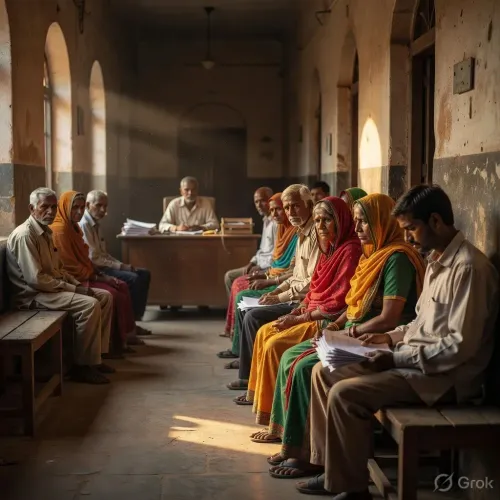
Home Ministry expands FRRO network to all state capitals by 2027
Synopsis
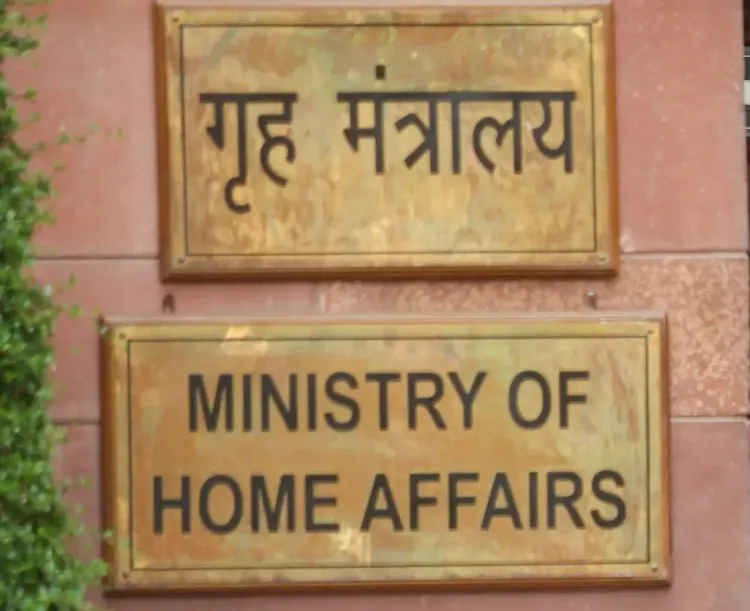
India's Foreigners Regional Registration Office network has grown to 20 locations, with Home Minister Amit Shah directing full state capital coverage by 2027. Five new offices have opened since 2025, including in northeastern capitals like Aizawl and Kohima — a quiet but significant restructuring of how India manages the rising flow of foreign visitors and residents.
Key Takeaways
Home Minister Amit Shah has directed establishment of FRROs in all state capitals by 2027 .
India now has 20 FRRO offices , up from a smaller network that left several capitals under distant jurisdictions.
Five new FRROs have been set up since 2025 , including offices in Jaipur, Chandigarh, Guwahati, Aizawl , and Amravati .
Three more offices — in Kohima, Agartala , and Bhubaneswar — have been recently notified.
The expansion aims to improve service access for foreign nationals visiting India for tourism, medical treatment , and education , while strengthening immigration compliance.
The Union Home Ministry on Monday, 2 November 2026 announced a significant expansion of the Foreigners Regional Registration Office (FRRO) network across India, with Home Minister Amit Shah directing that an FRRO be established in every state capital by 2027. The move is aimed at improving service accessibility for foreign nationals, strengthening regulatory compliance, and positioning India as a more attractive destination for tourism, medical care, and education.
Scale of Expansion
The total number of FRRO offices in India has now risen to 20, up from a smaller network that left several state capitals dependent on offices in distant cities. Since 2025, five new FRROs have been set up in state capitals. Three offices — at Jaipur (Rajasthan), Chandigarh (Punjab and Haryana), and Guwahati (Assam) — were established in 2025, previously falling under the jurisdiction of the FRRO offices at Delhi, Amritsar, and Kolkata, respectively.
In 2026, two additional offices were set up in Aizawl (Mizoram) and Amravati (Andhra Pradesh). Aizawl had previously been handled by the FRRO in Kolkata, while Amravati was under the jurisdiction of the FRRO in Hyderabad.
Most Recent Additions
Three further FRRO offices have recently been notified: Kohima (Nagaland), Agartala (Tripura), and Bhubaneswar (Odisha). Prior to this, Kohima and Agartala were covered by FRRO Kolkata, and Bhubaneswar fell under FRRO Hyderabad. These additions mark a clear policy shift towards decentralising immigration services to the country's northeastern and eastern periphery.
Full List of FRRO Locations
The 20 FRRO offices are now located at Ahmedabad, Amravati, Amritsar, Aizawl, Agartala, Bengaluru, Bhubaneswar, Calicut, Chennai, Cochin, Chandigarh, Delhi, Guwahati, Hyderabad, Kolkata, Kohima, Kozhikode, Lucknow, Mumbai, and Trivandrum.
Why the Expansion Matters
According to the Ministry's statement, there has been a substantial rise in the number of foreign nationals visiting India for tourism, medical treatment, and education. The FRRO framework serves a dual purpose: facilitating legitimate travel and stay for foreigners, and ensuring effective enforcement of immigration laws and national security requirements. The expansion reduces the geographical burden on foreign nationals, who previously had to register with offices located in different states. This comes amid broader government efforts to streamline visa and immigration services, including the e-FRRO portal launched in earlier years to enable online registration. Notably, the addition of offices in smaller state capitals such as Aizawl, Kohima, and Agartala signals a focus on regions that have seen increased cross-border movement and require tighter administrative oversight.
What Comes Next
With the current tally at 20 offices, the remaining state capitals without dedicated FRROs are expected to be covered before the 2027 deadline set by Home Minister Shah. Officials have indicated the expansion will continue to prioritise both service delivery and regulatory enforcement in equal measure.
Point of View
But its real test lies in execution. Establishing offices in state capitals is a necessary first step; staffing them adequately and integrating them with the e-FRRO digital backend is the harder half. The inclusion of northeastern capitals — Aizawl, Kohima, Agartala — is strategically notable given the region's sensitivity to cross-border movement. What the announcement does not address is the current backlog of registration and visa extension requests at existing offices, which has been a persistent grievance among foreign nationals and diplomatic missions alike. Decentralisation alone does not resolve capacity constraints.
NationPress
2 Nov 2026
Frequently Asked Questions
What is a Foreigners Regional Registration Office (FRRO)?
An FRRO is a government office under the Union Home Ministry responsible for registering and regulating foreign nationals residing in India beyond a specified period. It handles visa extensions, residential permits, and immigration compliance, and serves as the primary point of contact for foreign nationals with Indian immigration authorities.
How many FRRO offices does India now have?
India now has 20 FRRO offices following recent expansions. They are located in Ahmedabad, Amravati, Amritsar, Aizawl, Agartala, Bengaluru, Bhubaneswar, Calicut, Chennai, Cochin, Chandigarh, Delhi, Guwahati, Hyderabad, Kolkata, Kohima, Kozhikode, Lucknow, Mumbai, and Trivandrum.
Which new FRRO offices were opened since 2025?
Five new FRRO offices have been set up since 2025. Jaipur, Chandigarh, and Guwahati were established in 2025, followed by Aizawl and Amravati in 2026. Additionally, Kohima, Agartala, and Bhubaneswar have recently been notified as new FRRO locations.
Why is the government expanding the FRRO network?
The Home Ministry cited a substantial increase in foreign nationals visiting India for tourism, medical treatment, and education as the primary reason. The expansion is intended to improve service accessibility, reduce the jurisdictional burden on existing offices, and strengthen enforcement of immigration laws and security requirements.
When will all state capitals have an FRRO office?
Home Minister Amit Shah has directed that FRRO offices be established in all state capitals by 2027. The government is progressively working towards this deadline, with the current count standing at 20 offices nationwide.