Mandaviya Hails India's First Hydrogen Train Launch
Synopsis
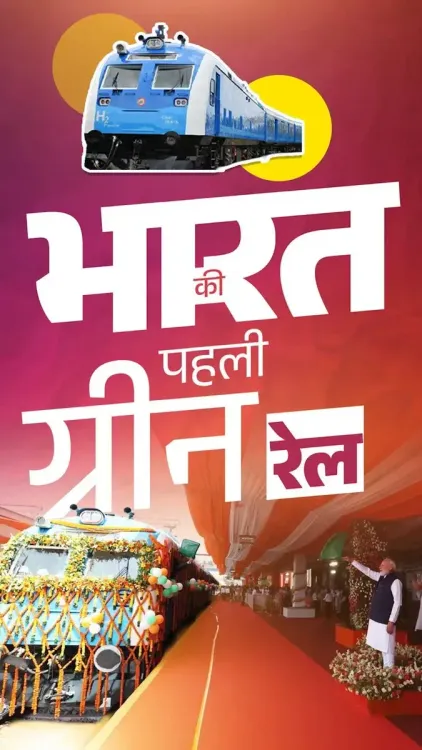
Union Minister Mansukh Mandaviya on 17 July 2026 shared footage of India's first hydrogen-powered train on X, calling it the world's most powerful. The development marks a milestone in Indian Railways' net-zero roadmap and the National Green Hydrogen Mission's push into green mobility.
Key Takeaways
Mansukh Mandaviya shared a video on 17 July 2026 showcasing India's first hydrogen-powered train.
The minister described it as the 'world's most powerful' hydrogen train in his post.
Indian Railways has been developing hydrogen fuel-cell trains since 2021 as part of its net-zero emissions roadmap.
The project is backed by the National Green Hydrogen Mission (approved 2023 ) and received budgetary support in the Union Budget 2023-24 .
Hydrogen trains are seen as a solution for routes where overhead electrification is not viable, supporting India's 2070 net-zero target .
Commercial rollout timelines, designated routes, and further technology partnerships remain to be announced.
Union Labour and Sports Minister Mansukh Mandaviya on Friday, 17 July 2026, shared a video on X celebrating what he described as the world's most powerful hydrogen train — India's first hydrogen-powered train — marking a significant milestone in the country's green mobility push.
Posting in Hindi, the minister wrote: 'दुनिया की सबसे ताकतवर, भारत की पहली हाइड्रोजन ट्रेन...' ('The world's most powerful, India's first hydrogen train...'), sharing footage of the train in what appears to be an official showcase of the indigenously developed technology.
Context
Indian Railways has been working toward hydrogen fuel-cell trains as part of its broader net-zero emissions roadmap, a goal first signalled in 2021 when the national carrier announced plans to introduce such trains across its network. The post by Mandaviya signals that this long-anticipated project has now reached a demonstrable stage, with a train ready to be publicly showcased.
The minister's decision to amplify the development reflects a cross-ministerial push to highlight indigenously developed green technologies — a pattern consistent with the government's broader communication strategy around infrastructure and climate action.
Policy Backdrop
The hydrogen train initiative sits within the framework of the National Green Hydrogen Mission, a central scheme approved in 2023 to scale green hydrogen production and its application across transport and industrial sectors. The Union Budget 2023-24 had earmarked budgetary support for pilot hydrogen train projects under the green mobility umbrella.
India's railway electrification drive has already reduced diesel dependence on major trunk routes, but hydrogen trains are seen as the next frontier — particularly for heritage lines, hilly terrain, and regional routes where overhead electrification is difficult or uneconomical. The push aligns with India's 2070 net-zero target.
Stakeholders and Impact
For railway passengers, hydrogen trains promise quieter, cleaner journeys with zero direct emissions at the point of operation. For renewable energy firms and electrolyser manufacturers, a scaled rollout would create significant demand for green hydrogen supply chains, potentially unlocking industrial investment across states.
The development also carries strategic importance: a domestically developed hydrogen train would reduce reliance on imported rolling stock technology and position India as a potential exporter of green rail solutions to other emerging economies.
What's Next
Attention will now turn to the commercial rollout timeline — which specific routes are designated for hydrogen train operations, how many rakes are planned in the first phase, and whether additional budget allocations or technology partnerships under the National Green Hydrogen Mission will be announced to support scale-up.
Further clarity on the train's technical specifications, the source of hydrogen fuel, and the infrastructure required at stations will be critical to assessing how quickly this milestone can translate into a passenger-ready service. The development positions Indian Railways as a serious player in global green transport, with momentum likely to build ahead of international climate reviews.
Point of View
Amplifying a technological milestone at a moment when India's green credentials are under international scrutiny ahead of climate reviews. The hydrogen train fits neatly into a broader narrative the ruling establishment has been building — that India is not merely a passive participant in the energy transition but an active innovator. Cross-ministerial promotion of railway technology by a Labour and Sports Minister underscores how the government is mobilising its entire cabinet to project this story. The real test, however, will be the speed of commercial deployment and whether the green hydrogen supply chain can scale to make the economics viable.
NationPress
16 Oct 2026
Frequently Asked Questions
What is India's first hydrogen train?
India's first hydrogen train is a fuel-cell-powered locomotive developed under Indian Railways' net-zero emissions programme, showcased publicly in July 2026 and described by Minister Mansukh Mandaviya as the world's most powerful hydrogen train.
Which ministry is responsible for the hydrogen train project in India?
The hydrogen train project falls under the Ministry of Railways, supported by the National Green Hydrogen Mission. Minister Mansukh Mandaviya, who holds the Labour and Sports portfolios, amplified the announcement reflecting cross-government promotion of the initiative.
What is the National Green Hydrogen Mission?
The National Green Hydrogen Mission is a central government scheme approved in 2023 aimed at scaling up green hydrogen production and its use across transport, industry, and energy sectors in India.
When did Indian Railways start working on hydrogen trains?
Indian Railways announced plans to introduce hydrogen fuel-cell trains in 2021 as part of its broader roadmap to achieve net-zero emissions, with pilot projects receiving budgetary support in the Union Budget 2023-24.
Which routes will India's hydrogen train run on?
Specific commercial routes have not yet been officially confirmed. Hydrogen trains are expected to be deployed on heritage lines, hilly terrain, and regional corridors where overhead electrification is difficult or uneconomical.