India-Japan ties enter new phase as Takaichi, Modi meet in New Delhi
Synopsis
Japanese PM Sanae Takaichi's New Delhi visit produced more than diplomatic pleasantries — it surfaced a concrete strategic convergence between Japan's updated FOIP framework and India's MAHASAGAR initiative, with a live naval exercise as proof of intent. As the two nations count down to their 75th diplomatic anniversary in 2027, the 'brother and sister' framing signals a relationship moving from partnership rhetoric to operational alignment.
Key Takeaways
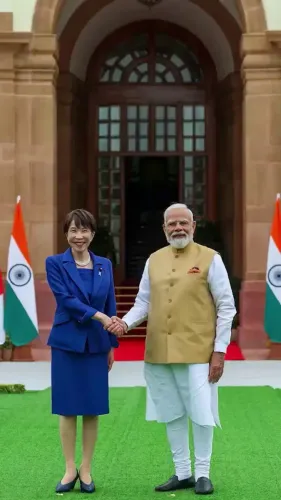
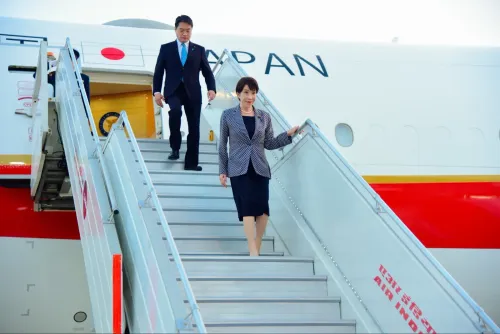
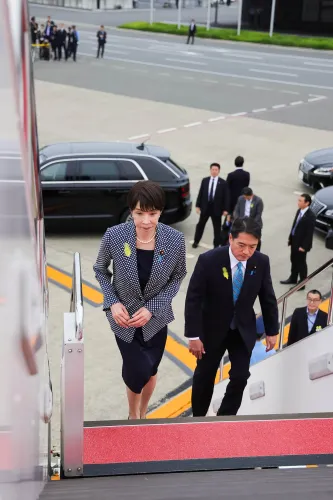
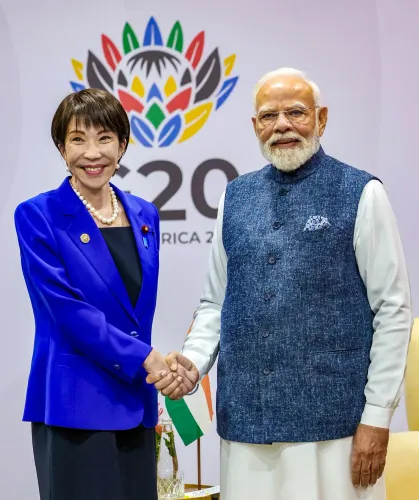
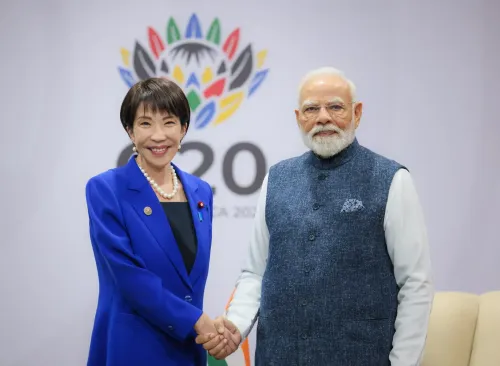
Japanese PM Sanae Takaichi met PM Narendra Modi at Hyderabad House, New Delhi on 3 July 2025 for bilateral talks.
Both leaders identified three priority areas : strategic cooperation, economic partnership, and people-to-people ties.
Japan's updated FOIP framework and India's MAHASAGAR (Great Ocean Initiative) were declared mutually aligned.
A Japan Maritime Self-Defence Force destroyer and an Indian Navy vessel are set to conduct a joint exercise during Takaichi's visit.
Both sides agreed to deepen naval MRO cooperation and equipment collaboration under the Make in India framework.
2027 marks the 75th anniversary of India-Japan diplomatic relations, which both sides described as a milestone for a 'new phase' in ties.
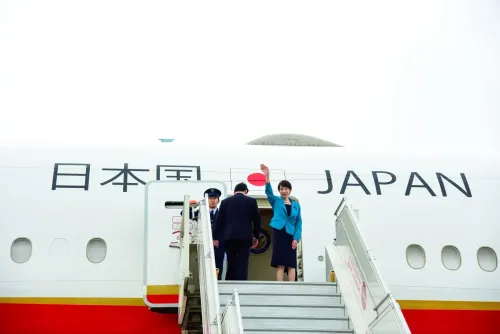
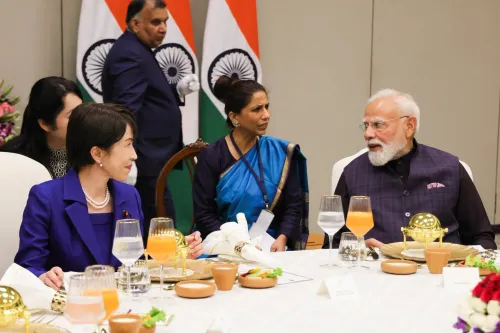
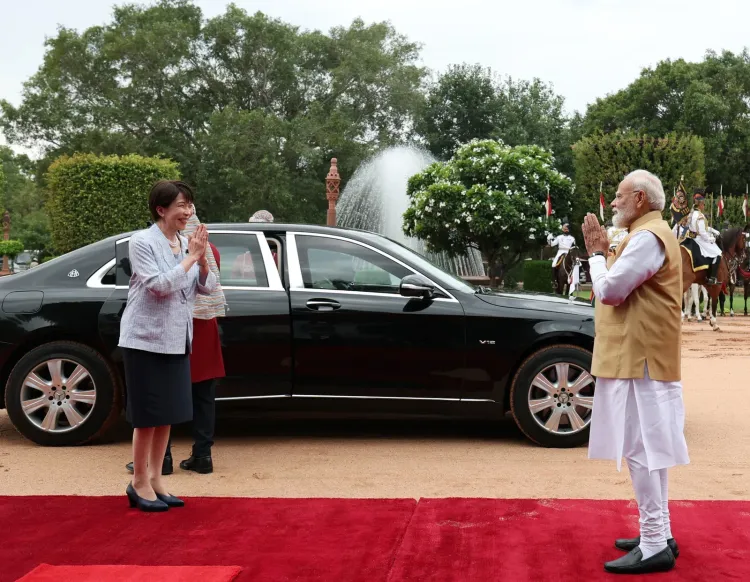
Japanese Prime Minister Sanae Takaichi on 3 July 2025 declared that India and Japan are committed to deepening their partnership 'as brother and sister,' following bilateral talks with Prime Minister Narendra Modi at Hyderabad House in New Delhi. The two leaders identified three priority areas to anchor their cooperation as both nations prepare to mark 75 years of diplomatic relations in 2027.
Key Developments from the Summit
Addressing a joint press conference after the talks, Takaichi expressed gratitude for India's hospitality and warmly acknowledged Modi's reference to her as a 'beautiful younger sister.' She said the sentiment captured the spirit of the bilateral relationship. 'Japan and India must leverage our respective strengths to become stronger and more prosperous together,' she said. 'In the midst of international affairs in disarray, the establishment of such an inter-complementary cooperative relationship has become ever more important.'
The two leaders reaffirmed the breadth of their shared agenda and agreed to focus cooperation on three central pillars: strategic alignment, economic partnership, and people-to-people ties ahead of the diplomatic anniversary.
Strategic Cooperation and Indo-Pacific Alignment
On the strategic front, Takaichi highlighted convergence between Japan's updated Free and Open Indo-Pacific (FOIP) framework — which she said now emphasises self-reliance and resilience — and Prime Minister Modi's MAHASAGAR initiative, described as the Great Ocean Initiative, which seeks to help Indian Ocean nations defend their sovereignty and maritime space through their own efforts. 'This is perfectly aligned with FOIP,' Takaichi said.
Maritime security cooperation emerged as a centrepiece of the talks. Takaichi announced that a destroyer from Japan's Maritime Self-Defence Force and an Indian Navy vessel are scheduled to conduct a joint exercise during her visit. Both sides also agreed to enhance exercises in the Indian Ocean, expand naval maintenance, repair, and overhaul cooperation, and strengthen equipment collaboration under the Make in India framework.
Economic Vision and Viksit Bharat
Takaichi drew an explicit link between Modi's Viksit Bharat vision — India's goal of becoming a developed nation by 2047 — and Japan's own growth ambitions, describing the two as complementary. She said both countries share the goal of making their nations stronger through 'future-focused investments,' signalling that economic cooperation will be a key driver of the relationship's next phase.
This comes amid a broader global realignment, with major democracies seeking to build supply-chain resilience and reduce dependencies on single-source economies. India and Japan have been deepening industrial ties through existing frameworks, and Thursday's summit is expected to add further momentum to joint manufacturing and infrastructure initiatives.
75th Anniversary and the Road Ahead
With 2027 marking 75 years of India-Japan diplomatic relations, Takaichi framed the current moment as a historic inflection point. 'I would like to seize this opportunity to further bring closer together the people of our two countries,' she said. Under the India-Japan Special Strategic Global Partnership, she added, the relationship is moving into 'a new phase.' She concluded by extending an invitation to Modi to visit Japan for the next round of talks.
The summit signals that both governments view the bilateral relationship not merely as a regional arrangement but as a structural pillar of the emerging Indo-Pacific order.
Point of View
But the substance underneath is harder-edged: a live naval exercise, MRO cooperation under Make in India, and an explicit dovetailing of FOIP and MAHASAGAR are the real deliverables. What mainstream coverage may miss is that Japan's updated FOIP — with its new emphasis on self-reliance and resilience — is a quiet acknowledgement that the original framework needed teeth. India's MAHASAGAR offers a complementary doctrine that keeps the Indo-Pacific framing alive without being seen as US-led containment. The 2027 anniversary deadline gives both sides a political forcing function to convert this summit's language into signed agreements — the test will be whether naval and industrial cooperation translates into binding frameworks before that milestone.
NationPress
1 Oct 2026
Frequently Asked Questions
What was decided at the India-Japan summit in New Delhi on 3 July 2025?
Prime Ministers Narendra Modi and Sanae Takaichi agreed to deepen cooperation across three areas: strategic alignment, economic partnership, and people-to-people ties. Key outcomes included aligning Japan's FOIP framework with India's MAHASAGAR initiative and announcing a joint naval exercise during Takaichi's visit.
What is the MAHASAGAR initiative mentioned by PM Takaichi?
MAHASAGAR, described as the Great Ocean Initiative, is Prime Minister Modi's framework for Indian Ocean nations to defend their sovereignty and maritime space through their own efforts. Takaichi said it is 'perfectly aligned' with Japan's updated Free and Open Indo-Pacific (FOIP) vision.
Why is 2027 significant for India-Japan relations?
2027 marks the 75th anniversary of the establishment of diplomatic relations between India and Japan. Both leaders described it as an opportunity to deepen people-to-people ties and move the India-Japan Special Strategic Global Partnership into a new phase.
What maritime cooperation was announced during the summit?
A destroyer from Japan's Maritime Self-Defence Force and an Indian Navy vessel are scheduled to conduct a joint exercise during Takaichi's visit. Both sides also agreed to enhance Indian Ocean exercises, expand naval maintenance, repair, and overhaul (MRO) cooperation, and strengthen equipment collaboration under Make in India.
How does the India-Japan partnership connect to the broader Indo-Pacific strategy?
Both nations view their bilateral ties as a structural pillar of the Indo-Pacific order. Japan's updated FOIP framework, which now emphasises self-reliance and resilience, and India's MAHASAGAR initiative share the goal of ensuring free, open, and sovereign maritime spaces — making the two frameworks mutually reinforcing.