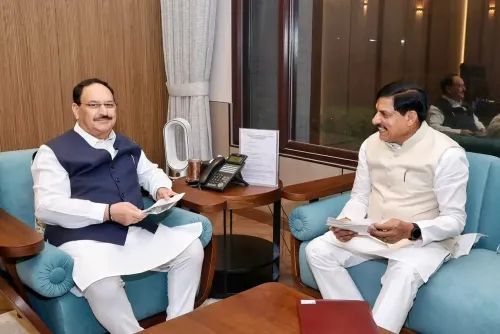
CM Mohan Yadav Highlights India's FTA Push in Chemicals Sector
Synopsis
Madhya Pradesh CM Dr. Mohan Yadav shared Union Minister JP Nadda's statement highlighting India's FTAs with Oman, New Zealand and the UK to strengthen the chemicals and petrochemicals sector globally, with EU negotiations still ongoing.
Key Takeaways
India has concluded FTAs with Oman , New Zealand , and the United Kingdom , according to Union Minister JP Nadda as quoted by CM Dr.
The chemicals and petrochemicals sector is cited as the primary driver of India's current FTA agenda.
India-EU Broad-based Trade and Investment Agreement talks — relaunched in 2022 after a gap since 2007 — remain active but unresolved.
The UK formally began post-Brexit FTA negotiations with India in January 2022 .
Ratification timelines and sector-specific tariff schedules under concluded FTAs are the critical next milestones to watch.
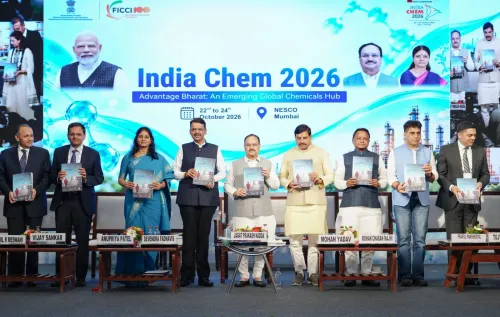
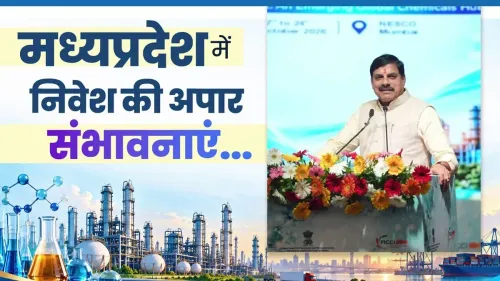
India is staking its claim in the global chemicals and petrochemicals race — and a series of free trade agreements is the chosen instrument. Madhya Pradesh Chief Minister Dr. Mohan Yadav shared remarks on Thursday, 22 October 2026 from Union Minister JP Nadda, citing completed FTAs with Oman, New Zealand, and the United Kingdom, while flagging active negotiations with the European Union as the next frontier.
Chemicals and Petrochemicals at the Centre of India's Trade Diplomacy
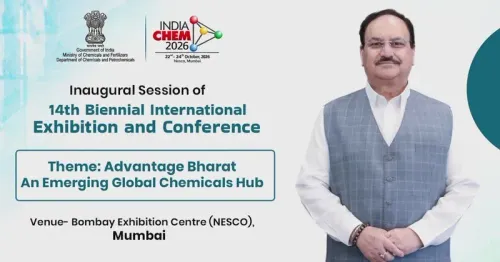
The post quotes JP Nadda directly: 'भारत सरकार केमिकल और पेट्रोकेमिकल के क्षेत्र में वैश्विक स्तर पर आगे बढ़ने का प्रयास कर रही है' — ('The Government of India is making efforts to advance globally in the field of chemicals and petrochemicals'). The statement frames the FTA push not as routine diplomacy but as a deliberate sector-first export strategy.
India's chemicals and petrochemicals industry has long been earmarked as a priority export vertical under successive foreign trade policies. Integrating that sector into global value chains through preferential market access is the logic driving the current round of agreements.
The FTA Map: Oman, New Zealand, UK — and the EU on the Horizon
Oman, a Gulf Cooperation Council member, represents India's longstanding energy and trade corridor into West Asia. New Zealand has engaged in multiple rounds of goods-and-services negotiations with India, while the UK — pursuing bilateral trade deals independently after Brexit — formally launched FTA talks with India in January 2022.
The EU deal is the most consequential still in motion. India-EU Broad-based Trade and Investment Agreement talks, first launched in 2007 and revived in 2022 after a prolonged freeze, represent access to one of the world's largest single markets. Nadda's formulation — 'प्रयास जारी हैं' ('efforts are ongoing') — signals intent without claiming a timeline.
Why the Petrochemical Angle Matters for Indian Exporters
For Indian chemical manufacturers and petrochemical exporters, preferential tariff schedules under concluded FTAs can meaningfully shift competitiveness against rivals in China, the Middle East, and Southeast Asia. The sector's inclusion as a named priority in a ministerial statement of this kind is itself a signal to industry of policy backing at the highest level.
What will matter next: the specific tariff schedules and ratification timelines under each concluded agreement, and whether any fresh round of India-EU talks produces a concrete negotiating calendar. The chemistry between trade policy and industrial ambition is rarely instantaneous — but the direction is now clearly set.
Point of View
The government signals to domestic industry that market-access deals are calibrated to competitive export priorities, not just geopolitical optics. The EU negotiation remains the defining test: a deal there would dwarf the combined market weight of the three concluded agreements. Until that materialises, India's FTA map is strategically credible but commercially incomplete.
NationPress
22 Oct 2026
Frequently Asked Questions
Has India signed an FTA with the UK?
According to Union Minister JP Nadda as quoted by CM Dr. Mohan Yadav, India has concluded an FTA with the United Kingdom. The UK formally began post-Brexit FTA negotiations with India in January 2022.
What is the status of India-EU FTA talks?
India-EU trade agreement negotiations are ongoing. Talks on the Broad-based Trade and Investment Agreement were first launched in 2007, paused for years, and relaunched in 2022, but no deal has been announced yet.
Why is India focusing on chemicals and petrochemicals in its FTA strategy?
The chemicals and petrochemicals sector has been identified as a priority export area under India's foreign trade policies. FTAs provide Indian exporters preferential tariff access, improving competitiveness against rivals in China, the Middle East, and Southeast Asia.
What did JP Nadda say about India's trade agreements?
JP Nadda stated that India is making efforts to advance globally in the chemicals and petrochemicals sector, and has concluded FTAs with Oman, New Zealand, and the UK, while negotiations with the European Union are continuing.
Does India have a trade deal with Oman?
According to JP Nadda's statement shared by CM Dr. Mohan Yadav, India has concluded an FTA with Oman. Oman is a Gulf Cooperation Council member with longstanding energy and trade ties to India.