Is India Set to Update Its Base Year for National Accounts Data to 2022–23?
Synopsis
India is taking a major step by updating its national accounts base year to 2022-23, aiming to enhance the accuracy of economic data. Finance Minister Nirmala Sitharaman's announcement comes after IMF's criticism regarding outdated data, ensuring better reflection of the current economic structure.
Key Takeaways
New base year: India updates national accounts to 2022-23.
Implementation date: Effective from February 26-27 next year.
Response to IMF: Change addresses IMF's concerns over outdated data.
Enhanced accuracy: Aims to better reflect current economic conditions.
Reliability of data: CAG ensures the integrity of public finance audits.
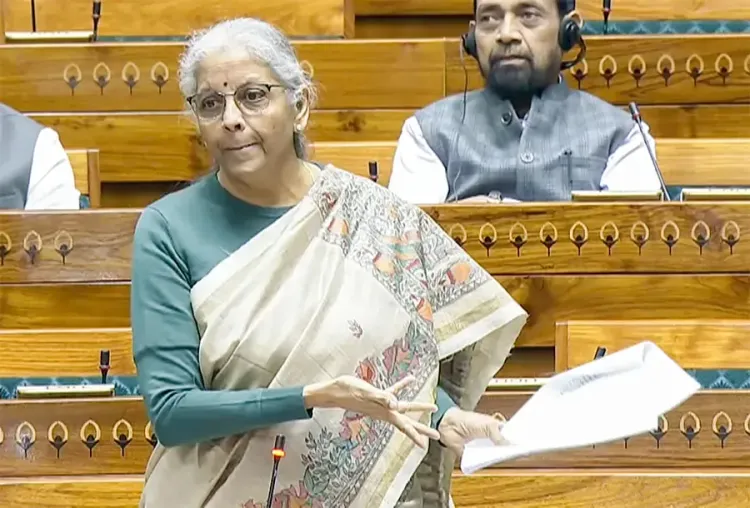
New Delhi, Dec 3 (NationPress) India is poised to adopt 2022-23 as the new base year for calculating its national accounts, effective from February 26–27 next year, as part of a significant update to the nation’s economic data framework, announced Finance Minister Nirmala Sitharaman in Parliament on Wednesday.
The new base year of 2022-23 will replace the existing base year of 2011–12, which has been utilized for over a decade. This update aims to ensure that national account statistics accurately represent the current structure of the economy, she elaborated.
During her announcement, the Finance Minister addressed concerns regarding the recent C grade assigned to India’s national accounts data by the International Monetary Fund (IMF) in its Article IV annual assessment of India’s economic framework released last week. She clarified that the IMF rating pertained specifically to the outdated base year, not the quality or credibility of the data.
"The grade was assigned to data on national accounts. The reason for the C rating? It was based on an outdated base year—2011-2012. However, the Government of India is changing that, and from next year we will have a base year of 2022-2023, effective from February 26-27," the Finance Minister stated.
The situation became politicized after the National Statistics Office released figures indicating that India’s real GDP growth surged by 8.2 percent during the July-September quarter of 2025-26. Congress member Jairam Ramesh criticized the timing of the release as "ironic," in light of the IMF’s grading.
Nevertheless, the IMF’s Article IV annual assessment also notes that "India’s robust economic performance has benefited from sound macroeconomic policies and prior structural reforms. Despite external challenges, growth is expected to remain resilient, with inflation staying subdued."
The IMF’s criticism centers on the methodology of India’s statistical system but does not question the authenticity of the data.
"National accounts data are available at sufficient frequency and timeliness, providing broadly adequate granularity. However, some methodological weaknesses impede surveillance and justify an overall sectoral rating of C for the national accounts," it stated.
The IMF underscored the "outdated base year" of 2011-12 on which the data is predicated.
Senior officials assert that India’s public finance and accounting systems are under the scrutiny of the Comptroller and Auditor General, an independent constitutional authority responsible for auditing all receipts and expenditures of both the Union and the States. CAG reports are presented in Parliament and state legislatures, examined by Public Accounts Committees and other standing committees that operate across party lines, ensuring the utmost reliability of the data.
Government borrowing is also conducted through the Reserve Bank of India within explicit statutory and rule-based limits. Budget documents, RBI publications, and CAG audit reports validate one another, reflecting the soundness of India’s National Accounts system.
Point of View
We recognize the importance of updating national accounts data to reflect current economic realities. The shift to a new base year is crucial for maintaining the credibility of India's economic statistics and addressing international concerns. This move not only aligns with global standards but also enhances our ability to track economic performance accurately, ultimately benefiting policy-making and public trust.
NationPress
3 Oct 2026
Frequently Asked Questions
Why is India updating its base year for national accounts?
India is updating its base year to 2022-23 to better reflect the current economic structure and address criticisms regarding the outdated 2011-12 base year, as noted by the IMF.
When will the new base year take effect?
The new base year of 2022-23 will be effective from February 26-27 next year.
What did the IMF say about India's national accounts data?
The IMF assigned a C grade to India's national accounts data due to the outdated base year, but it did not question the quality or credibility of the data itself.
How often is the national accounts data updated?
National accounts data updates are conducted periodically to ensure the statistics accurately reflect the current state of the economy.
What role does the Comptroller and Auditor General play?
The Comptroller and Auditor General audits all receipts and expenditures of the Union and States, ensuring the reliability of India's public finance and accounting systems.