How Does India-WHO Collaboration Showcase Commitment to Traditional Medicine?
Synopsis
India's alliance with the WHO highlights a resolute commitment to mainstream traditional medicine, as stated by Union Minister Prataprao Jadhav. This partnership aims to harness science and standards for global healthcare integration, marking a transformative step in traditional medicine's acceptance.
Key Takeaways
India-WHO partnership aims to integrate traditional medicine into global healthcare.
Significant milestones have been achieved since the partnership began in 2016.
The WHO Global Traditional Medicine Centre is set to open in Jamnagar by October 2025.
India provides 104 scholarships annually for traditional medicine education.
Collaborative research initiatives are underway in various countries.
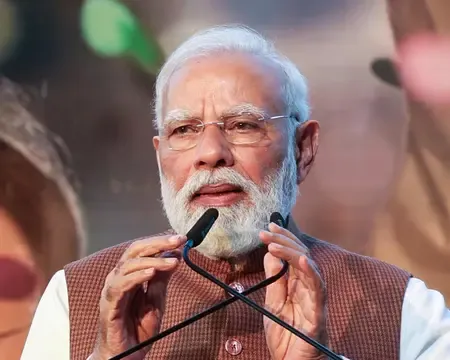
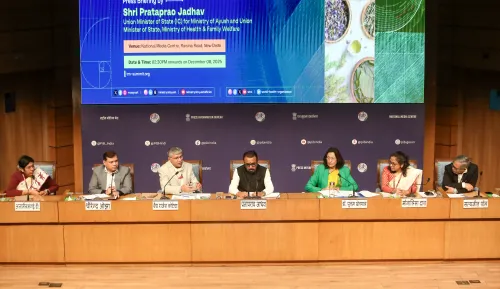
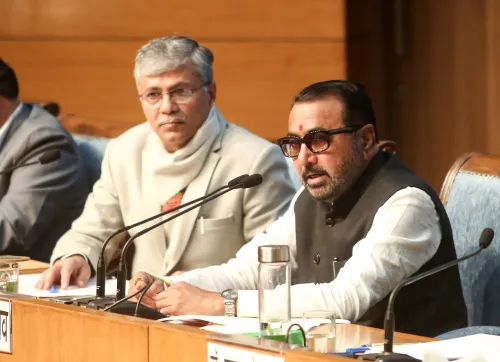
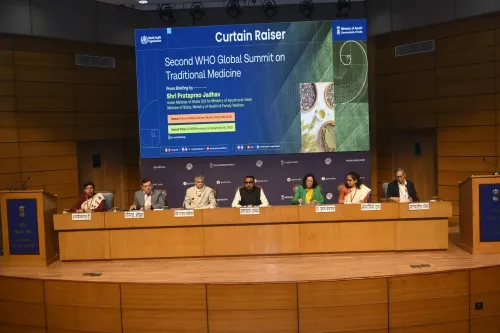
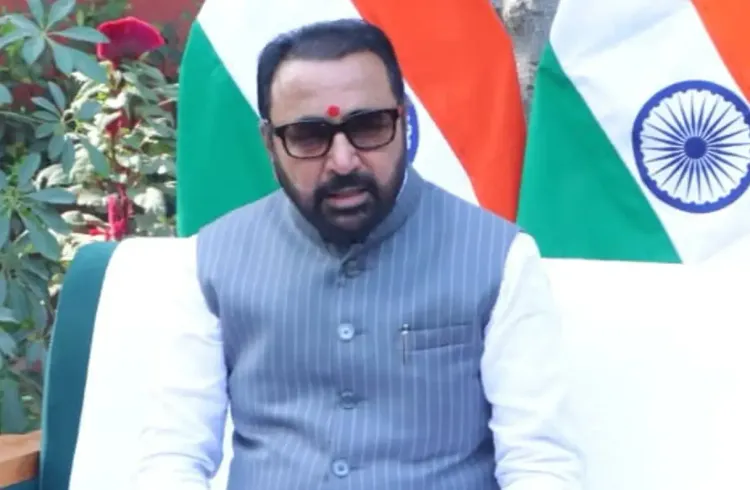
New Delhi, Dec 17 (NationPress) The partnership between India and the World Health Organization (WHO) showcases a unified dedication to integrating traditional medicine into mainstream healthcare, as stated by Union Minister Prataprao Jadhav on Wednesday.
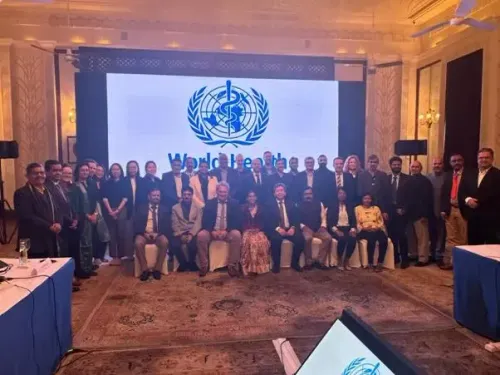
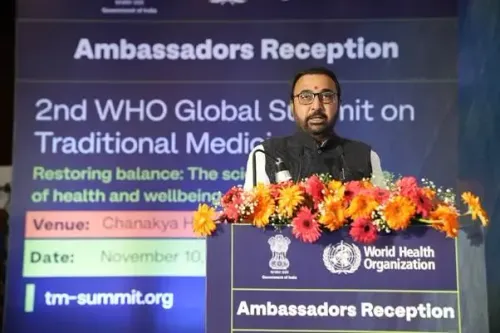
During his address at the second WHO Global Summit on Traditional Medicine held at Bharat Mandapam in New Delhi, the Minister emphasized that the India-WHO collaboration is pivotal for integrating these practices through scientific methods and established standards.
The three-day international scientific event is taking place from December 17 to 19.
“India’s partnership with the World Health Organization signifies a joint effort to elevate traditional medicine to the forefront of global health systems through science, standards, and evidence,” Jadhav remarked.
Since the inception of this collaboration in 2016, considerable advancements have been realized, including the introduction of the ICD-11 Module 2 in 2024, which incorporates Ayurveda, Siddha, and Unani morbidity codes into the global health classification system.
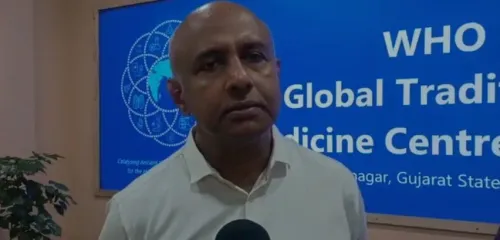
The ongoing development of the International Classification of Health Interventions (ICHI) and the forthcoming WHO Global Traditional Medicine Centre in Jamnagar, expected to be completed by October 2025, emphasizes a significant shift towards the global acceptance and institutional reinforcement of traditional medicine, according to the Minister.
“India is actively expanding international partnerships in traditional medicine through research, education, and capacity building,” Jadhav added.
The country provides 104 scholarships each year to foreign students, has established 26 country-level Memoranda of Understanding (MoUs), collaborates with over 50 global institutions, and has set up Ayush Chairs in 15 universities along with Ayush Information Cells in 43 different nations.
The Minister highlighted ongoing collaborative research efforts, such as trials of Ashwagandha in the UK, studies on Guduchi in Germany, and Ayurveda-focused diabetes research in Latvia.
“By utilizing digital tools like the Ayush Grid and innovative technologies such as artificial intelligence, India is meticulously documenting and validating traditional knowledge to tackle modern global health issues,” Jadhav stated.
Simultaneously, the WHO acknowledged India’s pivotal role in traditional medicine.
Dr. Tedros Adhanom Ghebreyesus, WHO Director-General, in a video statement, celebrated India’s leadership and collaborative efforts in the realm of traditional medicine.
He emphasized that health transcends mere technologies and treatments, advocating for balance, dignity, and the collective wisdom of humanity. He noted that during the recent World Health Assembly, the WHO Global Traditional Medicine Strategy for 2025-2034 was adopted.
This strategy aims to enhance the evidence base for informed decision-making through science and data, ensure safety and quality via effective regulation, and incorporate traditional, complementary, and integrative medicine (TCIM) into national health frameworks, starting with primary health care, thereby unlocking its broader potential for biodiversity, sustainability, and community wellness, according to the WHO chief.
Additionally, he pointed out that to actualize this strategy, the WHO has launched the Global Centre for Traditional Medicine in India.
Point of View
The India-WHO collaboration signifies a crucial advancement in healthcare, reflecting the country’s commitment to integrating traditional practices with modern health systems. This initiative not only enhances international cooperation but also underscores the importance of traditional medicine in addressing contemporary health challenges.
NationPress
20 Sept 2026
Frequently Asked Questions
What is the significance of the India-WHO collaboration?
The collaboration aims to integrate traditional medicine into global health systems, enhancing healthcare through scientific standards and evidence-based practices.
When was the India-WHO partnership established?
The partnership began in 2016, focusing on advancing traditional medicine's role in health.
What are some achievements of this collaboration?
Key milestones include the launch of ICD-11 Module 2 and the development of the WHO Global Traditional Medicine Centre in Jamnagar.
How does India support traditional medicine education?
India offers 104 scholarships annually for foreign students, collaborates with over 50 institutions, and has established Ayush Chairs in various universities.
What future plans does WHO have regarding traditional medicine in India?
The WHO plans to strengthen traditional medicine through the Global Centre for Traditional Medicine and the implementation of the WHO Global Traditional Medicine Strategy 2025-2034.