CM Rekha Gupta Hails India's 114-Medal Haul at World Yogasana Championship 2026
Synopsis
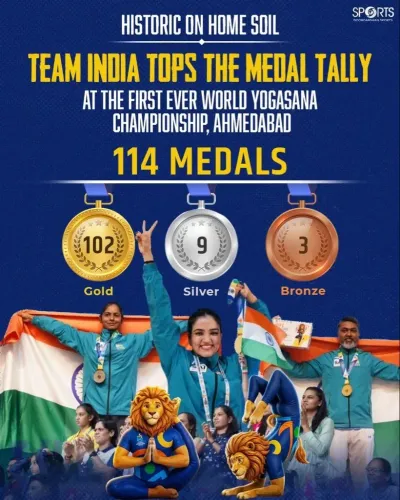
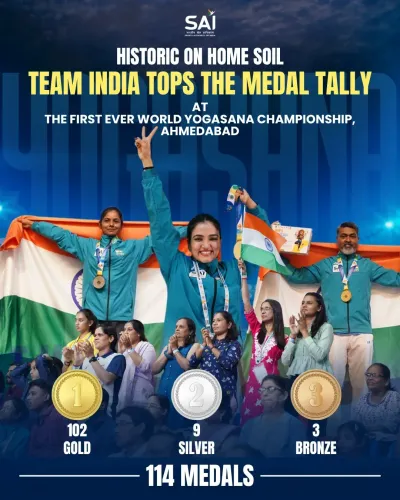
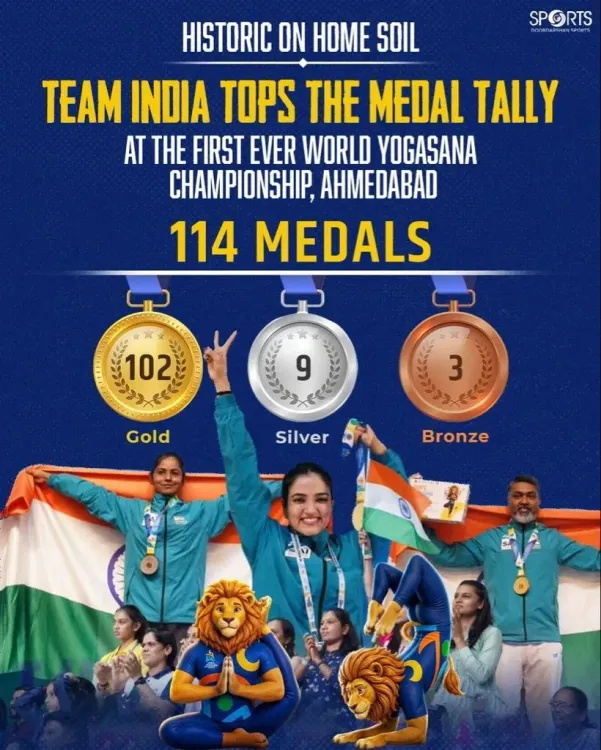
Delhi Chief Minister Rekha Gupta congratulated India's contingent after the country won 114 medals — 102 gold, 9 silver, and 3 bronze — at the World Yogasana Championship 2026, calling it a historic performance.
Key Takeaways
India won 114 medals at the World Yogasana Championship 2026, as stated by Delhi CM Rekha Gupta on June 9, 2026.
The tally comprised 102 gold medals , 9 silver medals , and 3 bronze medals .
Delhi Chief Minister Rekha Gupta extended congratulations to athletes, coaches, and support staff.
India has pursued yogasana as both a competitive sport and a cultural diplomacy tool since the UN adopted International Day of Yoga in 2014 .
The result is expected to strengthen federations' case for yogasana's inclusion in events such as the Asian Games .
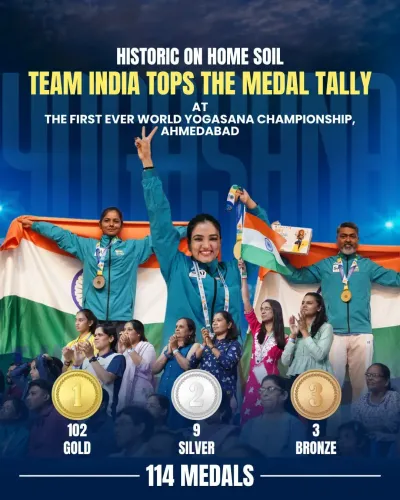
Delhi Chief Minister Rekha Gupta on Tuesday, June 9, 2026, congratulated India's contingent after the country delivered what she described as a historic performance at the World Yogasana Championship 2026, claiming a total of 114 medals — including 102 gold, 9 silver, and 3 bronze.
Context
Posting on X, Rekha Gupta offered congratulations to all participants, writing: 'विश्व योगासन चैंपियनशिप 2026 में भारत का ऐतिहासिक प्रदर्शन' ['India's historic performance at the World Yogasana Championship 2026']. She extended her wishes to the athletes — referred to as yogaveeron ['yoga warriors'] — as well as to coaches and support staff. The post was accompanied by an image marking the occasion.
The medal tally, as stated in the post, places India at the top of the standings with a dominant gold count. The Chief Minister's public acknowledgement reflects the growing political and institutional attention that yogasana competitions now attract at the state level.
Policy Backdrop
India's embrace of yogasana as a competitive sport has deep policy roots. In 2014, the United Nations General Assembly adopted the International Day of Yoga following an Indian resolution, cementing yoga's place in global cultural diplomacy. Since then, central ministries and state governments have invested in training infrastructure, federations, and domestic leagues to build competitive depth.
Successive editions of yogasana championships have recorded expanding Indian participation and high medal returns, part of a deliberate strategy to frame traditional Indian practices within a modern sporting framework. Efforts to secure a pathway for yogasana's inclusion in multi-sport events such as the Asian Games remain an ongoing ambition for the sport's governing bodies.
Stakeholders and Impact
The immediate beneficiaries of the result are the Indian yoga athletes and their coaching staff, whose training pipelines — supported by both central and state-level bodies — have produced a medal haul of this scale. For Delhi, whose Chief Minister has publicly amplified the achievement, the result also carries symbolic weight as the city positions itself as a hub for sports governance and training.
The championship outcome is likely to strengthen the case made by yogasana federations for enhanced government funding and formal recognition within India's broader sports development ecosystem. Coaches and athletes seeking institutional support will point to this performance as evidence of the sport's competitive maturity.
What's Next
Attention will now turn to whether India's dominant showing translates into renewed lobbying for yogasana's inclusion in the Asian Games or other major multi-sport competitions. The next edition of the World Yogasana Championship will be closely watched as a benchmark for whether this medal count can be sustained or improved. Domestically, the result is expected to fuel demand for expanded grassroots programmes and state-sponsored academies dedicated to the discipline.
Point of View
If it holds up, would represent an extraordinary dominance that federations will leverage in their push for multi-sport event inclusion. For the BJP, publicly celebrating yogasana aligns with a broader cultural-nationalist sporting identity that has been cultivated since 2014. The pattern suggests that government patronage of yogasana competitions will only deepen ahead of any Asian Games inclusion bid.
NationPress
22 Sept 2026
Frequently Asked Questions
How many medals did India win at the World Yogasana Championship 2026?
According to Delhi CM Rekha Gupta's post, India won 114 medals in total — 102 gold , 9 silver , and 3 bronze — at the World Yogasana Championship 2026.
What is the World Yogasana Championship?
The World Yogasana Championship is an international competition in which yogasana is contested as a sport. India has consistently been a dominant participant, supported by central and state government investment in training and federations.
Is yogasana part of the Asian Games?
As of the 2026 championship, yogasana has not been included in the Asian Games. Governing bodies have been lobbying for its inclusion, and strong performances at world championships are used to support that case.
Why is India so dominant in yogasana competitions?
India's dominance stems from deep cultural familiarity with the discipline, sustained government funding for training infrastructure, and a growing federation ecosystem that has professionalised competitive yogasana since the early 2010s.