How Did the Indian Army Celebrate Republic Day with Four-Legged Warriors?
Synopsis
On Republic Day 2026, India showcased a groundbreaking animal contingent from the Army's RVC, featuring Bactrian camels, Zanskar ponies, and trained raptors. This historic presentation highlights the vital role of animals in national defense, merging tradition with innovation in military operations.
Key Takeaways
Historic presentation of an animal contingent at Republic Day.
Bactrian camels and Zanskar ponies showcased for their resilience.
Highlighting the vital role of animals in military operations.
Emphasis on self-reliance and innovation within the Army.
Integration of indigenous breeds into military roles.
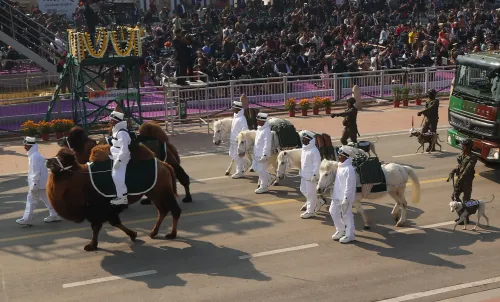
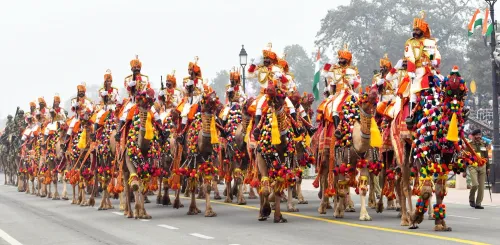
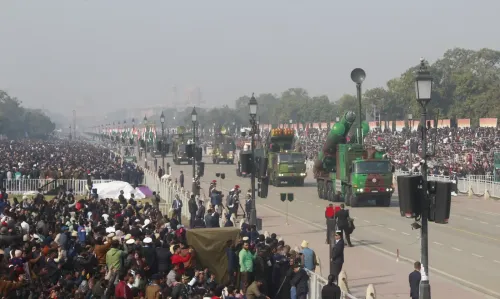
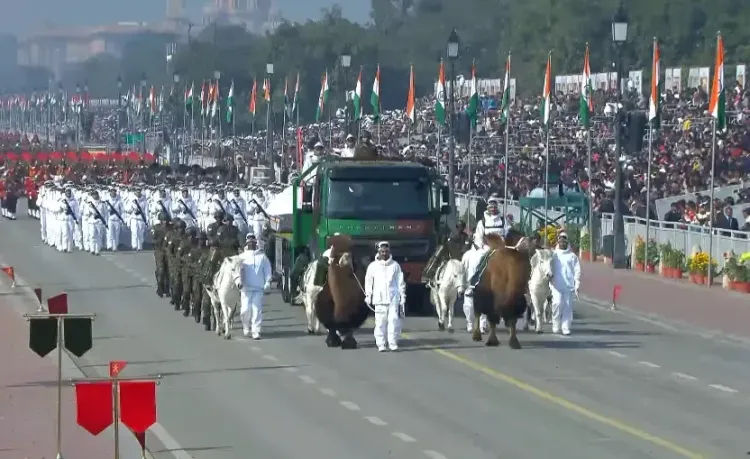
New Delhi, Jan 26 (NationPress) On the occasion of its 77th Republic Day, India experienced an extraordinary sight as a specially organized animal unit from the Indian Army's Remount and Veterinary Corps (RVC) paraded down Kartavya Path. This event highlighted the crucial role that animals play in safeguarding the nation’s most challenging frontiers.
This was the inaugural presentation of such a varied animal contingent during the national parade, bringing to light a less visible yet essential aspect of military readiness.
The unit included two Bactrian camels, four Zanskar ponies, four trained raptors, ten Indian-breed Army dogs, and six conventional military dogs currently in active duty.
This formation represented a remarkable fusion of tradition, operational advancement, and a growing sense of self-reliance within the Army's operational landscape.
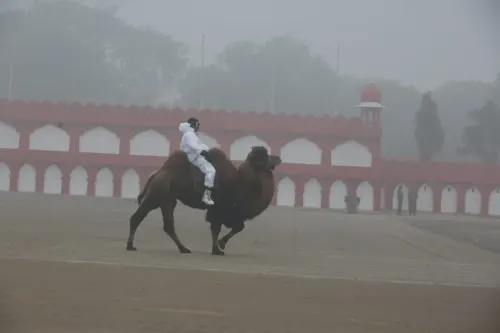
Leading the contingent were the sturdy Bactrian camels, recently incorporated to assist operations in the frigid deserts of Ladakh.
These camels are naturally adapted to extreme cold, low oxygen conditions, and elevations exceeding 15,000 feet. They can transport loads of up to 250 kilograms over long distances with minimal water and feed.
Their addition has significantly bolstered logistical support and mounted patrol capabilities along the Line of Actual Control, especially in sandy terrains and steep inclines.
Alongside them marched the Zanskar ponies, a rare indigenous breed from Ladakh.
Despite their smaller stature, these ponies possess remarkable endurance, able to carry loads between 40 and 60 kilograms over long distances at high altitudes and in temperatures that can drop to -40 degrees Celsius.
Since their induction in 2020, they have been deployed in some of the most extreme operational zones, including the Siachen Glacier.
Beyond logistics, Zanskar ponies are crucial in mounted patrols, sometimes traversing distances of up to 70 kilometers in a single day, standing side by side with soldiers in perilous regions.
Enhancing the formation's operational capabilities were four raptors, utilized by the Army for bird-strike prevention and surveillance.
Their inclusion signifies an innovative approach to leveraging natural abilities to improve safety and situational awareness in sensitive operational settings.
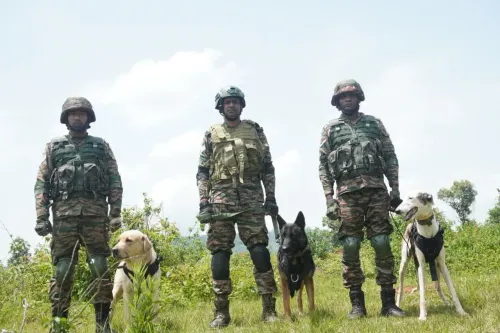
A standout feature of the parade was the presence of Army dogs, often called the 'Silent Warriors' of the Indian Army.
These dogs, bred, trained, and cared for by the Remount and Veterinary Corps at the RVC Centre and College in Meerut, assist troops in counter-terrorism efforts, explosive and mine detection, tracking, security, disaster response, and search-and-rescue missions.
Over the years, Army dogs and their handlers have exhibited remarkable bravery, earning commendations and awards for their roles in combat and humanitarian missions.
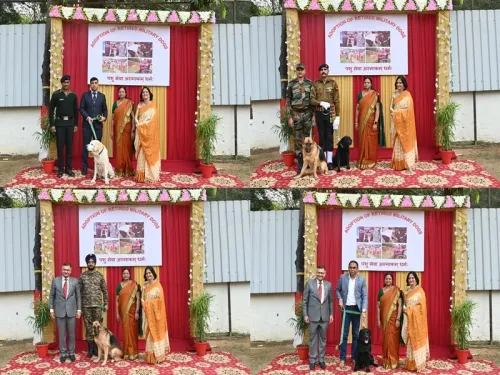
In alignment with the vision of Atmanirbhar Bharat and the Make in India initiative, the Army has increasingly included indigenous dog breeds like the Mudhol Hound, Rampur Hound, Chippiparai, Kombai, and Rajapalayam.
Their involvement in the Republic Day parade underscores India's commitment to self-reliance in defense and the successful integration of local breeds into specialized military functions.
As the animal unit passed by the saluting dais on Republic Day 2026, it served as a poignant reminder that India's defense capabilities are not solely reliant on machines and human soldiers but also on the quiet dedication of animals.
From the icy peaks of Siachen to the frigid deserts of Ladakh and disaster-stricken civilian areas, these animals have shared the burden of duty, valor, and sacrifice.
They marched as four-legged warriors, epitomizing resilience, loyalty, and the Indian Army's steadfast commitment to protect the nation under all circumstances.
Point of View
It is evident that the inclusion of an animal contingent in the Republic Day parade is a significant step towards acknowledging the vital support provided by these animals in military operations. It reflects the Army's commitment to innovation and self-reliance, aligning perfectly with the nation’s strategic vision.
NationPress
19 Sept 2026
Frequently Asked Questions
What animals were included in the Indian Army's Republic Day parade?
The parade featured Bactrian camels, Zanskar ponies, trained raptors, and various breeds of Army dogs, emphasizing their roles in military operations.
Why are Bactrian camels significant to the Indian Army?
Bactrian camels are well-suited for operations in extreme cold and high altitudes, capable of carrying heavy loads over long distances with minimal resources.
What role do Zanskar ponies play in the military?
Zanskar ponies are known for their endurance and are used in logistics and mounted patrols in challenging terrains.
How does the Indian Army train its dogs?
Dogs are bred, trained, and cared for by the Remount and Veterinary Corps, specializing in various operations such as search-and-rescue and counter-terrorism.
What does the inclusion of indigenous dog breeds signify?
It demonstrates India's push for self-reliance in defense and the integration of local breeds into military roles, aligning with the Atmanirbhar Bharat initiative.