Is the Indian Economy Growing Strongly Amid Global Challenges?
Click to start listening
Synopsis
Despite global economic challenges, the Indian economy demonstrates remarkable growth driven by strong domestic demand and sound macro policies. The RBI's insights provide a comprehensive overview of the financial landscape, highlighting resilience and potential risks. Explore how India's economic journey unfolds.
Key Takeaways
- Indian economy shows strong growth amidst global challenges.
- Domestic demand and effective macroeconomic policies are key drivers.
- Financial institutions are resilient with robust capital buffers.
- Household debt is rising but remains lower than peer nations.
- External uncertainties pose potential risks for future growth.
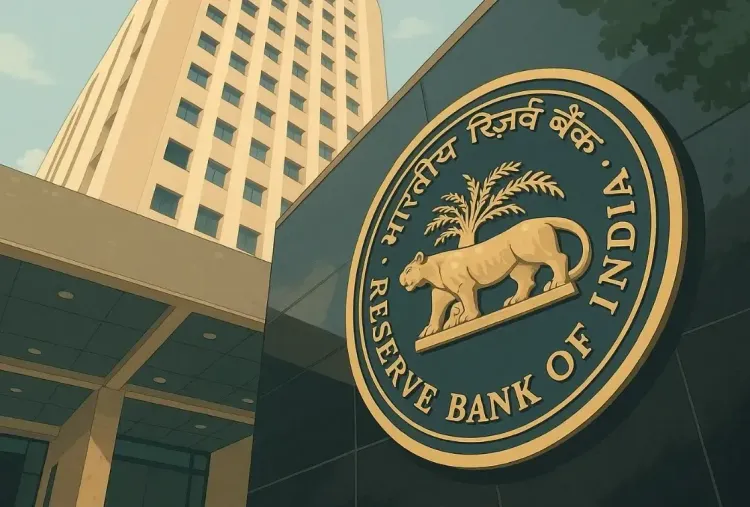
New Delhi, Jan 1 (NationPress) In the face of a challenging global economic environment, the Indian economy is exhibiting strong growth, driven by robust domestic demand, favorable inflation, and sound macroeconomic strategies, according to the Reserve Bank of India (RBI).
The domestic financial landscape remains solid and resilient, supported by strong balance sheets, favorable financial conditions, and minimal volatility in financial markets. However, the Central Bank has pointed out potential short-term risks stemming from external uncertainties, including geopolitical and trade factors, as noted in its latest Financial Stability Report (FSR).
The report highlights that the global economy has shown resilience, bolstered by fiscal interventions, accelerated trade, and significant investments tied to AI. Nevertheless, persistent downside risks remain due to continuing uncertainties, elevated public debt levels, and the threat of a market correction.
“While global financial markets seem robust, they are revealing increasing underlying vulnerabilities. The rapid surge in equities and other risk assets, along with the expanding influence of non-bank financial entities and their interconnectedness with banks, as well as the rise of stablecoins, amplify the fragilities within the global financial system,” it stated.
The RBI further mentioned that the condition of scheduled commercial banks (SCBs) is robust, characterized by strong capital and liquidity reserves, improved asset quality, and solid profitability. Results from macro stress tests confirm the resilience of SCBs to absorb losses under hypothetical adverse circumstances while maintaining capital levels significantly above the regulatory threshold. Stress tests also validate the robustness of mutual funds and clearing corporations.
Non-banking financial companies (NBFCs) are also performing well, backed by strong capital reserves, healthy earnings, and enhanced asset quality. The insurance sector showcases balance sheet stability, with the consolidated solvency ratio remaining above the acceptable limit.
In addition, household debt rose to 41.3 percent of gross domestic product (GDP) by the end of March 2025, reflecting a steady increase from a five-year average of 38.3 percent, with consumption-related loans forming the majority of the borrowings, as indicated in the report.
However, the Central Bank noted that, compared to many peer emerging market nations, India’s household debt remains comparatively low.
Point of View
The trajectory of the Indian economy remains promising, reflecting resilience in domestic demand and effective policy frameworks. While external uncertainties loom, the strong fundamentals of India's financial system provide a robust platform for sustainable growth. As we navigate these challenges, it is crucial to stay informed and proactive.
NationPress
07/01/2026
Frequently Asked Questions
What factors are contributing to the growth of the Indian economy?
The growth of the Indian economy is primarily driven by strong domestic demand, manageable inflation, and effective macroeconomic policies, as highlighted by the Reserve Bank of India.
What are the risks facing the Indian economy?
The Indian economy faces near-term risks from external uncertainties, including geopolitical tensions and trade issues, as noted in the RBI's Financial Stability Report.
How is the health of the Indian banking sector?
The health of scheduled commercial banks in India remains sound, characterized by strong capital and liquidity buffers, improved asset quality, and robust profitability.
Is household debt a concern in India?
Household debt has risen to 41.3% of GDP, but it remains lower compared to many peer emerging market economies, indicating a manageable debt situation.
What is the outlook for the Indian economy?
The outlook for the Indian economy appears positive, with a strong financial system and robust domestic demand, though ongoing vigilance is necessary due to external risks.