Is Indian Railways the 2nd Largest Freight Carrier in the World?
Synopsis
Discover how Indian Railways transformed into the second largest freight carrier globally, with record freight loading increases and strategies to maintain competitive fares. This article explores significant developments in railway capacity and electrification.
Key Takeaways
Freight loading has increased significantly from 1,233 MT to 1,617 MT.
Indian Railways is now the second largest freight carrier worldwide.
No freight rate changes since 2018, despite rising costs.
Passenger fares were rationalized after over 5 years.
Major projects and electrification efforts are underway to boost capacity.
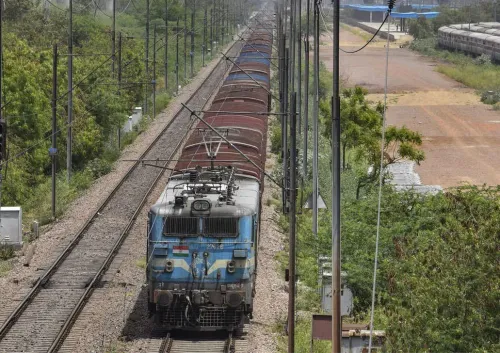
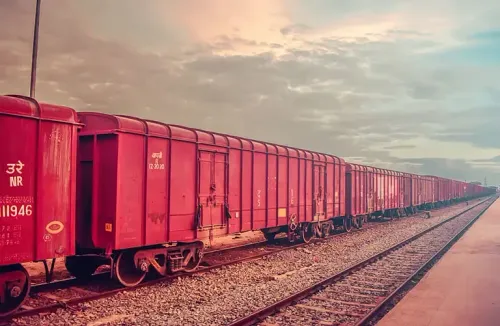
New Delhi, Dec 11 (NationPress) The government has announced that freight loading has surged from 1,233 million tonnes (MT) in 2020-21 to 1,617 MT in 2024-25, establishing Indian Railways as the second largest freight carrying rail network globally.
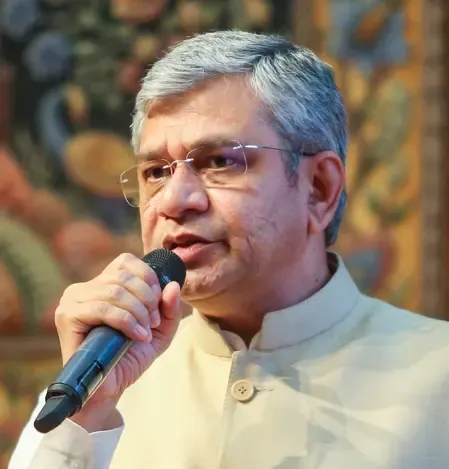
To maintain competitive rates, the government has not adjusted freight charges since 2018, despite rising input costs, as stated by Union Minister Ashwini Vaishnaw.
Passenger fares were adjusted starting July 1, 2025, following a hiatus of over five years. The fare increments are minimal, ranging from 0.5 paise to 2 paise per km for premium classes,” Vaishnaw elaborated in response to queries in Lok Sabha.
Key measures for affordable passenger fares include no increase in general class fares for journeys up to 500 km, followed by a 0.5 paise rise per passenger per km; a similar increase applies in Sleeper Class Ordinary and First-Class Ordinary; while 1 paise increase per passenger per km occurs in Non-AC classes in Mail Express, and 2 paise increase per passenger per km in reserved AC classes.
To support low and middle-income families, fares for MST (Monthly Season Ticket) and suburban travel have remained unchanged, the minister indicated.
Indian Railways has implemented numerous strategies to boost freight loading and revenue, which include:
Enhancing network capacity through significant rail network expansion involving the construction of new lines, multi-tracking existing routes, and gauge conversions.
“As of April 1, 2025, there are 431 sanctioned projects (including 154 new lines, 33 gauge conversions, and 244 doubling projects),” the minister revealed.
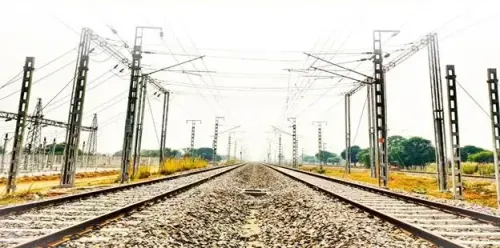
Electrification of railway lines is underway in a mission mode, with 99.1% of the Broad Gauge (BG) network electrified to date.
In efforts to boost freight capacity, a significant number of IR wagons have been acquired, along with the manufacture of new locomotives. From 2014 to 2025, around 200,000 wagons and over 10,000 locomotives have been added to enhance freight loading and mobility.
Point of View
The focus on expanding capacity and electrification positions Indian Railways for a sustainable future. It reflects a strong alignment with the nation's broader goals of modernization and efficiency.
NationPress
19 Sept 2026
Frequently Asked Questions
What is the current freight loading capacity of Indian Railways?
As of 2024-25, Indian Railways has achieved a freight loading capacity of **1,617 million tonnes (MT)**.
When were passenger fares last adjusted?
Passenger fares were last adjusted on **July 1, 2025**, after a gap of more than five years.
How has Indian Railways enhanced its capacity?
Indian Railways has enhanced its capacity through network expansion, gauge conversion, and the procurement of new wagons and locomotives.
What percentage of the Broad Gauge network is electrified?
Approximately **99.1%** of the Broad Gauge (BG) network has been electrified.
What measures are in place for affordable passenger fares?
Measures include no fare increases for general class up to 500 km and minimal fare increases for other classes.