How is India Supporting Global AIDS Control While Protecting Its Citizens?

Synopsis
On World AIDS Day, Union Health Minister J.P. Nadda emphasizes India's dual role in battling HIV/AIDS domestically while aiding global efforts. With significant reductions in infections and deaths, India sets a benchmark in public health. Discover how the country is achieving its ambitious targets and shaping a healthier future worldwide.
Key Takeaways
India is committed to global AIDS control.
Significant reductions in new HIV infections.
India's pharmaceutical industry is a key player.
Strong political commitment and community engagement are vital.
India aims to meet the 95-95-95 targets by 2030.
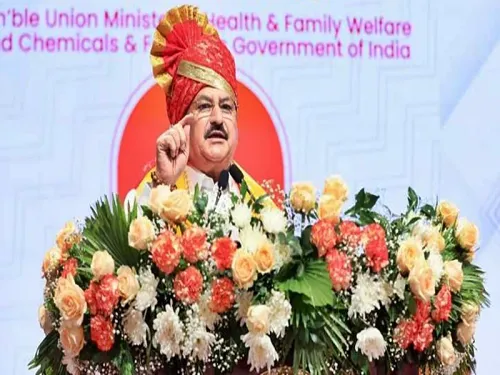
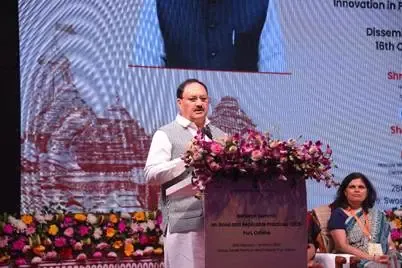
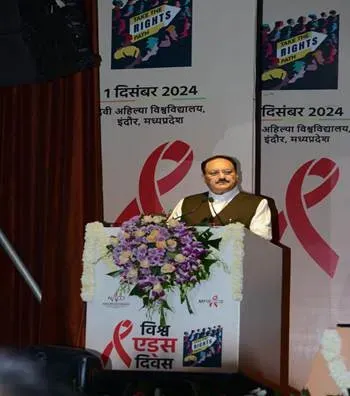
New Delhi, Dec 1 (NationPress) India is not only safeguarding its own citizens but is also extending support to other nations to achieve control over HIV/AIDS, highlighted Union Health Minister J.P. Nadda on Monday.
During the World AIDS Day event at Vigyan Bhawan, Nadda reiterated India’s dedication to hastening efforts to eradicate AIDS as a public health concern.
He praised the Indian pharmaceutical industry for creating medications and diagnostics that have not only empowered India in its battle against AIDS but have also aided other countries.
"India is at the forefront of the global fight against AIDS, bearing a responsibility towards all of humanity," Nadda stated.
"India not only safeguards its own but also assists the world in AIDS control by providing affordable and quality medications worldwide," he further emphasized.
Nadda pointed out that India’s HIV and STD initiatives continue to yield impressive results, evidenced by significant declines in new infections and mortality rates, alongside broadened access to vital services.
"From 2010 to 2024, new HIV infections dropped by 48.7 percent, AIDS-related fatalities by 81.4 percent, and mother-to-child transmission decreased by 74.6 percent," he reported.
"Testing coverage surged from 4.13 crore in 2020–21 to 6.62 crore in 2024–25, while the number of individuals receiving treatment increased from 14.94 lakh to 18.60 lakh. Viral load testing also saw substantial growth—from 8.90 lakh to 15.98 lakh tests," he added.
The Health Minister noted that these accomplishments surpass global averages for the same timeframe and reflect a robust political commitment, ongoing domestic investment, data-driven program strategies, and continuous community involvement.
He emphasized that the country has achieved a 35 percent reduction in new HIV infections (compared to a global reduction of 32 percent) and a 69 percent decrease in HIV-related deaths, far exceeding the global average reduction of 37 percent.
Nadda also stressed that India is well on its way to achieving the global 95-95-95 targets by 2030.
"Awareness of HIV status has reached 85 percent, compared to a national goal of 95 percent, treatment coverage is at 88 percent, and viral load suppression is exceptionally high at 97 percent," Nadda concluded.
Point of View
It's evident that India's proactive approach embodies a commitment to public health not only for its citizens but also for the global community. The strides made in combating HIV/AIDS signal a strong investment in health infrastructure and a collaborative spirit that should be commended and emulated worldwide.
NationPress
24 Sept 2026
Frequently Asked Questions
What is India's role in global AIDS control?
India is actively supporting global AIDS control by providing affordable medications and sharing its expertise in managing HIV/AIDS.
What achievements has India made in reducing HIV infections?
India has achieved a 48.7% reduction in new HIV infections and an 81.4% decrease in AIDS-related deaths between 2010 and 2024.
What is the significance of the 95-95-95 targets?
The 95-95-95 targets aim for 95% of people living with HIV to know their status, 95% of those diagnosed to receive sustained antiretroviral therapy, and 95% of those on treatment to achieve viral suppression.
How is India enhancing access to HIV services?
India has increased testing coverage and treatment access significantly, demonstrating a strong commitment to combating HIV/AIDS.
What is the importance of the pharmaceutical industry in this fight?
The Indian pharmaceutical industry plays a crucial role in developing affordable medicines and diagnostics that aid both domestic and global efforts in controlling HIV/AIDS.