India's core industries grow 5.4% in July, iron ore surges 29.5%
Synopsis
India's nine core industries — now expanded to include iron ore for the first time — grew 5.4% in July 2026, with iron ore output surging a remarkable 29.5%. The cumulative April–July growth of 4.3% compares with just 1.5% a year ago, signalling a meaningful broadening of India's industrial recovery heading into Q2 of FY2026-27.
Key Takeaways
India's Index of Core Industries (ICI) grew 5.4 per cent year-on-year in July 2026 .
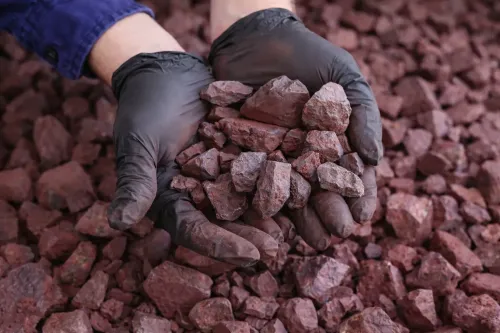
Iron ore output surged 29.5 per cent ; it has been newly added to the core industries basket, expanding the index from eight to nine sectors.
Cement production rose 13.1 per cent , driven by government infrastructure spending on highways, ports, and railways.
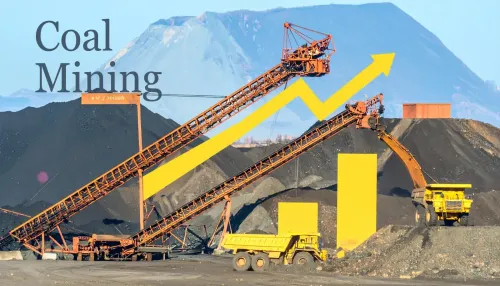
Electricity generation grew 9 per cent ; coal output rose 7.6 per cent .
Natural gas , crude oil , and fertilisers recorded negative growth in July.
Cumulative April–July 2026 ICI growth stands at 4.3 per cent , up sharply from 1.5 per cent in the same period last year.
India's Index of Core Industries (ICI) expanded by 5.4 per cent in July 2026 compared to the same month a year earlier, with iron ore, cement, and electricity leading the charge, according to data released by the Ministry of Commerce and Industry on Thursday, 20 August. The reading signals continued momentum in the country's industrial backbone even as some sectors slipped into contraction.
Standout Performers
The most striking headline was iron ore output, which surged 29.5 per cent in July — a figure that carries added weight because iron ore has been added to the core industries basket for the first time under the revised ICI series. Its inclusion expands the index from eight to nine core industries, a structural change that took effect from July 2026 under the new Base Year 2022-23 framework introduced by the Office of Economic Adviser, Department for Promotion of Industry and Internal Trade (DPIIT).
Cement production posted a robust 13.1 per cent gain, underpinned by sustained government spending on large-scale infrastructure — highways, ports, and railways — which has kept demand buoyant through the monsoon quarter. Electricity generation climbed 9 per cent, while coal output rose 7.6 per cent, reflecting firm energy demand across manufacturing and household consumption.
Moderate Gains in Steel and Refinery
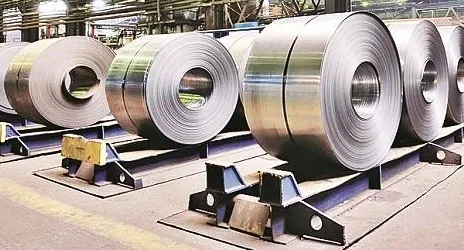
Steel output grew 2.9 per cent in July, and refinery products expanded by 2.7 per cent, according to the official data. While these figures are positive, they trail the headline performers and suggest that the industrial recovery remains uneven across sub-sectors.
Sectors in the Red
Not all core industries shared in the expansion. Natural gas, crude oil, and fertilisers all recorded negative growth in July, tempering the overall picture. These segments have faced persistent structural pressures — from import dependency in fertilisers to maturing domestic fields in oil and gas — that a single month's headline number does not resolve.
June Revised Upward; April–July Cumulative Improves Sharply
The provisional ICI reading for June 2026 has been revised upward from 119.6 to 120.7, lifting the year-on-year growth rate for that month from 5.0 per cent to 6.0 per cent. On a cumulative basis, the April–July 2026 growth rate now stands at 4.3 per cent, a sharp acceleration from 1.5 per cent in the corresponding period of the previous year — a sign that the industrial recovery is broadening as the fiscal year progresses.
With infrastructure spending holding firm and the revised ICI series providing a more current baseline, the trajectory of core industries through the second quarter of FY2026-27 will be closely watched by policymakers and investors alike.
Point of View
But the composition matters more than the number. Iron ore's 29.5 per cent surge is partly a statistical artefact — it enters the index for the first time, so there is no comparable base effect drag. Strip that out and the underlying picture is more moderate. The persistent contraction in natural gas, crude oil, and fertilisers is a recurring drag that infrastructure-led growth cannot paper over indefinitely. The real signal is the cumulative April–July acceleration to 4.3 per cent from 1.5 per cent — that shift is broad-based enough to be meaningful, and it puts the government's full-year industrial growth narrative on firmer ground heading into the Budget review cycle.
NationPress
20 Aug 2026
Frequently Asked Questions
What is India's Index of Core Industries and why does it matter?
The Index of Core Industries (ICI) tracks output across nine key sectors — coal, crude oil, natural gas, refinery products, fertilisers, steel, cement, electricity, and now iron ore — that collectively influence a wide range of downstream industries. A sustained rise in the ICI is typically a leading indicator of broader industrial and GDP growth.
Which sectors drove the 5.4 per cent ICI growth in July 2026?
Iron ore (up 29.5 per cent), cement (up 13.1 per cent), and electricity (up 9 per cent) were the primary drivers. Coal output also rose 7.6 per cent, while steel and refinery products posted moderate gains of 2.9 per cent and 2.7 per cent respectively.
Why has iron ore been added to the core industries index?
Iron ore has been included in the revised ICI series — which uses Base Year 2022-23 — due to its intensive use in industrial production and its significant contribution to overall economic development. This expands the index from eight to nine core industries, with the new series taking effect from July 2026.
Which sectors recorded negative growth in July 2026?
Natural gas, crude oil, and fertilisers all contracted in July 2026, partially offsetting gains in other sectors. These three segments have faced structural challenges including import dependency and maturing domestic production fields.
How does the April–July 2026 cumulative growth compare with last year?
The cumulative ICI growth rate for April–July 2026 stands at 4.3 per cent, a sharp improvement from 1.5 per cent in the same period of the previous year, indicating a meaningful broadening of India's industrial recovery.