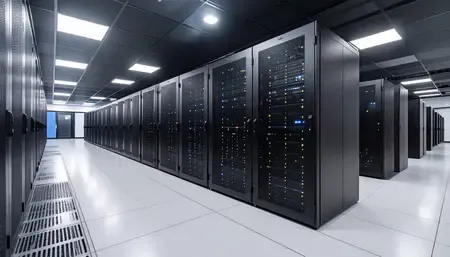
India's Data Centre Capacity Surges Fourfold Since 2020 to 1,500 MW: Minister
Synopsis
India's data centre industry is on a remarkable upward trajectory, with capacity set to soar from 375 MW in 2020 to 1,500 MW by 2025. This growth underscores the country's commitment to advancing technology and supporting AI development.
Key Takeaways
Data centre capacity in India is set to increase significantly.
Approximately 38,231 GPUs have been onboarded to support AI.
Electricity demand from data centres is projected to hit 13.56 GW by 2031-32.
Advanced cooling technologies are being adopted to reduce water usage.
The government's SHANTI Act aims to facilitate reliable energy for data centres.
New Delhi, March 13 (NationPress) The data centre sector in India is experiencing significant expansion, with total capacity projected to grow from approximately 375 MW in 2020 to close to 1,500 MW by 2025, as shared in Parliament on Friday.
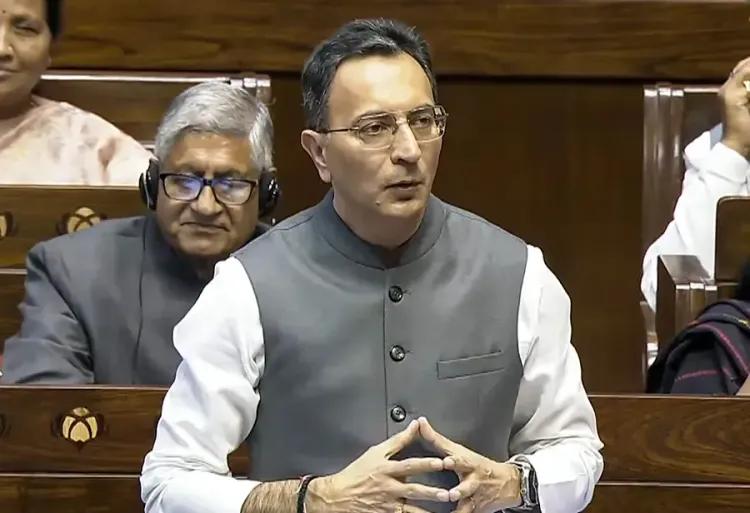
In response to a query in the Rajya Sabha, Union Minister Jitin Prasada revealed that to foster advancements in artificial intelligence (AI), around 38,231 GPUs have been integrated through 14 approved service providers and data centres under the AI compute capacity framework.
These computing resources are accessible to startups, researchers, academic institutions, and other qualified users at a subsidized average rate of Rs 65 per hour, which is approximately one-third of the global average.
The data centres are strategically located in major technology hubs across the country, including Mumbai, Navi Mumbai, Hyderabad, Bengaluru, Noida, and Jamnagar.
The minister emphasized the government's awareness of the essential infrastructure needs of the expanding data centre ecosystem, particularly concerning electricity and water resources.
As per the Ministry of Power, electricity demand from data centres is anticipated to escalate to 13.56 GW by 2031-32 as the sector continues to grow alongside AI and other large-scale computing applications.
The national transmission infrastructure in India is being progressively enhanced to accommodate the rising electricity demand and deliver a reliable power supply throughout various regions.
The recently enacted Sustainable Harnessing and Advancement of Nuclear Energy for Transforming India (SHANTI) Act is also projected to contribute to reliable energy solutions for emerging sectors like AI and data centres by facilitating the future deployment of small modular and micro nuclear reactors.
Prasada pointed out that water usage in data centres varies based on the cooling technologies employed.
Groundwater extraction for industrial purposes, including data centres, is governed by guidelines from the Ministry of Jal Shakti.
To reduce water consumption, the industry is increasingly implementing advanced cooling technologies such as direct-to-chip liquid cooling, adiabatic cooling, and immersion cooling.
Companies are also utilizing high-density racks to effectively support high-performance computing and AI workloads while minimizing overall power and water usage, according to the minister.
Point of View
This expansion is poised to bolster economic growth and innovation.
NationPress
26 Sept 2026
Frequently Asked Questions
What is the current data centre capacity in India?
India's data centre capacity is projected to increase from approximately 375 MW in 2020 to nearly 1,500 MW by 2025.
How is the government supporting AI development in data centres?
The government has onboarded about 38,231 GPUs through 14 empanelled service providers to support AI development.
What cooling technologies are data centres adopting?
Data centres are increasingly using advanced cooling technologies such as direct-to-chip liquid cooling, adiabatic cooling, and immersion cooling.
How much electricity demand is expected from data centres by 2031-32?
The electricity demand from data centres is projected to reach 13.56 GW by 2031-32.
What is the average cost for using AI compute resources?
AI compute resources are provided at a subsidised average rate of Rs 65 per hour.