Is India Entering a ‘Defining Phase’ in Electronics Manufacturing as Global Value Chains Shift?
Synopsis
India's electronics manufacturing is poised for a transformative shift as global value chains realign. With a vision for a $500 billion industry, the country is strengthening its position as a trusted hub for production and exports. Key states like Karnataka are leading this charge, fostering growth and innovation in the sector.
Key Takeaways
India's electronics manufacturing is at a critical juncture.
Aiming for a $500 billion industry requires strategic collaboration.
Karnataka is a leader in mobile phone exports .
Women are increasingly becoming a vital part of the workforce.
Investment in innovation will drive future growth.
New Delhi, Dec 4 (NationPress) India’s electronics manufacturing is embarking on a transformative journey as global value chains undergo a significant realignment, positioning the nation as a reliable production and export hub, according to a recent statement from the Indian Cellular and Electronics Association (ICEA).
To realize the vision of a $500 billion electronics industry, consistent scale, competitiveness, and a stable policy framework across key manufacturing states are essential, the ICEA emphasized.
India’s current fiscal support has laid a robust groundwork, primarily driven by mobile phone production.
The production of mobile phones has surged by over 2700%, while exports have skyrocketed by 130 times, resulting in the creation of more than 1.3 million jobs in the past decade, the ICEA reported.
A significant portion of these jobs has gone to first-time workers, particularly women, who now constitute the backbone of India’s contemporary electronics workforce.
The growth in mobile phone manufacturing has spurred advancements in various sectors, including components, PCBA, chargers, wearables, audio products, industrial electronics, aerospace electronics, toy manufacturing, and other emerging categories.
The ICEA noted that these industries collectively enhance India’s supply chain capabilities, facilitating long-term integration into global value chains. Global companies continue to invest confidently, thereby solidifying India’s reputation in international manufacturing.
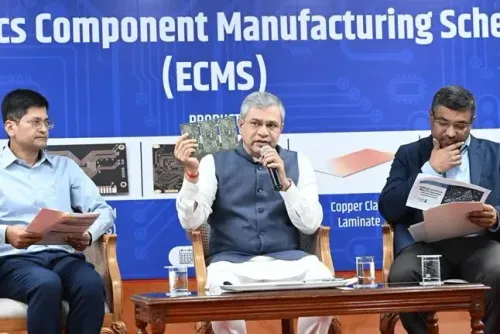
Interest in the ECMS scheme is indicative of this momentum. The ECMS aims to cultivate indigenous capabilities in components and sub-assemblies, fortifying the value chain and fostering Indian champions in the years to come.
The report highlighted Karnataka’s pivotal role in this development, having established an innovation-driven electronics ecosystem supported by a technology-ready workforce and a culture of design and engineering excellence.
Through continued collaboration between industry and government, Karnataka can further propel India’s ambitions for enhanced value addition, supply chain resilience, component and sub-assembly development, and design-led manufacturing.
Karnataka currently contributes over 21.3% of India’s mobile phone exports and approximately 20% of the country’s overall electronics exports.
“Mobile phones account for nearly 65% of Karnataka’s total electronics exports,” the industry body pointed out.
“We had in-depth discussions with ICEA about opportunities to expand the electronics and mobile manufacturing sectors in Karnataka. The state’s investment-friendly climate, substantial government incentives, and the vision document in progress position Karnataka to attract greater investments, generate quality jobs, and broaden advanced technical opportunities for our citizens,” stated M. B. Patil, the state’s Minister for Large and Medium Scale Industries and Infrastructure Development.
This decade presents a significant opportunity for all major states to collaborate closely with industry and the Centre to fortify India’s electronics value chain. Regular outreach, ecosystem development, and long-term policy consistency will steer India toward its global electronics aspirations, the release concluded.
Point of View
The ongoing transformation in India's electronics manufacturing is a promising development. The collaborative efforts between the government and industry are essential for realizing the ambitious targets set for the sector. Maintaining a stable policy environment and fostering innovation will be crucial as India positions itself on the global stage.
NationPress
4 Oct 2026
Frequently Asked Questions
What is the projected size of India's electronics industry?
India aims to achieve a size of $500 billion for its electronics industry.
How much has mobile phone production increased in India?
Mobile phone production in India has surged by over 2700% in the last decade.
What role does Karnataka play in India's electronics exports?
Karnataka accounts for over 21.3% of India's mobile phone exports and about 20% of the overall electronics exports.
What initiatives are driving growth in India's electronics sector?
The ECMS scheme and government incentives are key initiatives driving growth and innovation in India's electronics sector.
How many jobs have been created in the electronics sector in the past decade?
Over 1.3 million jobs have been created in the electronics sector in India over the past ten years.