How Will India’s Energy Sector Become a Global Case Study?

Synopsis
India's energy sector is on the brink of becoming a global benchmark for sustainability and innovation. Piyush Goyal outlines the remarkable journey from power scarcity to surplus, emphasizing key pillars that support this transformative progress. Discover how India's energy landscape is evolving and what it means for the future.
Key Takeaways
Surplus power generation is now a reality in India.
The country is a leader in renewable energy solutions.
Five key pillars support India's energy transformation.
Significant reductions in power shortages have been achieved.
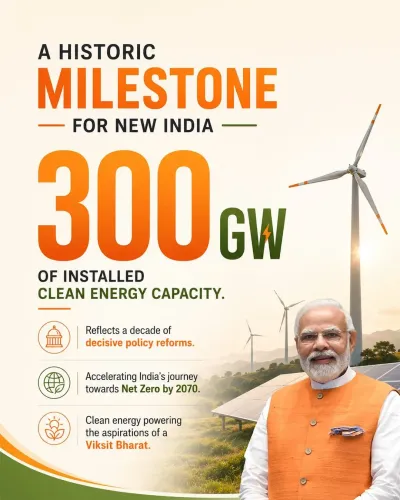
India is on track to achieve its Paris Agreement goals.
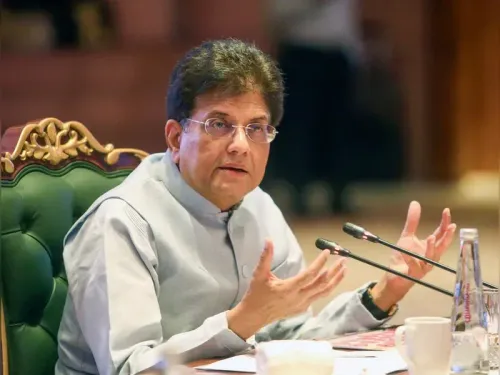
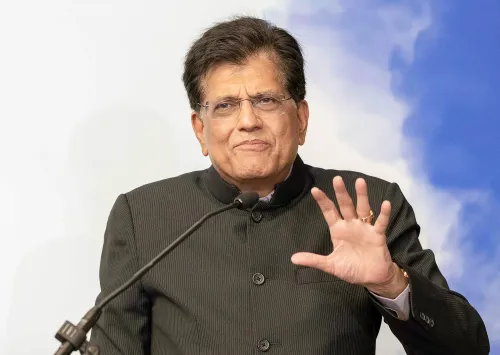
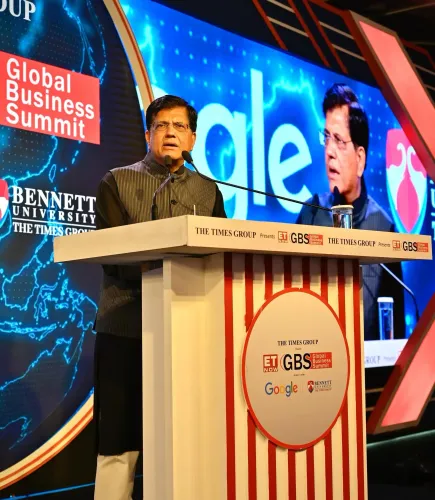
New Delhi, Dec 15 (NationPress) The nation has progressed towards surplus power generation, grid integration, and a leading role in renewable energy, stated Piyush Goyal, the Commerce and Industry Minister, on Monday. He emphasized that the past 11 years of India’s energy sector evolution demonstrate that bold vision, honest intent, and relentless execution can transform a country's destiny.
Goyal clarified that this transformation was intentional, stemming from a clear vision and unwavering efforts. He noted that India has shifted from power scarcity to power security, and is now progressing towards power sustainability.
With confidence, Goyal asserted that as India advances toward Viksit Bharat by 2047, the energy sector will serve as a global case study in effectively managing scale, speed, and sustainability.
During a briefing, he reported that the country achieved its highest ever coal production of 1,048 million tonnes in FY 2024–25, while coal imports have decreased by approximately 8 percent.
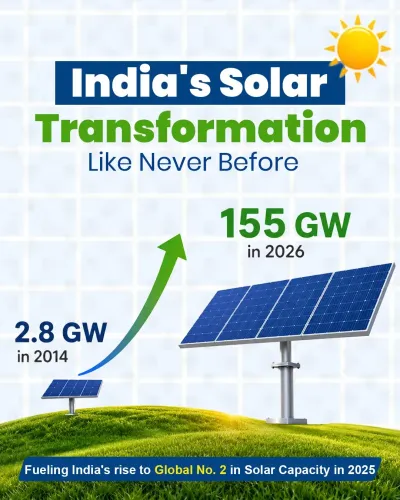
Additionally, Goyal highlighted that India’s solar power capacity has surged 46 times over the past 11 years, positioning the country as the third-largest globally, with wind power capacity increasing from 21 GW in 2014 to 53 GW in 2025.
He further mentioned that India has established itself as the fourth-largest refining hub globally and is working on enhancing its refining capacity by 20 percent.
The minister shared that a total of 34,238 km of natural gas pipelines have been authorized, with 25,923 km already operational.
Moreover, he introduced the SHANTI Bill, which aims to facilitate private sector participation in the nuclear energy domain.
Goyal outlined that this transformation is anchored on five fundamental pillars.
The first pillar is universal access. He emphasized that electricity has been made available to every household through the Saubhagya scheme, and 47.4 crore LED bulbs were distributed under the UJALA programme, leading to savings on electricity bills and reduced carbon emissions.
The second pillar is affordability. He pointed out that the GST on clean energy equipment like solar and wind was reduced from 12 percent to 5 percent. Furthermore, the ethanol blending target of 20 percent was achieved ahead of schedule, originally set for 2030.
He also stated that inter-State transmission charges for the sale of solar and wind power have been waived.
The third pillar is availability. Power shortages decreased from 4.2 percent in 2013 to 0.1 percent in 2025. The establishment of a unified national grid has empowered India to fulfill a record peak power demand of 250 GW.
The fourth pillar is financial viability. Reforms under the PM-UDAY scheme have fortified the power distribution sector, with DISCOM dues reduced from Rs 1.4 lakh crore in 2022 to Rs 6,500 crore in 2025.
Lastly, Goyal highlighted the fifth pillar as sustainability and global responsibility. He noted that India has become the first G20 nation to meet the objectives of the Paris Agreement, with 50 percent of the installed power capacity now sourced from non-fossil fuels.
Point of View
It is essential to recognize India's remarkable journey towards energy sustainability. The strategic vision and execution illustrated by Piyush Goyal and the government reflect a commitment to not only meeting domestic energy needs but also setting a benchmark for global practices in sustainability.
NationPress
24 Sept 2026
Frequently Asked Questions
What is the main focus of India's energy transformation?
The primary focus is on transitioning from power scarcity to power sustainability, emphasizing renewable energy and technology integration.
How has India's solar power capacity changed?
India's solar power capacity has increased by 46 times over the past 11 years, making it the third-largest solar power producer globally.
What are the five pillars of India's energy transformation?
The five pillars are universal access, affordability, availability, financial viability, and sustainability.
What milestones has India achieved in coal production?
India recorded its highest-ever coal production of 1,048 million tonnes in FY 2024–25.
What is the significance of the SHANTI Bill?
The SHANTI Bill aims to allow private players to engage in the nuclear energy sector, promoting investment and innovation.