India's Metro Rail Expansion: A Catalyst for Urban Growth and Financial Relief
Synopsis
Discover how India's metro rail network has transformed urban mobility and economic stability over the past decade, becoming the world's third largest while promoting sustainable growth and reducing financial burdens for households.
Key Takeaways
India's metro rail network has grown to be the third largest in the world.
Over 1,000 km of metro connectivity has been established across 26 cities .
Investment in metro projects has surged, with annual budgets increasing significantly.
Metro services enhance economic stability and reduce transportation costs.
Innovations like the Water Metro in Kochi set benchmarks for sustainable urban mobility .
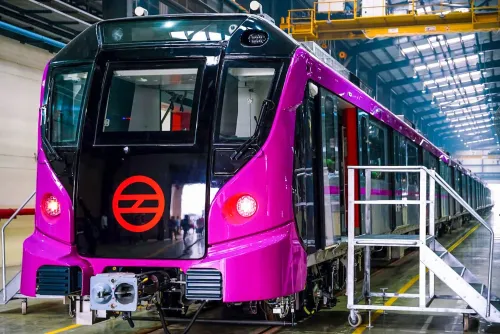
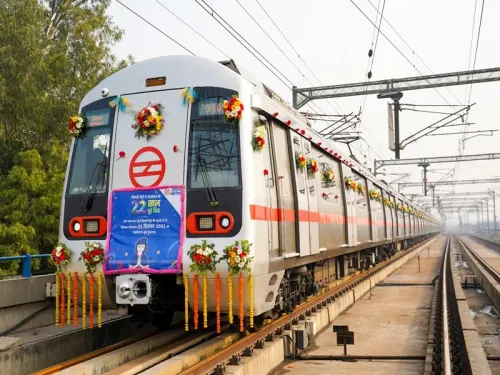
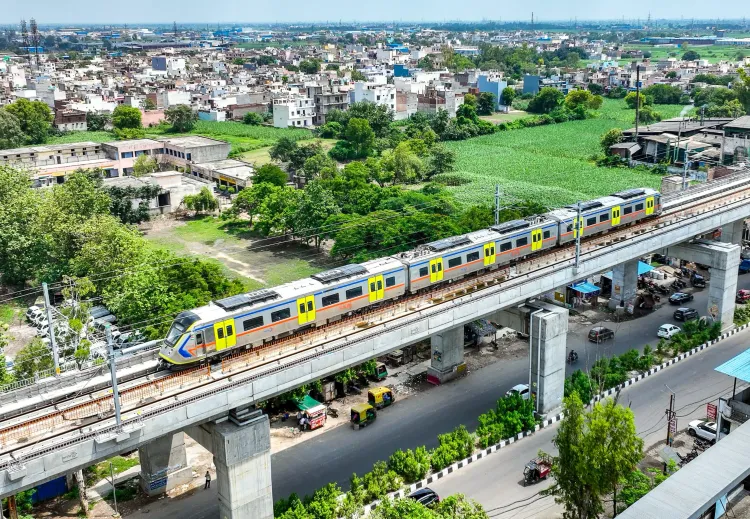
New Delhi, March 15 (NationPress) In the last eleven years, India has experienced an extraordinary growth in its metro rail framework, now ranking as the third largest globally.
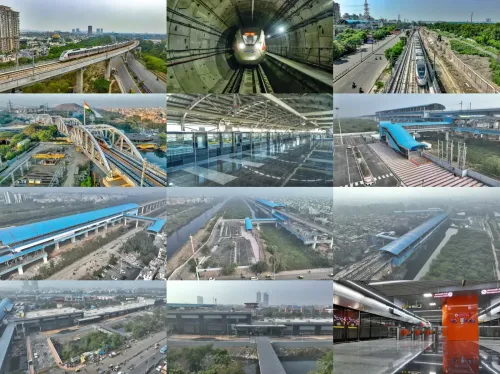
Starting with merely a few operational lines across five cities in 2014, the network has now expanded to encompass 26 cities, achieving over 1,000 kilometres of metro coverage. This significant development has revolutionized urban travel, providing quicker, cleaner, and more dependable transportation options while also alleviating road congestion, as noted in an official statement released on Sunday.
The government has initiated an extensive urban transport strategy, approving 38 metro rail projects which span a total of 1,051 km and have an estimated budget of Rs 3.44 lakh crore since 2014. The annual budget for metro systems escalated from Rs 5,798 crore in 2013–14 to a projected Rs 29,550 crore by 2025–26.
Metro Rail significantly reduces household transportation expenses and promotes a healthier environment. Beyond serving as a travel option, investments in metros have emerged as catalysts for economic growth—creating jobs, enhancing access to education and healthcare, and improving the overall quality of life for families in India's swiftly urbanizing cities, as stated.
A study conducted by the Economic Advisory Council to the Prime Minister (EAC-PM) highlights the broad economic and social advantages resulting from metro development, spanning from financial stability to sustainable urban advancement.
Metro connectivity leads to lower transportation costs, which subsequently reduces delays in loan repayments and encourages timely home loan payoffs. In Delhi, instances of missed payments decreased by 4.42 percent, while early repayments rose by 1.38 percent. Similarly, in Bengaluru, delays dropped by 2.4 percent and early repayments increased by 3.5 percent. In Hyderabad, missed payments decreased by 1.7 percent, and early repayments saw a growth of 1.8 percent, according to the study.
Metro services are currently operational in key cities like Delhi & NCR, Mumbai, Bengaluru, Kolkata, Hyderabad, Chennai, Lucknow, Pune, Ahmedabad, and others. Notably, in April 2023, Kochi in Kerala became the first city in India to launch a Water Metro. This innovative system links 10 islands with electric-hybrid boats, providing seamless and eco-friendly transportation while setting a standard for sustainable urban mobility.
India's metro and Namo Bharat Regional Rapid Transit System (RRTS) initiatives have made significant strides, incorporating world-class technologies that enhance safety, efficiency, and sustainability.
For the first time globally, Namo Bharat trains operating on the Delhi–Meerut RRTS corridor employ a Hybrid level-III radio-based signaling system integrated with a Long Term Evolution (LTE) backbone. This cutting-edge technology ensures smarter and safer train operations, offering passengers an elevated sense of security and confidence during their travels.
Point of View
The expansion of India's metro rail network represents a significant advancement in urban infrastructure, directly impacting economic stability and everyday life for citizens. This development aligns with a nation-first approach, showcasing a commitment to sustainable urban growth and public welfare.
NationPress
24 Sept 2026
Frequently Asked Questions
How has the metro rail network in India changed over the years?
The metro rail network in India has expanded significantly from five cities in 2014 to 26 cities today, covering over 1,000 kilometres.
What economic benefits does the metro rail provide?
Metro rail reduces household transportation costs, promotes job creation, and enhances access to essential services, contributing to overall economic growth.
What is the significance of the Namo Bharat RRTS?
The Namo Bharat RRTS is noteworthy for its advanced signaling technology, enhancing train safety and operational efficiency.
How does metro connectivity affect loan repayments?
In cities like Delhi and Bengaluru, metro connectivity has led to reduced delays in loan repayments and increased early repayments, improving financial health for households.
What innovative transport system was launched in Kochi?
Kochi introduced India’s first Water Metro, connecting islands with electric-hybrid boats for sustainable transportation.