Integrated mobility and TOD key to India's urban future, experts say
Synopsis
With India set to add the equivalent of a medium-sized city to its urban population every month, experts at a national conclave in New Delhi have warned that fragmented mobility systems are a 'silent tax on growth' — and that integrated metro rail, RRTS, and transit-oriented development are the only credible answers to the country's looming urban crisis.
Key Takeaways
Nearly 40 per cent of India's population is projected to live in urban areas by 2036 , driving urgent demand for metro infrastructure expansion.
Chintan Research Foundation (CRF) convened the national conclave 'Metros in Metros' in New Delhi on 17 June to shape urban mobility policy.
Vikas Kumar said metro success should be measured by development quality around stations, not just track length.
Transit-Oriented Development (TOD) — compact, mixed-use, transit-accessible communities — was identified as a key tool for sustainable urban growth.
CRF President Shishir Priyadarshi described congestion as a 'silent tax on growth' and called for metro stations to become economic activity hubs.
NCRTC MD Shalabh Goel said India's metro systems now rank alongside the world's leading transit networks in technology and innovation.
India is in the midst of one of the largest urban transitions in recorded history, with nearly 40 per cent of its population projected to live in cities by 2036, making the rapid expansion of metro infrastructure a national imperative, leading urban mobility experts said at a national conclave held in New Delhi on 17 June.
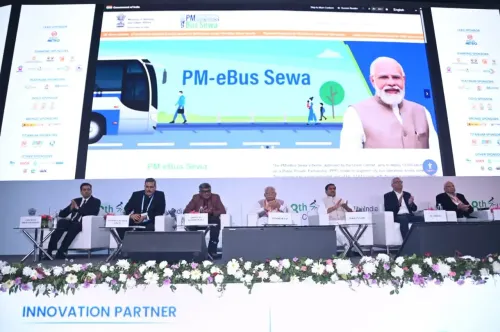
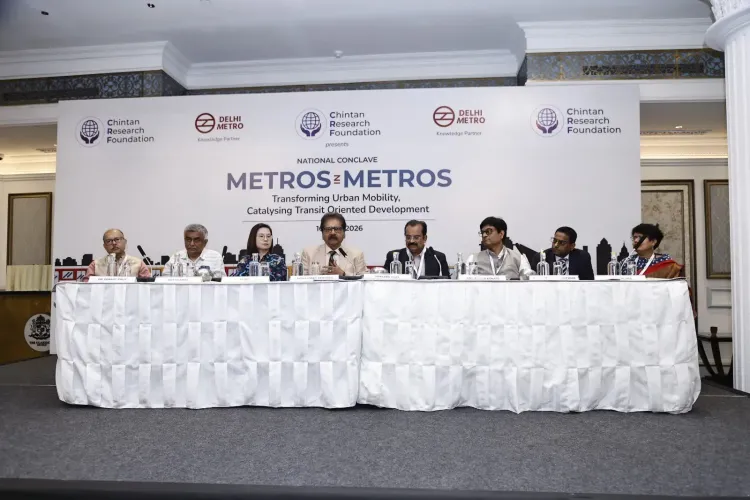
The conclave, titled 'Metros in Metros: Transforming Urban Mobility, Catalysing Transit-Oriented Development', was convened by the Chintan Research Foundation (CRF) to shape policy dialogue around India's urban mobility crisis and the role of integrated transit systems in addressing it.
Urban Rail as the Backbone of Growth
M. Jamshed, Distinguished Fellow at CRF and former Member (Traffic) of the Railway Board, said urban rail systems have become indispensable to modern cities worldwide. He stressed that the challenge is not merely to accommodate urban growth, but to build cities that are productive, inclusive, and environmentally sustainable — underpinned by integrated transport and land-use planning.
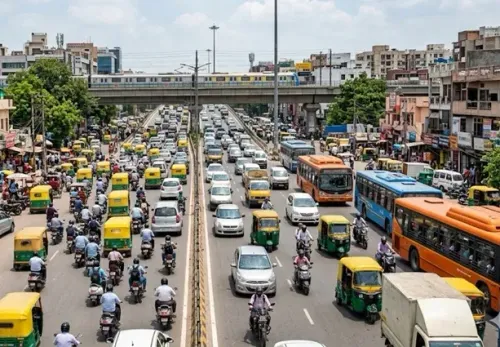
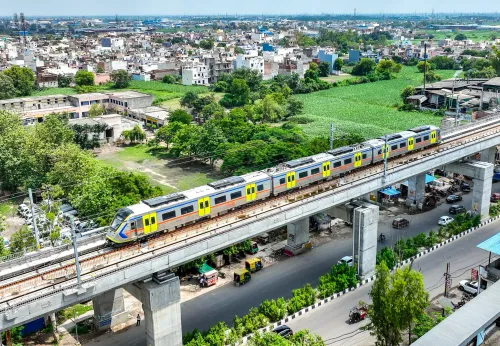
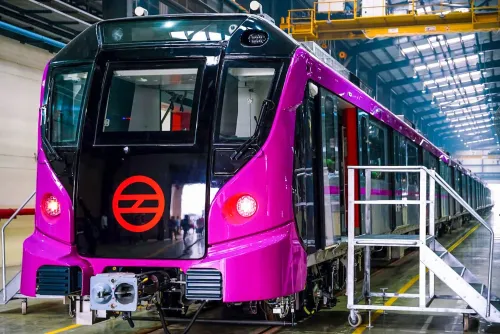
Participants at the conclave underscored the expanding role of Metro Rail, Regional Rapid Transit Systems (RRTS), and Suburban Rail Networks as the structural backbone of India's urban mobility ecosystem. The consensus was clear: fragmented mobility systems and unchecked congestion are imposing measurable economic and environmental costs on Indian cities.
What DMRC's MD Said
Dr. Vikas Kumar, Managing Director of the Delhi Metro Rail Corporation (DMRC), offered a sharp framing: 'Advanced cities are not those where the poor drive cars, but those where the rich use public transport.' He described metro systems as engines of economic growth and urban transformation, arguing that their success should be measured not in kilometres of track laid, but in the quality of development created around them. He called for transit systems that are safe, inclusive, and efficient for all citizens.
Dr. Kumar also highlighted Transit-Oriented Development (TOD) as a critical lever — compact, mixed-use, transit-accessible communities that can drive sustainable urban growth, provided they are backed by coordinated planning and innovative financing mechanisms.
The Scale of the Challenge
Shishir Priyadarshi, President of CRF, put the scale in stark terms: India is effectively adding the equivalent of a medium-sized city to its urban population every month. He described congestion as a 'silent tax on growth' that falls on all citizens equally, and argued that metro stations must evolve beyond transit stops into hubs of economic activity.
'The real question is not how urban transport drives growth, but how economic growth can translate into better urban transport systems and more liveable cities,' Priyadarshi said.
Planning, Execution, and Global Benchmarks
Dr. Brijesh Dixit, Managing Director of the Maharashtra State Infrastructure Development Corporation (MSIDC), stressed that the success of urban mobility projects depends fundamentally on robust planning and execution — including strong documentation, well-designed tender conditions, and clearly defined project parameters.
Shalabh Goel, Managing Director of the National Capital Region Transport Corporation (NCRTC), said India's metro systems now stand alongside the world's leading transit networks in technology and innovation, and called for resilient, integrated mobility systems tailored to India's urban aspirations.
With India's urban population set to swell dramatically over the next decade, the conclave's central message was unambiguous: integrated mobility and transit-oriented development are not optional add-ons, but foundational requirements for the country's urban future.
Point of View
Not just movement. The emphasis on TOD and integrated land-use planning is overdue, given that most Indian cities have built metro lines without reforming the zoning and financing frameworks around them. The DMRC MD's remark about the rich using public transport cuts to the core of a political economy problem: metro systems in India are still perceived as welfare infrastructure rather than productivity infrastructure. Until that perception shifts — and until TOD financing is mainstreamed — the gap between track kilometres and liveable-city outcomes will persist.
NationPress
16 Sept 2026
Frequently Asked Questions
What is Transit-Oriented Development (TOD) and why is it important for India?
Transit-Oriented Development refers to compact, mixed-use, transit-accessible communities built around mass transit hubs such as metro stations. Experts at the CRF conclave argued it is essential for India because it links urban growth directly to public transport investment, reducing sprawl and congestion while making cities more economically productive.
Why is India's urban mobility situation considered a crisis?
India is projected to have nearly 40 per cent of its population living in cities by 2036, effectively adding the equivalent of a medium-sized city to its urban population every month. Fragmented mobility systems and congestion are already imposing significant economic and environmental costs, making efficient public transport a national development priority.
What did DMRC Managing Director Dr. Vikas Kumar say at the conclave?
Dr. Vikas Kumar said that 'advanced cities are not those where the poor drive cars, but those where the rich use public transport.' He argued that metro success should be measured by the quality of development around stations, not merely by kilometres of track laid, and called for safe, inclusive, and efficient transit systems.
Which organisations and officials participated in the CRF urban mobility conclave?
The conclave was convened by the Chintan Research Foundation (CRF) and featured senior officials including DMRC MD Dr. Vikas Kumar, NCRTC MD Shalabh Goel, MSIDC MD Dr. Brijesh Dixit, CRF Distinguished Fellow M. Jamshed, and CRF President Shishir Priyadarshi.
How do Metro Rail, RRTS, and Suburban Rail fit into India's urban mobility plan?
Experts at the conclave described Metro Rail, Regional Rapid Transit Systems (RRTS), and Suburban Rail Networks as the structural backbone of India's urban mobility ecosystem. Together, they are expected to provide the integrated, high-capacity transit infrastructure needed to support India's rapidly urbanising population.