India's 413 mn vehicle fleet spurs call for new urban transport policy
Synopsis
India's vehicle fleet has ballooned from 90 million to 413 million in under two decades — and the 2006 policy meant to manage that growth has visibly failed. A formal ISPP review now recommends a new national urban transport policy by 2026, one that goes beyond standalone metro projects to tackle freight, app-based mobility, smaller cities, and climate resilience.
Key Takeaways
India's registered vehicle fleet crossed 413 million in 2025 , up from 90 million in 2006 — an addition of over 320 million vehicles in two decades.
The Indian School of Public Policy (ISPP) launched a formal review of the 2006 National Urban Transport Policy on 8 June in New Delhi .
The review found the 2006 policy's public and non-motorised transport vision was not matched by outcomes; a new policy is recommended for 2026 .
Key gaps identified: parking management , urban freight , app-based transport , e-commerce logistics , climate resilience , and mobility for smaller cities .
Former NITI Aayog CEO BVR Subrahmanyam called for embedding urban transport within a broader urbanisation framework to manage congestion and enable liveable cities.
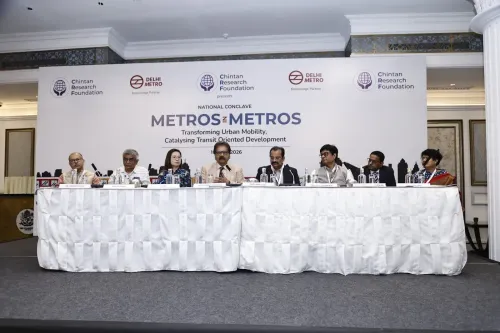
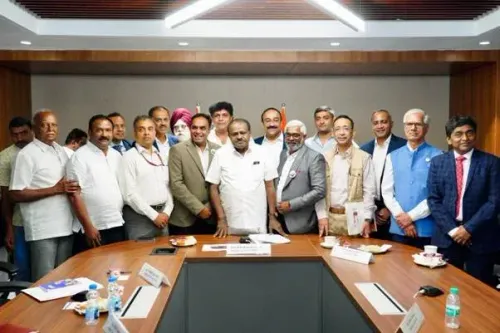
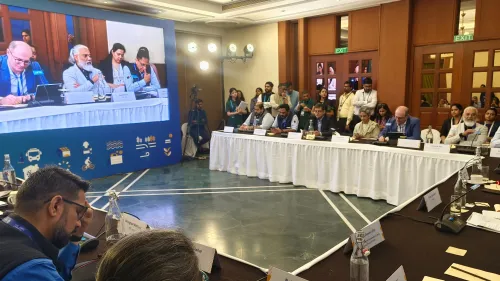
With India's registered vehicle fleet surpassing 413 million, transport and policy experts on Monday, 8 June called for a comprehensive new urban transport framework, as the Indian School of Public Policy (ISPP) formally launched a review of the country's 2006 National Urban Transport Policy in New Delhi. The review, conducted through ISPP's Centre for Urban Transitions (ICUT), concluded that the nearly two-decade-old policy's vision for public and non-motorised transport has not been matched by on-ground outcomes.
Scale of the Problem
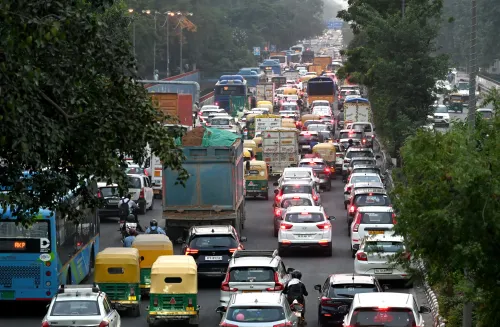
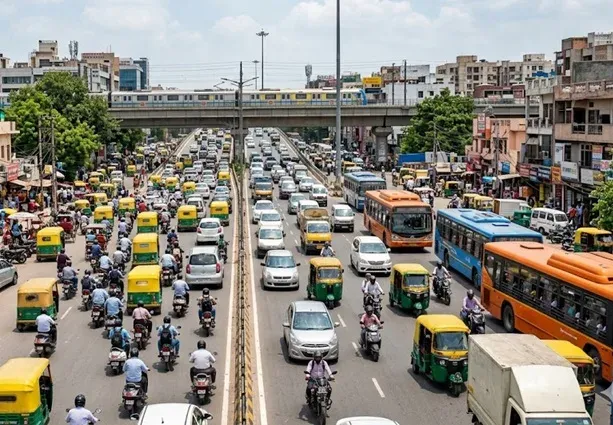
India's vehicle fleet has grown from roughly 90 million in 2006 to over 413 million in 2025 — an addition of more than 320 million vehicles in two decades. This explosive growth has outpaced the policy architecture designed to manage it, experts noted at the launch event, which drew urban planners, transport specialists, and former government officials.
Where the 2006 Policy Fell Short
The review found that implementation of the existing policy frequently prioritised stand-alone metro rail projects that were not integrated with broader mobility networks or land-use planning. Several issues now central to urban transport — including parking management, urban freight movement, the mobility needs of smaller cities, app-based transport services, e-commerce logistics, and climate resilience — were not adequately addressed in the 2006 framework. The report recommended a new policy be enacted in 2026 to reflect these contemporary challenges.
What Experts Said
Dr Parth Shah, Dean and Co-founder of the Indian School of Public Policy, argued that India has historically treated cities as an afterthought. 'India has never really had a comprehensive urbanisation policy because we long believed that India lives in its villages, and cities were often treated as an afterthought,' he said, adding that many problems the 2006 policy targeted have worsened due to the absence of coherent urban governance.
BVR Subrahmanyam, former CEO of NITI Aayog, stressed that India's economic growth will increasingly be driven by its cities. 'The next generation of policy must embed urban transport within a broader urbanisation framework that plans for growth, manages congestion and creates more liveable cities,' he said.
Sanjiv Sahai, former Managing Director of DIMTS and former Secretary of the Ministry of Power, pointed to the fundamental behavioural challenge: 'If public transport and walking remain inconvenient, people will continue to prefer private vehicles. The future of urban mobility lies in making public transport easier, more accessible and more reliable.'
Why a 2026 Policy Matters
India's urban population is projected to cross 600 million by 2036, according to government estimates, making the current policy vacuum increasingly costly. The review's recommendation for a 2026 policy comes at a time when cities are grappling with worsening air quality, chronic congestion, and rising road fatalities — all compounded by a vehicle fleet growing at a pace that public infrastructure has consistently failed to match. Notably, this is the first structured review of the 2006 policy to be undertaken by a major public policy institution, lending it added weight in ongoing policy conversations.
What Comes Next
The ISPP review is expected to feed into consultations with the Ministry of Housing and Urban Affairs and state governments. Industry bodies and urban planners have signalled support for a framework that integrates transit-oriented development, first-and-last-mile connectivity, and freight logistics into a single national vision. Whether the Centre moves to formalise a new policy before the 2026 deadline the review proposes remains to be seen.
Point of View
Capital-intensive, and often disconnected from last-mile reality — is perhaps the most damaging legacy of the 2006 framework. What India's cities actually need is unglamorous: integrated bus networks, safe footpaths, and freight logistics that do not choke arterial roads at dawn. The harder question the review does not fully answer is governance: urban transport in India is fragmented across municipal bodies, state transport undertakings, and central ministries, and no new policy document will fix that without a clear authority structure. A 2026 policy is necessary but not sufficient.
NationPress
23 Oct 2026
Frequently Asked Questions
Why is India's 2006 National Urban Transport Policy being reviewed?
The 2006 policy is being reviewed because its vision for public and non-motorised transport has not been matched by outcomes, and India's urban transport landscape has changed dramatically since then. India's vehicle fleet has grown from 90 million in 2006 to over 413 million in 2025, and new challenges such as app-based mobility, e-commerce logistics, and climate resilience were not addressed in the original framework.
Who is conducting the review of India's urban transport policy?
The review is being conducted by the Indian School of Public Policy (ISPP) through its Centre for Urban Transitions (ICUT). The launch event on 8 June in New Delhi brought together transport experts, urban planners, and former senior government officials.
What are the main gaps identified in the 2006 urban transport policy?
The review identified several critical gaps: over-reliance on standalone metro rail projects not integrated with broader mobility networks, and insufficient attention to parking management, urban freight, smaller city mobility, app-based transport services, e-commerce logistics, and climate resilience.
When is a new urban transport policy expected?
The ISPP review has recommended that a new national urban transport policy be enacted in 2026. Consultations with the Ministry of Housing and Urban Affairs and state governments are expected to follow the review's publication.
How fast has India's vehicle fleet grown since 2006?
India's registered vehicle fleet grew from approximately 90 million in 2006 to more than 413 million in 2025, meaning over 320 million vehicles were added in under two decades. This rapid growth has far outpaced the infrastructure and policy frameworks designed to manage urban mobility.