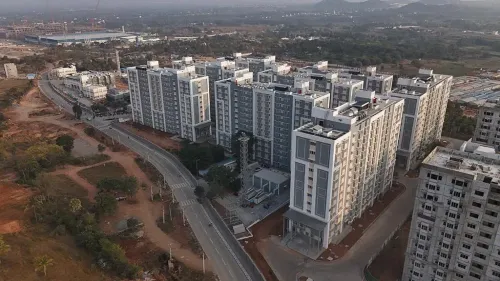
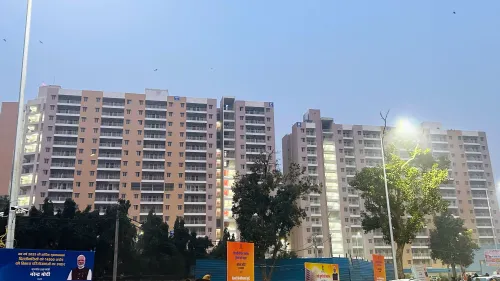
India needs ₹80 trillion urban infrastructure investment by 2037: BWR

Synopsis
India's cities need ₹80 trillion by 2037 — but only 17 have ever issued a municipal bond, raising a combined ₹45.4 billion since FY18. The Urban Challenge Fund bets that flipping the financing model from grants to market-driven capital can unlock ₹4 trillion. The yield spread compression from 480 bps to 155 bps suggests investors are warming up — the question is whether ULBs can meet them halfway.
Key Takeaways
India requires nearly ₹80 trillion in urban infrastructure investment by 2037 , according to Brickwork Ratings (BWR) .
Urban areas are projected to contribute 70 per cent of India's GDP by 2036 .
The Urban Challenge Fund (UCF) , a ₹1 trillion central scheme, aims to catalyse ₹4 trillion in total urban investment over five years.
ULBs must raise at least 50 per cent of project financing independently before central support is unlocked.
Only 17 cities have issued municipal bonds since FY18 , raising a combined ₹45.4 billion .
Municipal bond yield spreads have narrowed from 480 bps in FY20 to 155 bps in FY26, reflecting improved investor confidence.
India requires nearly ₹80 trillion in urban infrastructure investment by 2037 to keep pace with rapid urbanisation and sustain economic growth, according to a report released on Friday, 15 May by credit ratings agency Brickwork Ratings (BWR). The findings underscore a structural financing challenge that will define India's urban trajectory over the next decade.
Urban Areas and GDP Contribution
According to the BWR report, urban centres are projected to contribute nearly 70 per cent of India's GDP by 2036, elevating sustainable urban financing from a policy preference to a national imperative. The scale of required investment — roughly ₹80 trillion over 13 years — dwarfs current municipal financing capacity across most Indian cities.
The Urban Challenge Fund Model
At the centre of the government's response is the Urban Challenge Fund (UCF), a ₹1 trillion central scheme designed to catalyse nearly ₹4 trillion in total urban investments over five years. The UCF marks a decisive shift from India's traditional grant-driven urban development model to a market-driven financing framework.
Under the structure, Urban Local Bodies (ULBs) must independently raise at least 50 per cent of project financing through municipal bonds, bank loans, or public-private partnerships (PPPs) before central support is unlocked. The central government contributes 25 per cent of project costs, with states and ULBs funding the remainder. The model is explicitly designed to build fiscal discipline, transparency, and creditworthiness among ULBs.
Municipal Bond Market: Large Opportunity, Thin Track Record
Despite the ambition, the municipal bond market remains nascent. Since FY18, only 17 cities have issued municipal bonds, raising a combined ₹45.4 billion — a fraction of what the UCF aims to mobilise. Manu Sehgal, Chief Executive Officer of Brickwork Ratings, said the UCF 'could significantly deepen India's municipal finance ecosystem, particularly by expanding participation in the municipal bond market,' adding that the sector represents a 'large untapped financing opportunity.'
Investor sentiment, however, has been improving. Yield spreads on municipal bonds have narrowed sharply — from roughly 480 basis points in FY20 to approximately 155 basis points in FY26 versus the Reserve Bank of India (RBI) repo rate — signalling growing market confidence in city-level credit.
Credit Guarantees and Execution Risks
The UCF's ₹5,000 crore Credit Repayment Guarantee Scheme is intended to improve investor confidence by providing guarantees for first-time loans to smaller ULBs, broadening the investable universe for lenders. BWR notes, however, that while bank loans do not require formal credit ratings, over-reliance on institutional lending alone keeps cities tethered to state guarantees and limits financing diversification.
The report flags material execution risks: many ULBs lack the institutional capacity, revenue base, and governance frameworks required to independently access capital markets at scale. Without formal credit ratings and stronger fiscal management, the shift from grants to market financing could stall at the implementation stage.
What Happens Next
The success of the UCF model will depend on how quickly ULBs can build creditworthiness and attract private capital. Industry observers expect the next few years to be a critical test of whether India's urban bodies can transition from state-dependent entities to credible market borrowers — a shift that, if achieved, could fundamentally reshape how Indian cities are built and financed.
Point of View
But the more telling number is 17 — the count of Indian cities that have ever accessed the municipal bond market in nearly a decade. The UCF's market-driven model is structurally sound, but it assumes a level of ULB creditworthiness and governance capacity that most cities do not yet possess. Compressing yield spreads is encouraging, but spread compression driven by a thin, cherry-picked issuance pool is not the same as broad market depth. The real test is whether smaller ULBs — the ones the Credit Repayment Guarantee Scheme targets — can attract capital without state backstops. If they cannot, the UCF risks being another well-designed scheme that benefits only the cities already capable of benefiting.
NationPress
9 Oct 2026
Frequently Asked Questions
Why does India need ₹80 trillion in urban infrastructure investment by 2037?
India needs ₹80 trillion in urban infrastructure by 2037 to support rapid urbanisation and economic growth, according to Brickwork Ratings. Urban areas are projected to contribute nearly 70 per cent of India's GDP by 2036, making large-scale urban financing a national priority.
What is the Urban Challenge Fund (UCF)?
The Urban Challenge Fund is a ₹1 trillion central government scheme designed to shift India's urban development financing from a grant-driven to a market-driven model. It aims to catalyse nearly ₹4 trillion in total urban investments over five years, requiring ULBs to raise at least 50 per cent of project costs independently before central funds are released.
How developed is India's municipal bond market?
India's municipal bond market remains underdeveloped. Since FY18, only 17 cities have issued municipal bonds, raising a combined ₹45.4 billion — a small fraction of the financing the UCF aims to mobilise. However, yield spreads have narrowed from around 480 basis points in FY20 to roughly 155 basis points in FY26, indicating improving investor confidence.
What is the ₹5,000 crore Credit Repayment Guarantee Scheme?
It is a component of the UCF designed to improve investor confidence by providing guarantees for first-time loans to smaller Urban Local Bodies. The scheme aims to broaden the investable universe for lenders and help cities that have not previously accessed capital markets to do so.
What execution risks does the BWR report flag?
Brickwork Ratings warns that many ULBs lack the institutional capacity, revenue base, and governance frameworks needed to independently access capital markets. Over-reliance on bank lending without formal credit ratings keeps cities dependent on state guarantees and limits financing diversification, the report notes.