Iran's Call for US VP Vance to Join Islamabad Peace Talks: Insights from Former Diplomat Veena Sikri
Synopsis
Former Indian diplomat Veena Sikri reveals Iran's request for US Vice-President J.D. Vance to attend peace talks in Pakistan, citing his anti-war stance. She criticizes Pakistan's role as scripted by the US and highlights the mistrust Iran harbors towards American involvement.
Key Takeaways
Iran requested US VP Vance's involvement in peace talks.
Pakistan's role is seen as orchestrated by the US.
The ceasefire arose from global concerns over the Strait of Hormuz.
Iran exhibits resilience despite ongoing military actions.
Mistrust towards the US complicates current negotiations.
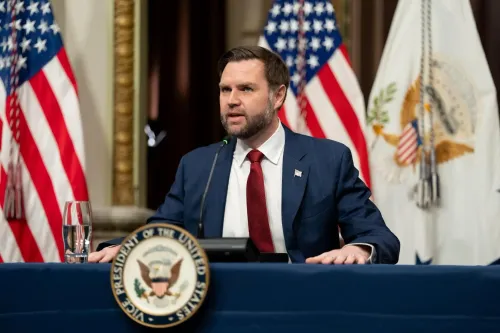
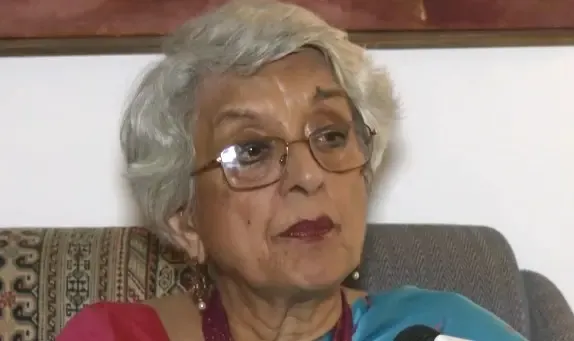
New Delhi, April 11 (NationPress) Former Indian High Commissioner to Bangladesh, Veena Sikri, stated on Saturday that Iran had requested US Vice-President J.D. Vance to participate in the ongoing peace negotiations in Islamabad, Pakistan, due to his anti-war stance. She characterized Pakistan's involvement in facilitating these discussions as "orchestrated" by the United States.
In an interview with IANS, Sikri mentioned, "Recently, US President Donald Trump declared his intention to 'obliterate Iran', and the ceasefire was reportedly established at the last moment."
She pointed out that the ceasefire agreement between the US and Iran arose from significant global concerns regarding the potential closure of the Strait of Hormuz.
Additionally, she remarked, "Iran's consistent military actions demonstrate its independence and resilience."
Current peace discussions between US and Iranian representatives are taking place in Islamabad, facilitated by Pakistan’s Prime Minister Shehbaz Sharif.
Sikri recalled that similar talks occurred in February in Muscat, mediated by Omani Foreign Minister Badr bin Hamad Al Busaidi.
"The Omani Foreign Minister had mentioned a breakthrough during those discussions, as Iran reportedly accepted all the US's conditions," the former diplomat noted.
She expressed that despite the earlier reported breakthrough, Israel launched an attack on Iran, which was supported by the US, leading her to believe that "Iran has developed a mistrust" towards them, rendering the current talks subject to skepticism.
The former diplomat emphasized that this, along with Iran's previous experiences with President Trump's Special Envoy Steve Witkoff and Jared Kushner, is why Iran has insisted on US Vice-President Vance's attendance at the talks.
"In the United States, it's often said that JD Vance has consistently opposed war," Sikri remarked.
She highlighted that direct talks between Washington and Tehran have yet to commence, stating, "If these direct conversations begin soon, it may lead to some negotiation."
Citing reports from Prime Minister Sharif's initial post on X after the ceasefire announcement, she said, "Pakistan has a scripted and choreographed role, executing whatever the US requests."
She also referenced reports indicating that Iran requested the US to release its frozen assets in exchange for unhindered movement through the Strait of Hormuz, a claim later denied by Washington.
"This indicates that some form of negotiation is occurring," Sikri said.
According to her, Iran is unlikely to continue the discussions if Israel's assaults on Lebanon persist.
"There are indications that Israel opposes these talks because their desired regime change in Iran has not materialized. Israel may even intend to resume attacks on Iran," Sikri concluded.
Point of View
Especially regarding US-Iran relations. The insights provided by former diplomat Veena Sikri emphasize the complexities and mistrust that characterize these ongoing discussions, showcasing a need for careful navigation in international diplomacy.
NationPress
19 Sept 2026
Frequently Asked Questions
Why did Iran want US Vice-President Vance to join the talks?
Iran requested US Vice-President J.D. Vance's participation in the talks due to his known anti-war stance, which aligns with Iran's interests in achieving peace.
What role did Pakistan play in the peace negotiations?
Pakistan, under Prime Minister Shehbaz Sharif's leadership, facilitated the peace talks between the US and Iran, although this involvement has been described as orchestrated by the US.
What caused the ceasefire between the US and Iran?
The ceasefire was prompted by significant global concerns about the potential closure of the Strait of Hormuz, a critical maritime route.
What mistrust does Iran have towards the US?
Iran has developed mistrust towards the US due to prior military actions by Israel supported by the US and their experiences with previous negotiations.
How might the ongoing talks impact US-Iran relations?
The outcome of the talks could potentially lead to negotiations that may reshape US-Iran relations, but ongoing regional tensions could hinder progress.