Census-2027: Jaipur Launches Phase-1 Training, Negligence to Draw Action
Synopsis
Jaipur kicks off Census-2027's first-phase training with a stern warning: negligence by officials will invite disciplinary action. With India's census delayed since 2021, the fully digital 2027 exercise covering 35.54 lakh people in Jaipur alone is one of the country's most consequential data operations in over a decade.
Key Takeaways
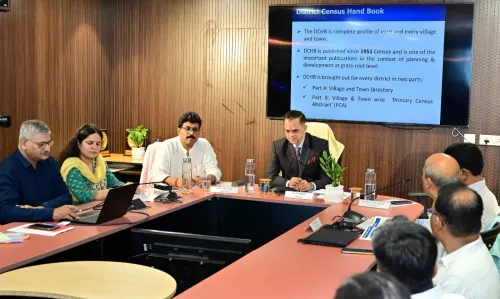
Census-2027 Phase-1 training was held on April 23 at the Collectorate Auditorium, Jaipur , organised by the Directorate of Census Operations, Rajasthan .
Chief Principal Census Officer Vishnucharan Mallick warned of strict disciplinary action against officials found negligent in census duties.
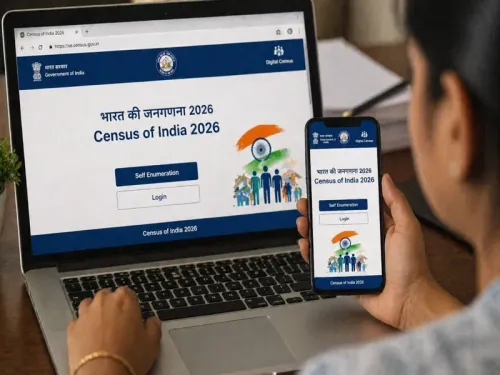
Census-2027 will be India's first fully digital census , with self-enumeration open from May 1 to May 15, 2026 .
Jaipur district's estimated census population is 35.54 lakh , to be covered by 4,817 enumerators and 780 supervisors across 5,277 blocks .
Full enumeration operations are scheduled from May 16 to June 14, 2026 , supervised by 38 Charge Officers .
India has been relying on 2011 Census data for over 14 years due to pandemic-related delays, making Census-2027 critical for welfare planning and parliamentary delimitation .
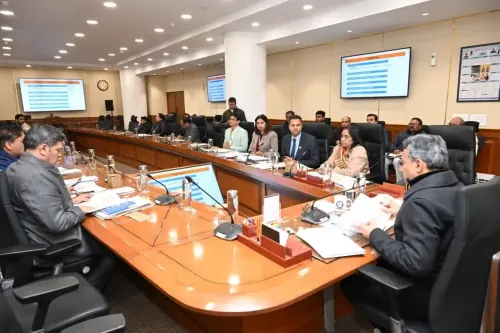
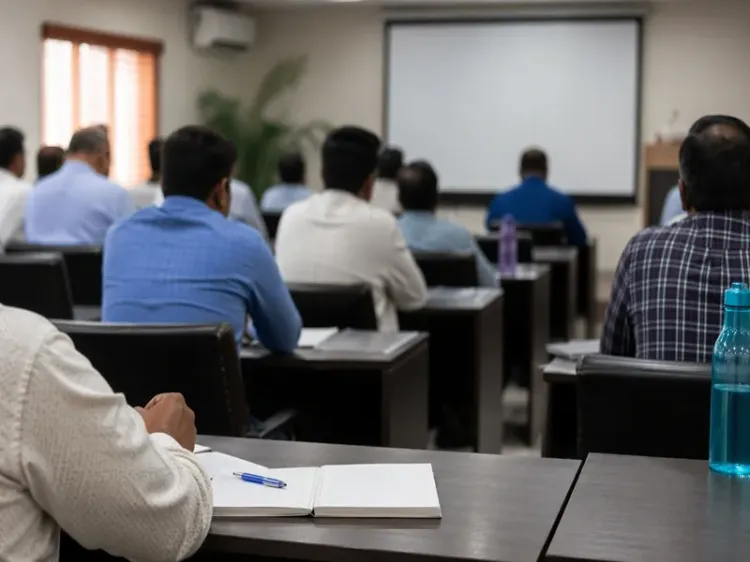
Jaipur, April 23 (NationPress) — The Directorate of Census Operations, Rajasthan, launched a critical one-day training session on Thursday, April 23, at the Collectorate Auditorium, Jaipur, marking the formal commencement of the first phase of Census-2027. The session focused on house listing and enumeration procedures and was presided over by Chief Principal Census Officer Vishnucharan Mallick, with District Collector and Principal Census Officer Sandesh Nayak in attendance. Senior officials across Jaipur district were put on notice: negligence will not be tolerated.
High-Level Training Flags National Importance of Census-2027
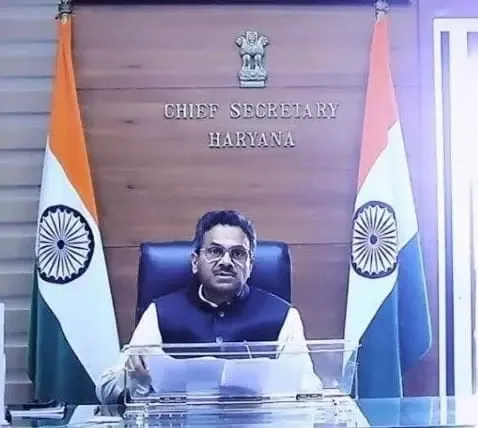
The training brought together all Census Officers, Sub-Divisional Officers, Charge Census Officers, and Tehsildars of Jaipur district under one roof. Chief Principal Census Officer Vishnucharan Mallick underscored that the census is a task of national importance and that its quality hinges on accurately reaching every single individual in the country.
He highlighted that Census-2027 will be conducted in a fully digital and modern format — a significant departure from previous paper-based enumeration methods — promising greater accuracy, transparency, and faster data analysis. This digital shift reflects India's broader push toward technology-driven governance, aligned with initiatives like the Digital India programme.
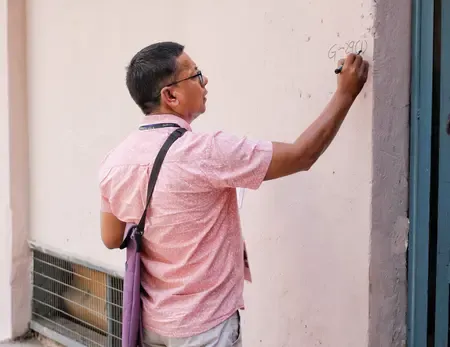
Officials were directed to execute house listing and self-enumeration activities — scheduled from May 1 to May 15, 2026 — with utmost seriousness. Encouraging maximum participation from public representatives and citizens in the self-enumeration process was also flagged as a priority.
Strict Disciplinary Action Warning Issued
Chief Principal Census Officer Mallick issued unambiguous instructions: any official or employee found negligent in performing census duties will face strict disciplinary action. This warning carries weight given that India's census — delayed significantly since its original 2021 schedule due to the COVID-19 pandemic — is already operating under national scrutiny.
The delay of over four years in conducting the census has had cascading consequences. Welfare schemes, parliamentary delimitation, and resource allocation formulas — many of which rely on census data — have been operating on 2011 Census figures for over a decade. The stakes for an accurate and timely Census-2027 are therefore extraordinarily high.
Charge Census Officers were also instructed to make necessary arrangements to protect supervisors and enumerators from extreme summer conditions, given that field operations will run through the peak of India's summer season. Officials were further directed to monitor all activities through the Census Management and Monitoring System (CMMS) portal.
Operational Scale: 35.54 Lakh Population, 4,817 Enumerators
The operational scope of the Jaipur district Census-2027 exercise is substantial. The estimated population under the jurisdiction stands at 35.54 lakh. A total of 38 Charge Officers will supervise operations, comprising 20 Tehsildars, two Municipal Council Commissioners, and 16 Executive Officers.
House listing and enumeration will span 5,277 blocks, carried out by 4,817 enumerators and 780 supervisors during the period from May 16 to June 14, 2026. This scale makes Jaipur one of the larger operational units in Rajasthan's census machinery.
District Collector Sandesh Nayak directed officers to organise a three-day training programme for all enumerators and supervisors before field operations begin. He also instructed officers to conduct field visits during both the training and operational phases to assess on-ground performance firsthand — a measure aimed at closing the gap between administrative directives and ground-level execution.
Digital Census: A Historic Shift in India's Data Collection
The transition to a fully digital census is arguably the most transformative aspect of Census-2027. For the first time, citizens will be able to complete self-enumeration online, reducing the burden on field enumerators and potentially improving data accuracy by eliminating transcription errors.
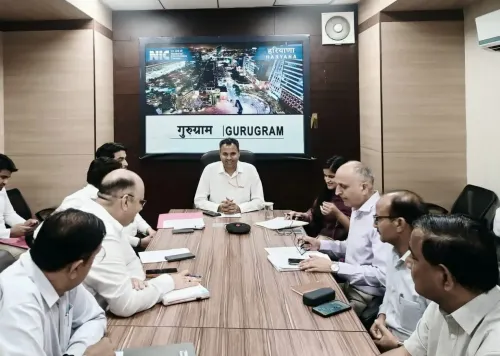
Joint Director Puneet Mehrotra of the Directorate of Census Operations, Rajasthan, provided detailed guidance during the session on self-enumeration procedures and fieldwork timelines. Also present were District Census Officer and Additional District Collector-III Sanjay Mathur, Joint Director of the Department of Statistics Babulal Meena, along with all Sub-Divisional Officers and Tehsildars.
Notably, the 2021 Census — originally planned to be India's first digital census — was postponed indefinitely due to the pandemic, making Census-2027 the first real-world test of India's digital enumeration infrastructure at scale. The outcome will directly influence parliamentary delimitation, welfare scheme targeting, and India's development planning for the next decade.
What Comes Next
With house listing and self-enumeration set to begin on May 1, 2026, and full enumeration running through June 14, 2026, the coming weeks will be a critical test of Rajasthan's administrative preparedness. The CMMS portal will serve as the real-time monitoring backbone, and any lapses flagged there could trigger the disciplinary action warned about at Thursday's session.
As India prepares for its most consequential data exercise in over a decade, the success of Census-2027 will depend not just on technology, but on the accountability and dedication of thousands of ground-level officials — a fact that senior officers in Jaipur made abundantly clear on Thursday.
Point of View
But the real test lies in last-mile accountability — the very thing Thursday's disciplinary warning was designed to enforce. If India's administrative machinery can deliver an accurate, technology-driven census after a four-year delay, it will be a governance milestone; if it stumbles, the consequences for data-driven policymaking will echo for another decade.
NationPress
19 Sept 2026
Frequently Asked Questions
When will Census-2027 house listing begin in Jaipur?
House listing and self-enumeration in Jaipur will begin on May 1, 2026 , and run through May 15, 2026 . Full enumeration across 5,277 blocks will then take place from May 16 to June 14, 2026 .
Why was India's census delayed until 2027?
India's census, originally scheduled for 2021 , was indefinitely postponed due to the COVID-19 pandemic . As a result, India has been relying on 2011 Census data for over a decade for policy planning and resource allocation.
What is new about Census-2027 compared to previous censuses?
Census-2027 will be India's first fully digital census , allowing citizens to self-enumerate online. This is expected to improve accuracy, reduce transcription errors, and enable faster data analysis compared to traditional paper-based methods.
How many enumerators will conduct Census-2027 in Jaipur?
A total of 4,817 enumerators and 780 supervisors will carry out census operations across 5,277 blocks in Jaipur district, supervised by 38 Charge Officers .
What action will be taken against negligent census officials in Rajasthan?
Chief Principal Census Officer Vishnucharan Mallick has issued strict instructions that any official or employee found negligent in performing census duties will face disciplinary action . Officials are also required to monitor activities through the CMMS portal in real time.