Is Jaipur Leading in Deletions During Rajasthan's SIR Process?
Synopsis
In a stunning turn of events, Rajasthan's Special Intensive Revision (SIR) has seen over 4 million voters cut from electoral rolls, with Jaipur leading in deletions. This reshaping of the voter base raises questions about the electoral process and its impact on urban constituencies. What does this mean for the future of voting in Rajasthan?
Key Takeaways
Jaipur leads with 536,000 deletions.
Significant impact on urban constituencies.
1.1 million voters may need to provide documentation.
Election officials stress the importance of accurate rolls.
Political implications are notable in key constituencies.
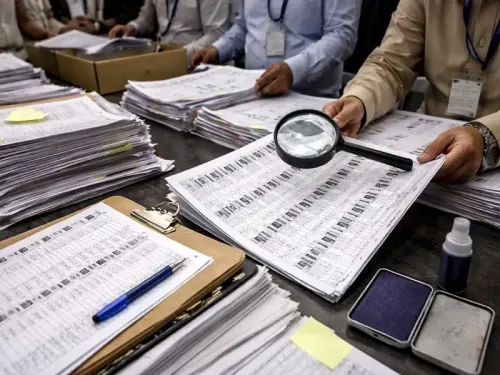
Jaipur, Dec 17 (NationPress) The Special Intensive Revision (SIR) of electoral rolls has dramatically altered the voter landscape in Rajasthan, resulting in the removal of 4,184,819 names from the draft electoral rolls across 199 assembly constituencies in the state.
Data segmented by district reveals that Jaipur has experienced the highest number of deletions, with 536,000 names erased, trailed by Jodhpur at 257,000 and Udaipur at 195,000. Other districts facing significant deletions include Bhilwara (168,000), Kota (159,000), and Ajmer (152,000).
Conversely, Jaisalmer encountered the least impact, with merely 23,420 names removed, followed by Barmer (47,669) and Bharatpur (73,875). The draft lists, released on Tuesday, excluded the Anta assembly constituency.
Election officials report that these deletions represent a considerable portion of the electorate, particularly in urban areas where between 10 to 11.5 percent of voter names have been eliminated. In contrast, rural areas have seen an average deletion rate of around 5 percent, with Jaipur and Jodhpur experiencing the highest numbers.
Significant districts impacted by the SIR procedure include Jaipur (5,36,000), Jodhpur (2,57,831), Udaipur (1,95,748), Bhilwara (1,68,257), Kota (1,59,788), Ajmer (1,52,684), Sikar (1,43,850), Bikaner (1,28,949), Pali (1,25,549), Jhunjhunu (1,16,082), Banswara (1,14,800), Alwar (1,10,245), Jalore (97,806), Nagaur (91,752), Dausa (79,320), Rajsamand (73,984), Bharatpur (73,875), Barmer (47,669), and Jaisalmer (23,420).
In addition to deletions, approximately 1.1 million voters whose information could not be matched with previous records will receive notices requesting them to provide supporting documentation.
These voters must submit claims with valid identification at the Sub-Divisional Magistrate (SDM) office by January 15. Those wishing to include their names in the voter list need to fill out Form-6 along with a declaration.
Chief Electoral Officer Naveen Mahajan stated that the deletions were executed after identifying voters who had permanently moved, could not be located at their registered addresses, were deceased, or had multiple entries. Such voters will not receive further notices but can contest the deletion by providing documentary proof. The SIR procedure has also created a notable political impact.
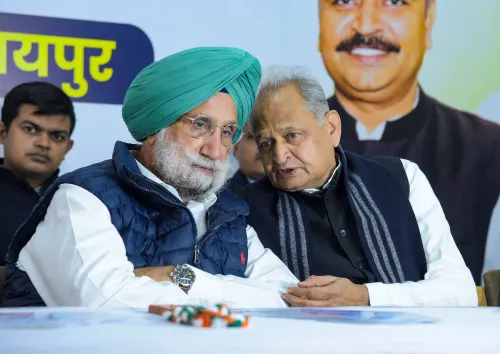
Constituencies like Bhilwara, Sardarpura (the former seat of CM Ashok Gehlot), Civil Lines, Sanganer (the constituency of Chief Minister Bhajanlal Sharma), and Vidyadhar Nagar (the seat of Deputy CM Diya Kumari) are among the assembly segments with the highest rates of deletions.
Point of View
I note that the recent Special Intensive Revision in Rajasthan has led to significant changes in the electoral landscape. While the deletions indicate rigorous efforts to maintain updated and accurate electoral rolls, the impact on urban constituencies, particularly in Jaipur and Jodhpur, warrants careful observation. This situation highlights the need for transparency and engagement with voters to ensure democratic participation.
NationPress
3 Oct 2026
Frequently Asked Questions
What is the reason for the deletions in the voter rolls?
The deletions were made to remove names of voters who have permanently migrated, are deceased, or have duplicate entries.
How many names were deleted from the electoral rolls?
A total of 4,184,819 names were removed from the draft electoral rolls across 199 assembly constituencies.
What should voters do if their names were deleted?
Voters whose names were deleted can contest the decision by providing valid documentation to the Sub-Divisional Magistrate office by January 15 .
Which districts were most affected by the deletions?
The districts most impacted include Jaipur , Jodhpur , and Udaipur .
How does this affect urban versus rural constituencies?
Urban constituencies saw a deletion rate of 10 to 11.5 percent, compared to 5 percent in rural areas.