Jaishankar Backs Exam Integrity Bill Passed by Parliament

Synopsis
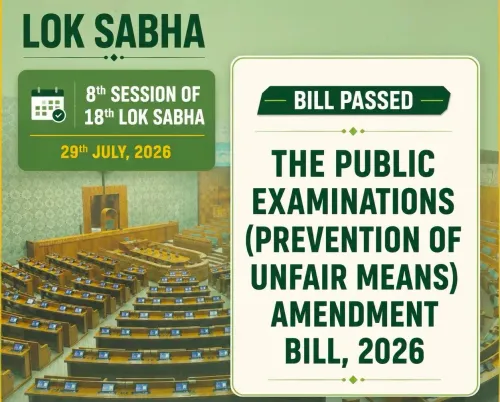
Both Houses of Parliament have passed the Public Examination (Prevention of Unfair Means) Amendment Bill, 2026, introducing fast-track courts, special prosecutors, and time-bound investigations to strengthen India's anti-exam-fraud legal framework. External Affairs Minister Dr. S. Jaishankar hailed the bill as a commitment to protecting India's youth.
Key Takeaways
Both Houses of Parliament passed the Public Examination (Prevention of Unfair Means) Amendment Bill, 2026 on July 31, 2026 .
The bill introduces time-bound investigations, Special Public Prosecutors, Special Fast-Track Courts , and an expedited appellate mechanism .
It amends the original Public Examinations (Prevention of Unfair Means) Act, 2024 , enacted after paper-leak controversies in NEET and UGC-NET .
Union External Affairs Minister Dr.
Jaishankar called the passage 'a step-forward' for integrity and credibility in public examinations.
The law awaits presidential assent before special courts and investigation norms can be operationalised.
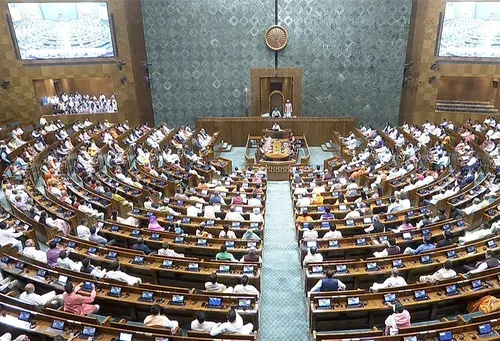
India's millions of competitive-exam aspirants got a legislative shield on Friday, July 31, 2026, as both Houses of Parliament cleared the Public Examination (Prevention of Unfair Means) Amendment Bill, 2026 — and Union External Affairs Minister Dr. S. Jaishankar was among the first in the Cabinet to publicly welcome it.
Calling the bill's passage 'a step-forward towards ensuring the integrity, transparency and credibility of India's public examination system,' Dr. Jaishankar underlined the Modi government's stated resolve to protect what he described as 'the right of India's hardworking youth and talent.'
What the Amendment Adds to the 2024 Law
The amendment builds on the Public Examinations (Prevention of Unfair Means) Act, 2024, which Parliament enacted in February 2024 after a wave of paper-leak controversies — most visibly around the NEET and UGC-NET national entrance tests — shook public confidence in India's high-stakes examination machinery. That original law criminalised malpractice and set out penalties, but critics noted it lacked teeth on the procedural side.
The 2026 Amendment addresses that gap directly. It introduces time-bound investigations, the appointment of Special Public Prosecutors, the creation of Special Fast-Track Courts, and an expedited appellate mechanism — a four-pronged architecture designed to move cases from FIR to verdict without the years-long delays that have historically let exam-fraud networks operate with impunity.
Why Fast-Track Courts Change the Calculus
The inclusion of dedicated fast-track courts is the sharpest new edge in the legislation. Exam malpractice networks thrive on slow justice — when a paper-leak accused walks free on bail and the trial drags for a decade, the deterrent effect of any law collapses. Speedy prosecution, by contrast, raises the real cost of fraud for organised syndicates that treat question-paper theft as a commercial enterprise.
Special Public Prosecutors add a parallel layer: rather than routing these technically complex cases through an already-burdened general prosecution system, the amendment carves out dedicated legal expertise — a recognition that exam-fraud cases involve digital evidence, encrypted networks, and impersonation chains that demand specialist handling.
The Aspirant at the Centre of It All
For the estimated crores of students who sit national-level examinations each year — competing for seats in medical colleges, engineering institutes, central government jobs, and the armed forces — the stakes could not be higher. A single leaked paper can invalidate months of preparation and delay careers by a year. The 2024 controversies triggered protests in multiple states and forced re-examinations that displaced hundreds of thousands of candidates.
The amendment's passage signals that the central government views examination integrity not as an administrative detail but as a fundamental equity issue: when paper leaks advantage those who can pay for stolen answers, every honest aspirant is robbed of a fair shot.
With presidential assent the next formal step, the operationalisation of special courts and time-bound investigation norms will determine whether the law's promise translates into deterrence on the ground — and whether India's examination calendar can finally be trusted again.
Point of View
Signalling that the 2024 paper-leak crisis left a political scar it is determined to address structurally rather than administratively. The fast-track court mechanism is the most consequential addition — it shifts the deterrence logic from punishment-on-paper to punishment-in-practice. Dr. Jaishankar's endorsement, from the External Affairs portfolio rather than Education, reflects a Cabinet-wide political investment in the issue. Whether the special courts are staffed and operationalised swiftly will be the real test of legislative intent.
NationPress
31 Jul 2026
Frequently Asked Questions
What is the Public Examination Amendment Bill 2026?
The Public Examination (Prevention of Unfair Means) Amendment Bill, 2026 is a law passed by both Houses of India's Parliament that strengthens the original 2024 Act by adding fast-track courts, special prosecutors, time-bound investigations, and an expedited appeals process to tackle exam fraud and paper leaks.
How is the 2026 bill different from the 2024 exam law?
The original 2024 Act criminalised malpractice in public examinations. The 2026 Amendment adds procedural muscle: dedicated fast-track courts, Special Public Prosecutors, and time-bound investigation mandates to ensure cases are resolved quickly rather than languishing in the courts for years.
Why was a new exam integrity law needed in India?
Recurring paper leaks in major national exams — including NEET and UGC-NET in 2024 — exposed systemic vulnerabilities and triggered widespread protests. The 2024 Act addressed penalties; the 2026 Amendment targets the slow justice that allowed fraud networks to operate without effective deterrence.
What are Special Fast-Track Courts for public examinations?
These are dedicated courts established under the 2026 Amendment to hear exam-fraud cases on an expedited basis, reducing the time from charge to verdict and raising the real deterrent cost for organised paper-leak syndicates.
When will the Public Examination Amendment Bill 2026 come into effect?
The bill must receive presidential assent before it becomes law. Once assented to, the government will need to operationalise the special courts and time-bound investigation norms — that implementation phase is the key next step to watch.