Jal Shakti Minister Paatil Hails Historic Narmada Consensus
Synopsis
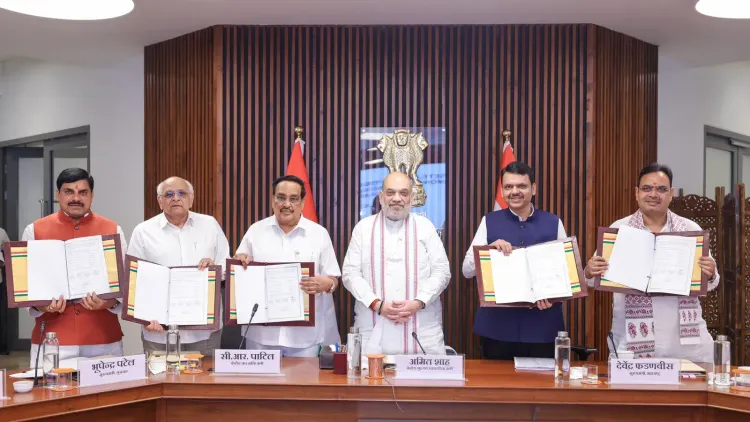
Union Jal Shakti Minister C. R. Paatil on 7 July 2026 welcomed a landmark consensus on long-pending Narmada Yojana disputes, reached at a New Delhi meeting chaired by Home Minister Amit Shah and attended by the chief ministers of all four riparian states — Gujarat, Maharashtra, Madhya Pradesh, and Rajasthan.
Key Takeaways
A historic consensus on long-pending Narmada Yojana issues was reached in New Delhi on 7 July 2026 .
The meeting was chaired by Union Home Minister Amit Shah and attended by chief ministers of all four riparian states.
The four states involved are Gujarat , Maharashtra , Madhya Pradesh , and Rajasthan .
The Narmada Water Disputes Tribunal award dates to 1979 ; disputes have persisted for decades despite institutional mechanisms.
Follow-up action is expected from the Narmada Control Authority to translate the political consensus into implementation directives.
Union Jal Shakti Minister C.
Paatil credited PM Narendra Modi 's leadership and framed the outcome as a model of cooperative federalism.
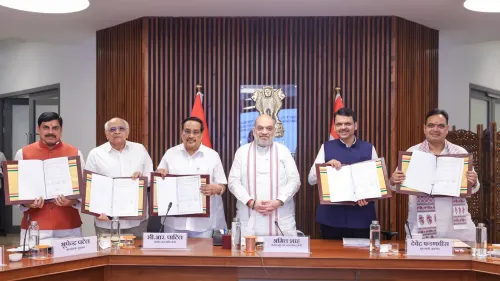
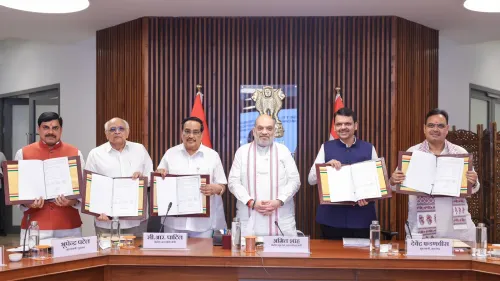
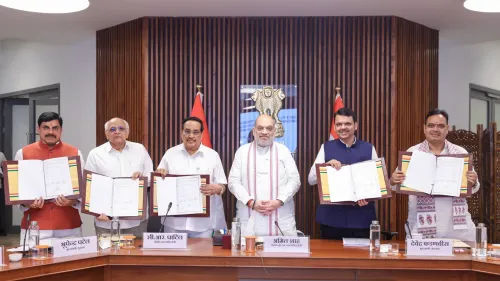
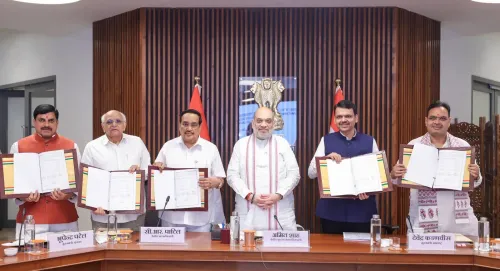
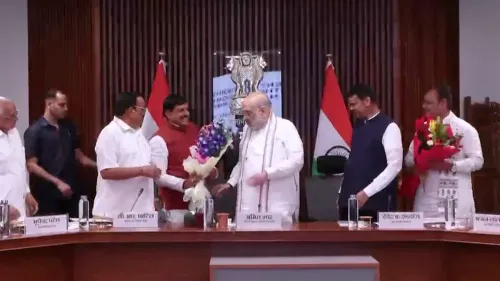
Union Jal Shakti Minister C. R. Paatil on Tuesday, 7 July 2026 welcomed what he called a historic all-party consensus on long-pending issues related to the Narmada Yojana, reached at a high-level meeting convened in New Delhi under the chairmanship of Union Home Minister Amit Shah. The agreement brings together the chief ministers of all four riparian states — Gujarat, Maharashtra, Madhya Pradesh, and Rajasthan — on a single platform for the first time in years to resolve disputes that have long stalled implementation of the project.
Context
Paatil, posting in Gujarati on X, described the development as an 'aitihasik sarvasampati' (historic consensus), crediting Prime Minister Narendra Modi's 'far-sighted leadership' and Home Minister Shah's chairmanship for making the breakthrough possible. He extended 'heartfelt gratitude' to PM Modi, Home Minister Shah, and the leadership of all participating states. The four hashtags he used — #ViksitBharat, #CooperativeFederalism, #SahakarSeSamriddhi, and #Narmada — frame the agreement squarely within the government's cooperative federalism narrative.
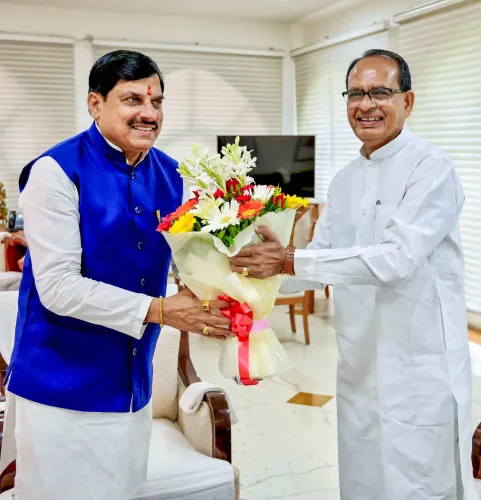
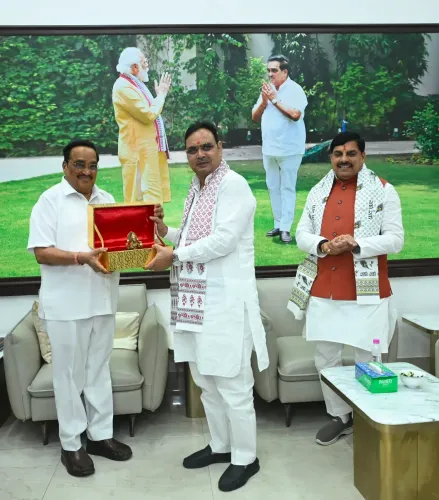
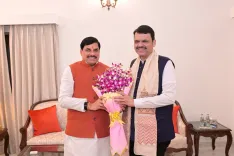
The chief ministers present at the meeting were Devendra Fadnavis of Maharashtra, Bhajanlal Sharma of Rajasthan, Mohan Yadav of Madhya Pradesh, and Bhupendra Patel of Gujarat. Paatil described their coming together on one platform as a 'powerful reflection of the spirit of cooperative federalism.'
Policy Backdrop
The Narmada Yojana is one of India's most consequential and contested multipurpose river valley projects, involving dams, canals, and hydropower infrastructure shared across the four basin states. The Narmada Water Disputes Tribunal delivered its final award in 1979, fixing water-sharing allocations among the states, and the Narmada Control Authority was established in 1980 to oversee implementation and adjudicate disputes arising from that award.
Despite these institutional mechanisms, several components of the project have faced prolonged delays due to inter-state disagreements over water allocation, submergence compensation, and infrastructure completion timelines. The four states have a documented history of litigation and stalled components that the July 2026 meeting aims to address. Gujarat, as the terminal state, is the primary beneficiary of Narmada waters for irrigation and drinking water supply, giving the state — and its chief minister — a particularly strong stake in resolution.
Stakeholders and Impact
The most immediate beneficiaries of any durable Narmada agreement are the farmers of the Narmada basin across all four states, who depend on the canal network for irrigation. Drinking water supply projects in Gujarat and parts of Rajasthan that draw from Narmada infrastructure are also directly affected by delays in project completion.
The meeting's framing under the Home Ministry — rather than the Jal Shakti Ministry alone — signals that the Centre is treating this as a political consensus exercise as much as a technical one. This approach mirrors the use of central facilitation in other inter-state water disputes under the current government. The agreement also aligns with the broader Jal Jeevan Mission goal of ensuring piped water to every rural household, for which Narmada infrastructure is a critical supply source in western India.
What's Next
The consensus reached on 7 July 2026 is expected to be followed by formal orders from the Narmada Control Authority translating the political agreement into operational directives for project implementation. Observers will also watch for any supplementary budgetary allocations in the next Union Budget directed at completing stalled Narmada project components. Whether the agreement holds through the technical and administrative stages — where past inter-state agreements have sometimes unravelled — will be the defining test of this breakthrough.
Point of View
Not merely a technocratic water-management exercise. By assembling four BJP-governed state governments under one roof, the meeting also allows the party to showcase cooperative federalism as a governance dividend ahead of future electoral cycles in these states. The framing around 'Viksit Bharat' and 'SahakarSeSamriddhi' ties a decades-old infrastructure dispute to the government's 2047 development vision, giving the agreement symbolic weight beyond its immediate administrative scope. The real test, however, lies in whether the Narmada Control Authority can convert political goodwill into enforceable implementation timelines — a stage where past agreements have frequently stalled.
NationPress
8 Jul 2026
Frequently Asked Questions
What is the Narmada Yojana consensus reached on 7 July 2026?
On 7 July 2026, the chief ministers of Gujarat, Maharashtra, Madhya Pradesh, and Rajasthan met in New Delhi under Home Minister Amit Shah's chairmanship and reached a consensus on long-pending inter-state disputes related to the Narmada Yojana, a major multipurpose river valley project.
Who chaired the Narmada meeting in New Delhi in July 2026?
Union Home Minister Amit Shah chaired the meeting, with Prime Minister Narendra Modi's leadership credited for enabling the breakthrough consensus.
Which states are part of the Narmada Yojana agreement?
The four riparian states are Gujarat, Maharashtra, Madhya Pradesh, and Rajasthan. Their chief ministers — Bhupendra Patel, Devendra Fadnavis, Mohan Yadav, and Bhajanlal Sharma respectively — attended the New Delhi meeting.
What is the Narmada Control Authority?
The Narmada Control Authority is a body established in 1980 to oversee implementation of the Narmada Water Disputes Tribunal's 1979 award and to resolve disputes arising from water-sharing arrangements among the four basin states.
What happens after the Narmada consensus of July 2026?
The political consensus is expected to be followed by formal orders from the Narmada Control Authority translating the agreement into operational directives, and potentially supplementary budget allocations for completing stalled project components.