Jal Shakti Minister Paatil highlights women athletes' medal haul
Synopsis
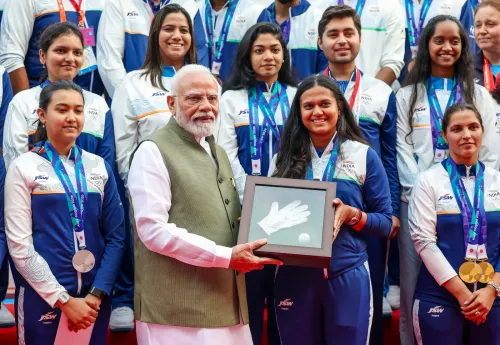
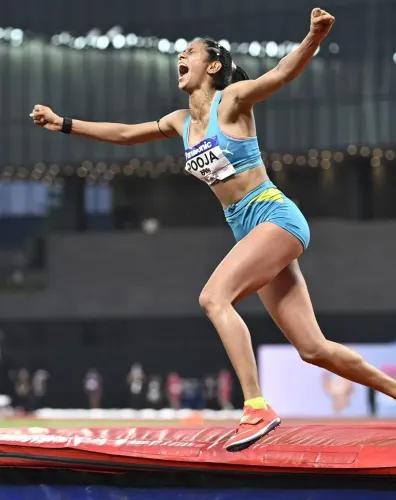
Jal Shakti Minister C. R. Paatil amplified PM Modi's statement that women athletes won 38 of India's 85 medals — including 11 gold — framing the tally as a defining image of a transformed nation.
Key Takeaways
38 of India's 85 medals in the cited event were won by women athletes, according to PM Modi's statement shared by Paatil.
Women athletes claimed 11 gold medals within that tally — a podium-level share of the overall haul.
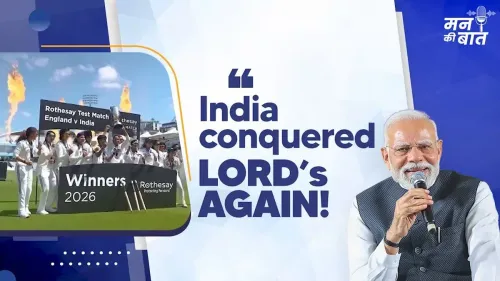
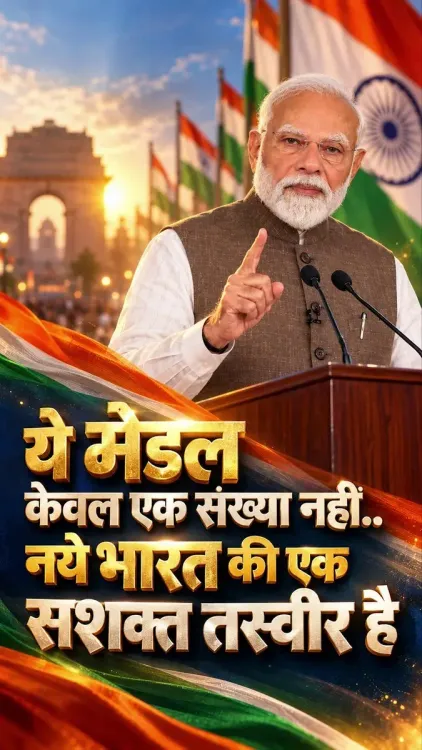
PM Modi described the medals as 'a powerful portrait of a new India,' framing athletic achievement as national progress.
Union Jal Shakti Minister C.
Paatil , a senior BJP leader and former Gujarat state president, amplified the statement on 17 October 2026 .
The Khelo India scheme, launched in 2017 , has been cited by the government as a structural driver of rising women's sports participation.
BJP leaders have consistently used India's multi-sport performances to reinforce the 'new India' governance narrative.
Thirty-eight medals out of 85 — nearly half of India's entire haul — carried by women. That is the number Union Jal Shakti Minister C. R. Paatil chose to anchor his post on Saturday, 17 October 2026, quoting Prime Minister Narendra Modi to frame a sporting moment as something far larger than a scoreboard.
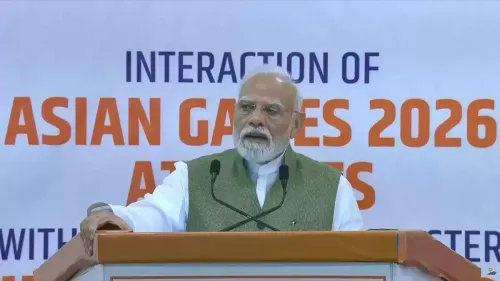
Paatil shared Modi's words verbatim: 'भारत ने जो 85 मेडल जीते हैं, उनमें से 38 मेडल हमारी विमेन एथलीट्स् ने जीते हैं। और इनमें 11 गोल्ड मेडल भी शामिल हैं।' ('Of the 85 medals India has won, 38 have been won by our women athletes — and 11 gold medals are among them.') The Prime Minister's closing line, amplified by Paatil, gave the numbers their political weight: 'These medals are not merely a count — they are a powerful portrait of a new India.'
Forty-four per cent of the gold — carried by women
The breakdown Modi cited is striking on its own terms. If 38 of 85 medals belong to women athletes, that is a 44.7 per cent share of the total tally. The 11 gold medals within that subset signal podium-topping performances, not consolation finishes. In a country where women's participation in competitive sport has historically lagged behind men's, numbers at that scale represent a structural shift, not a one-off result.
The government has pointed to the Khelo India scheme — launched in 2017 — as a foundational driver of this trend. The programme was designed explicitly to push grassroots sports participation, with a dedicated focus on women athletes and talent identification at the district level. Whether the pipeline it built is directly responsible for the medals being celebrated remains a subject of ongoing debate among sports administrators, but the political narrative has been consistent: investment in grassroots sport is producing international results.
Why BJP leaders keep reaching for the medal table
Paatil, a senior BJP leader and former Gujarat state president, is not the only voice in the party amplifying athletes' achievements through the lens of governance. BJP leaders have made a pattern of connecting India's performances in multi-sport events to the broader 'new India' narrative championed by Modi — a frame that positions sporting success as evidence of national transformation rather than purely athletic excellence.
The move has a logic to it. Women athletes winning nearly half a nation's medals is a story that cuts across political lines — it resonates with voters, parents, and young girls watching from small towns. Putting that statistic at the centre of a government communication is deliberate, and it lands because the underlying achievement is real.
The attention now shifts to what follows the medals: whether sports funding, infrastructure, and athlete welfare programmes receive a corresponding boost — or whether the scoreboard moment fades faster than the policy it is meant to validate.
Point of View
The party targets a politically resonant demographic while also making a genuine factual claim that is difficult to dispute. The 'new India' framing ties a sporting scoreboard to a decade-long political brand, converting athletic excellence into electoral messaging. The real test of whether this moment translates into durable policy will come in the next budget cycle's sports allocation.
NationPress
17 Oct 2026
Frequently Asked Questions
How many medals did Indian women athletes win according to PM Modi's statement?
According to PM Modi's statement shared by Minister Paatil, Indian women athletes won 38 medals , including 11 gold medals , out of India's total tally of 85 medals .
What is the Khelo India scheme and how does it support women athletes?
The Khelo India scheme was launched in 2017 to promote grassroots sports participation across India, with a specific focus on identifying and nurturing women athletes at the district level.
Why did C. R. Paatil post about India's medal tally?
C. R. Paatil , Union Jal Shakti Minister and senior BJP leader, shared PM Modi's statement to amplify the government's narrative linking women athletes' success to national progress under the current administration.
What event did India win 85 medals at?
The specific multi-sport event in which India won 85 medals was referenced in PM Modi's statement shared on 17 October 2026 ; the exact event name was not specified in the post.
What does 'new India' mean in the context of PM Modi's sports statement?
In PM Modi's framing, 'new India' refers to a transformed nation where women athletes competing and winning at the highest levels serve as evidence of social and developmental progress under the current government.