Jal Shakti Minister Paatil Meets Telangana CM Revanth Reddy on Water Issues
Synopsis
Union Jal Shakti Minister C. R. Paatil met Telangana Chief Minister A. Revanth Reddy and Irrigation Minister N. Uttam Kumar Reddy on 29 September 2026 for detailed discussions on water resource management, irrigation projects, and central scheme implementation in the state.
Key Takeaways
Union Jal Shakti Minister C.
Paatil held a detailed meeting with Telangana Chief Minister A.
Revanth Reddy on 29 September 2026 .
Telangana Irrigation and CAD Minister N.
Uttam Kumar Reddy and senior officials from both governments attended the talks.
Discussions covered 'various important subjects' related to Telangana and the Jal Shakti Ministry , including water resource management and water security.
The Jal Shakti Ministry was formed in May 2019 by merging water resources and drinking water ministries into a single central body.
Central flagship schemes in play include the Jal Jeevan Mission (2019) and Pradhan Mantri Krishi Sinchayee Yojana (2015), both active in Telangana.
The meeting reflects the BJP-led centre's stated policy of direct coordination with Opposition-governed states on water issues.
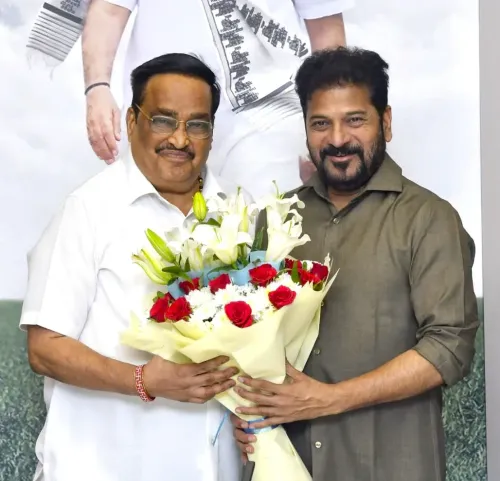
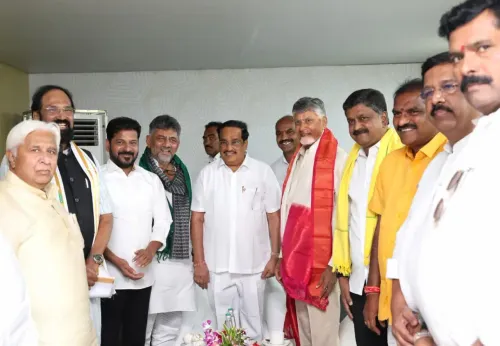
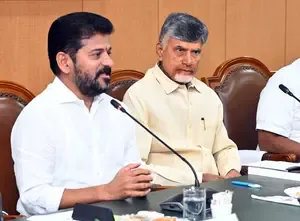
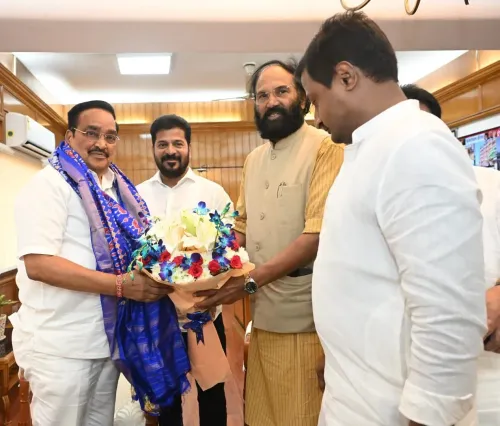
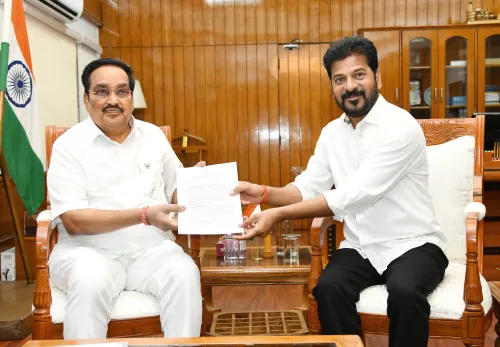
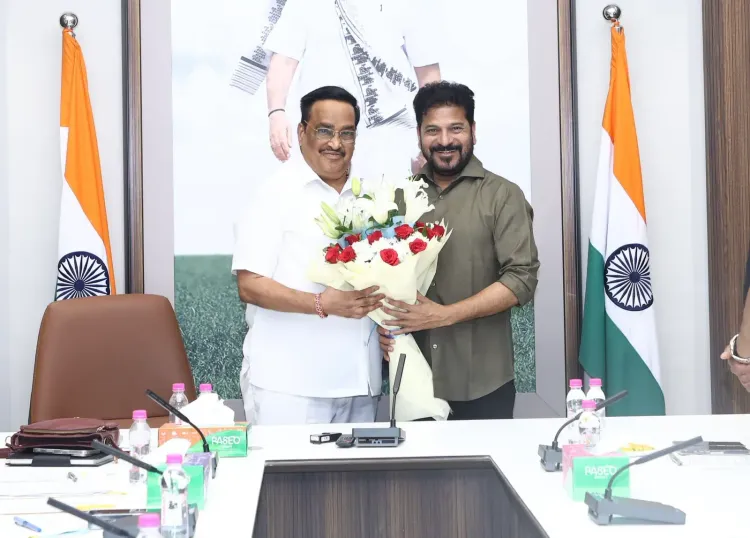
Water security and irrigation management took centre stage on Tuesday, 29 September 2026, when Union Jal Shakti Minister C. R. Paatil held a detailed high-level meeting with Telangana Chief Minister A. Revanth Reddy to discuss key issues at the intersection of state needs and central water policy.
Who Was in the Room — and Why It Matters
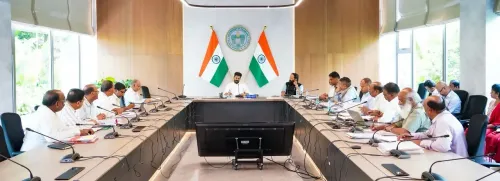
The meeting brought together a notably broad table. Alongside the two principals, Telangana Irrigation and Command Area Development (CAD) Minister N. Uttam Kumar Reddy attended, along with senior officials from both the Telangana government and the Union Ministry of Jal Shakti. The presence of the state's irrigation minister and central ministry officials signals the discussion went beyond courtesy — this was a working session.
Paatil posted on X in Hindi: 'aaj Telangana ke mananeey mukhyamantri... ke saath baithak kar... vistrit charcha ki' — 'today I held a detailed meeting with the honourable Chief Minister of Telangana and had extensive discussions on various important subjects related to the Telangana state and the Jal Shakti Ministry.'
Telangana's Water Ambitions — and the Centre's Role
Telangana sits astride two of India's most contested river systems — the Krishna and the Godavari — with a string of major ongoing irrigation projects drawing on both basins. The state has long sought faster central clearances and funding support for its irrigation infrastructure. The Jal Shakti Ministry, formed in May 2019 by merging the water resources and drinking water ministries, is the single point of contact for states navigating central schemes, inter-state river boards, and mission funding.
Two flagship programmes sit at the heart of any such dialogue: the Jal Jeevan Mission, launched in 2019 to bring functional household tap connections to every rural home, and the Pradhan Mantri Krishi Sinchayee Yojana (PMKSY), running since 2015 to expand irrigation coverage and improve water-use efficiency. Progress on both in Telangana would naturally feature in a meeting of this composition.
Centre-State Coordination — the Pattern Behind the Meeting
What makes this meeting politically noteworthy is the optics: Paatil represents the BJP-led central government, while Revanth Reddy leads a Congress government in Telangana — two parties locked in sharp national competition. Yet both sides chose structured bilateral engagement over posturing, consistent with the Modi government's stated approach of using direct centre-state coordination to resolve water issues rather than defaulting immediately to formal inter-state dispute mechanisms.
Paatil noted that under Prime Minister Narendra Modi's leadership, the central government 'continuously works to strengthen water resource management and water security through coordination and cooperation with states.' It is a framing the ministry has used consistently — but the fact that it is being applied in a meeting with an Opposition-run state adds a layer of governance substance.
Point of View
Revanth Reddy is Congress. For Telangana, whose Krishna and Godavari basin projects depend heavily on central clearances and mission funding, direct access to the Jal Shakti Minister is operationally valuable. The inclusion of the state's Irrigation Minister alongside senior officials from both sides suggests the agenda carried genuine technical weight, not just protocol. Watch whether this meeting produces specific project approvals or Jal Jeevan Mission targets in the weeks ahead — that will be the real measure of what was achieved.
NationPress
29 Sept 2026
Frequently Asked Questions
Why did Jal Shakti Minister C. R. Paatil meet Telangana CM Revanth Reddy?
The meeting was held on 29 September 2026 to discuss important subjects related to Telangana and the Jal Shakti Ministry, including water resource management, irrigation, and water security, with senior officials from both governments present.
What is the Jal Shakti Ministry and when was it formed?
The Ministry of Jal Shakti was formed in May 2019 by merging the Ministry of Water Resources with the Ministry of Drinking Water and Sanitation, making it the single central authority for water-related policy and schemes.
What central water schemes are relevant to Telangana?
Two key central schemes are the Jal Jeevan Mission, launched in 2019 to provide rural household tap connections, and the Pradhan Mantri Krishi Sinchayee Yojana, running since 2015 to expand irrigation coverage and improve water-use efficiency.
Who is N. Uttam Kumar Reddy?
N. Uttam Kumar Reddy is Telangana's Minister for Irrigation and Command Area Development, and he attended the meeting alongside Chief Minister Revanth Reddy and central officials.
Is it unusual for a BJP minister to meet a Congress chief minister on policy matters?
Not on water issues. The Modi government has consistently pursued direct centre-state coordination on water resource management regardless of party alignment, preferring bilateral engagement over formal dispute mechanisms.