How is Jamia Millia V-C Mazhar Asif Advocating for Hindi and Indian Languages in Decolonising Minds?
Click to start listening
Synopsis
Mazhar Asif, the Vice-Chancellor of Jamia Millia Islamia, passionately discusses how Hindi and Indian languages are vital in the movement to decolonise minds. His insights during a recent workshop shed light on the importance of embracing the Indian Knowledge System and the cultural context in language translation.
Key Takeaways
- Importance of Hindi and Indian languages in decolonising minds.
- Advocacy for the Indian Knowledge System (IKS) as a priority.
- Significance of contextualizing geography, history, and culture in translations.
- Recognition of contributions by figures like Bhartendu Harishchandra and Professor D.S. Kothari.
- Collaborative efforts in creating a comprehensive glossary of technical terms in Social Sciences.
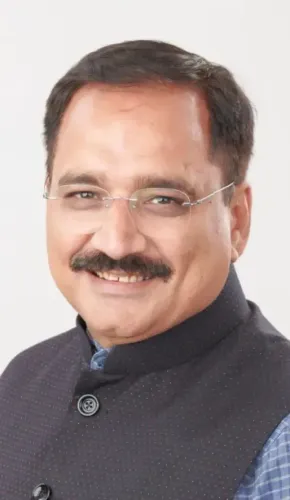
New Delhi, Jan 16 (NationPress) The Vice-Chancellor of Jamia Millia Islamia, Mazhar Asif, highlighted the significance of Hindi and Indian languages in freeing minds from the colonial legacy, as reported by an official on Thursday.
During a five-day workshop focused on creating a 'Learner's Glossary of Social Sciences' in Hindi from English, Asif stressed the urgency of moving away from a colonial mentality.
“A deceptive sense of modernity has damaging effects on people's minds. We must address this promptly by emphasizing the Indian Knowledge System (IKS),” he stated.
He praised the efforts made in translating political terms into Hindi and other contemporary Indian languages, extending his best wishes to all participants at the workshop.
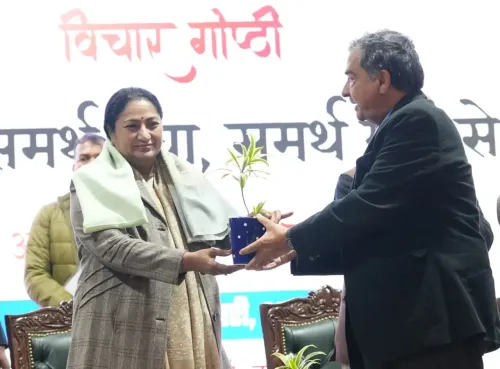
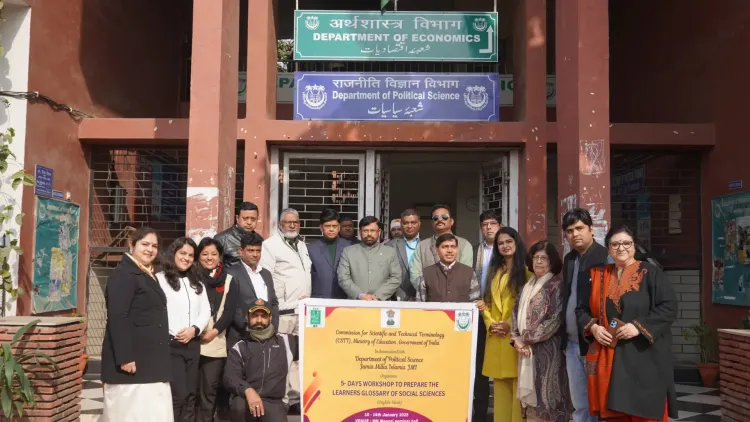
The workshop, held under the auspices of the Commission for Scientific and Technical Terminology (CSTT) of the Ministry of Education in collaboration with the Department of Political Science at Jamia Millia Islamia (a Central University), concluded on January 14. The valedictory session took place in the university's M.N. Meenai Seminar Room, Department of Political Science.
In his closing remarks, Asif noted, “Simply translating scientific and technical terms does not honor the essence of translation. It is essential to contextualize geography, history, and culture when translating terminologies into other Schedule Eight Languages or any other language.”
With his extensive background as a professional translator and linguistics expert in both Indian and foreign languages, the Vice-Chancellor advised committee members to consider the constraints of authentic translation, regardless of the language spoken or written in India.
He commended the team of thirteen experts dedicated to compiling a glossary of technical and scientific terms used in Social Sciences into Hindi.
The workshop's welcome address was delivered by Professor Naved Jamal, the Coordinator of the event. He highlighted Gandhi's vision of promoting Hindi/Hindustani and Bhartendu Harishchandra’s contribution to the national language movement.
Furthermore, he acknowledged Professor D.S. Kothari, a renowned physicist and educationist, who led the Committee of Scientific and Technical Terminology (CSTT) from 1960-1965.
Bulbul Dhar-James, Head of the Department of Political Science, introduced the workshop's theme to attendees.
Shahzad Ahmad Ansari, Assistant Director, provided an overview of the Commission for Scientific and Technical Terminology (CSTT).
Dean of Social Sciences, Muslim Khan, also addressed the audience as a distinguished guest speaker.
Saroj Kumar Das reiterated the principle of Bhartendu Harishchandra’s philosophy, emphasizing 'Niz Bhasha Unnati' (Advancement in one's own language).
Point of View
I see the push for Hindi and Indian languages in academia as a crucial step towards decolonisation. It's essential not only for cultural identity but for empowering future generations with knowledge rooted in their heritage. This movement reflects a broader trend of reclaiming narratives and fostering pride in indigenous languages.
NationPress
16/01/2026
Frequently Asked Questions
What was the focus of the workshop at Jamia Millia Islamia?
The workshop aimed at developing a 'Learner's Glossary of Social Sciences' translating from English to Hindi, emphasizing the importance of decolonising language.
Who organized the workshop?
The workshop was organized by the Commission for Scientific and Technical Terminology (CSTT) in collaboration with the Department of Political Science at Jamia Millia Islamia.
What did Mazhar Asif emphasize regarding modernity?
Mazhar Asif highlighted that a false sense of modernity has detrimental effects on minds, advocating for a focus on the Indian Knowledge System.
Who delivered the welcome address at the workshop?
The welcome address was given by Professor Naved Jamal, the Coordinator of the workshop.
What principle did Saroj Kumar Das emphasize?
Saroj Kumar Das reiterated the principle of 'Niz Bhasha Unnati,' which means 'Development in its own language.'