Has 2025 Marked a Shift in the J&K Narrative from Violence to Development and Aspirations?
Synopsis
As 2025 concludes, Jammu and Kashmir is witnessing a transformative shift from a narrative of violence to one of development, connectivity, and hope. With significant infrastructure advancements and a renewed focus on education, the region is poised for a promising future.
Key Takeaways
Infrastructure development is reshaping Jammu and Kashmir.
Education improvements are aligning with modern job markets.
The narrative has shifted from violence to aspiration .
Public investment is enhancing tourism and commerce.
Community engagement is fostering a sense of normalcy.
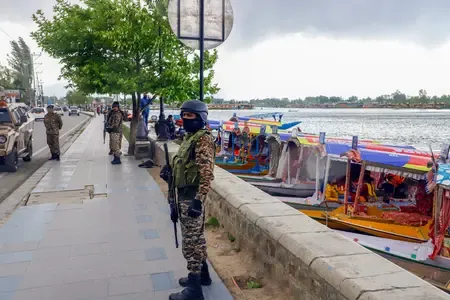
Srinagar, Dec 26 (NationPress) For the first time in decades, the narrative surrounding Jammu and Kashmir is no longer overshadowed by guns, bullets, corpses, or government structures ravaged by separatist violence. As we approach the end of 2025, the prevailing story is one of infrastructure development, connectivity, educational advancements, and a renewed sense of hope and aspiration.
This year’s headlines were predominantly free from the usual cycle of insurgency and counter-insurgency.
The sole exception was the horrific terror assault in Pahalgam on April 22, which claimed the lives of 26 innocent tourists and a local pony owner, briefly pushing India and Pakistan to the edge of conflict.
However, aside from this tragic event, the year 2025 in Kashmir and the larger Jammu and Kashmir region has been characterized by significant infrastructure advancements, including a new railway connection linking the Valley with the rest of India, enhanced educational facilities, and the gradual emergence of a development-focused narrative that has overshadowed years of violence.
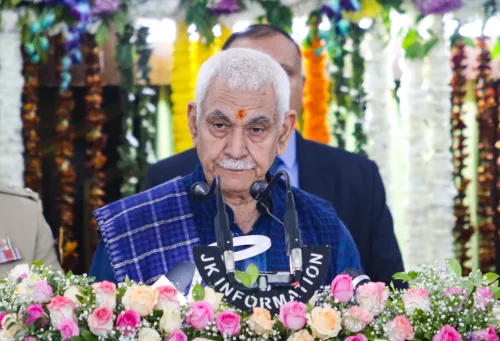
Opportunity, connectivity, and empowerment—coupled with the presence of an elected government and effective collaboration with security forces under Lieutenant Governor (L-G) Manoj Sinha—have enabled the people to move beyond the shadows cast by terrorism in 2025.
Public sentiment increasingly condemns terrorism and acknowledges the prolonged deprivation it imposed on the populace.
The grief and suffering of families who lost loved ones to terrorist acts are being recognized and addressed in ways seldom seen during decades of conflict.
"These individuals endured silently—unheard, without justice, and often deprived of a dignified farewell for their deceased," the L-G remarked during the year.
"Their moment of recognition has finally arrived."
In 2025, this acknowledgment translated into tangible actions: the filing of long-overdue FIRs, job provisions for bereaved families, compensation, and public validation of their pain.
While terrorism's remnants may not be entirely absent, as some official statements imply, it is evident that it no longer controls the narrative in Kashmir.
People are increasingly discussing terrorism in the past tense—a strong testament to the administration's ongoing efforts.
The year was not devoid of political tensions.
Frictions emerged between Chief Minister Omar Abdullah and L-G Manoj Sinha concerning the division of authority between the elected government and Raj Bhavan.
Having previously served as Chief Minister of a full-fledged state, Omar Abdullah now faces the challenge of navigating the new dynamics of governing a Union Territory—an adjustment that could mitigate institutional misunderstandings in the future.
On the development front, connectivity remained a pivotal theme.
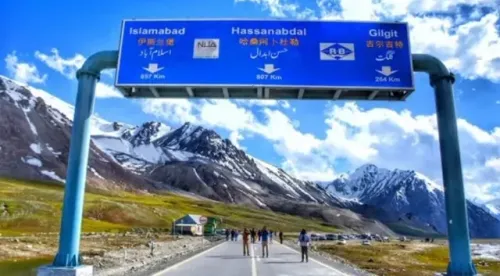
The inauguration of the Sonamarg Tunnel by Prime Minister Narendra Modi in January 2025 signified a key milestone, greatly enhancing all-weather accessibility.
Rail connectivity expanded further with the introduction and extension of Vande Bharat services to Srinagar, stimulating tourism, trade, and related sectors like hospitality and retail.
Education remained a significant focus.
The Economic Survey 2024-25 underscored major investments in education, including thousands of smart classrooms, ICT laboratories, and early childhood education centers.
Vocational education has expanded to over 1,000 schools, benefiting more than 140,000 students and aligning skill development with contemporary job markets.
Schools and colleges are increasingly transforming into vibrant hubs of learning rather than distant, underfunded outposts.
Leisure, culture, and community life also experienced a resurgence.
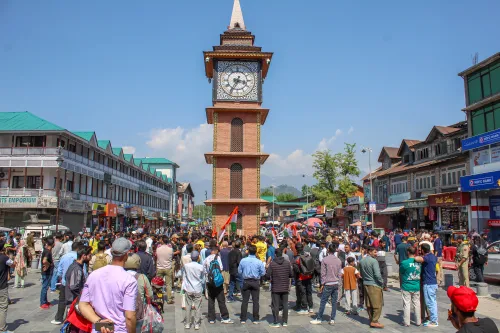
The expansion of public spaces, events, and recreational options has provided residents a sense of normalcy—allowing them time to live rather than merely survive.
For many, the once-urgent need to rush home to evade crossfire is now a memory.
Public and private investments are reshaping the hospitality and industrial sectors in Jammu and Kashmir. These investments are enhancing road networks, boosting commerce, and fostering skill-based employment that aligns with local aspirations.
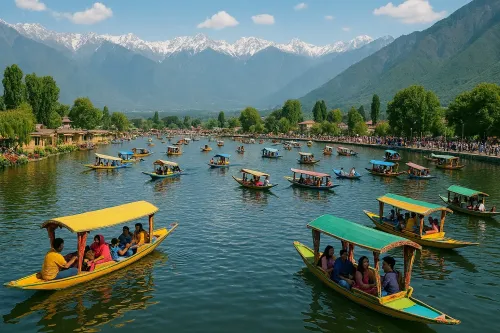
Between 2020 and 2024, domestic tourist arrivals surged nearly tenfold, reflecting renewed confidence among travelers and residents alike.
This momentum continued into 2025 with the launch of Asia's longest ski drag lift in Gulmarg in December, significantly enhancing winter tourism infrastructure and positioning Jammu and Kashmir as a premier destination for snow sports and adventure tourism.
The cumulative transformation is unmistakable. The earlier prevalence of stone-pelting, separatist-mandated shutdowns, street violence, arson, and the omnipresent fear that once characterized daily life have largely dissipated.
The separatist narrative has gradually been replaced with one of growth—of individual and collective aspirations driven by the confidence that the worst is behind.
As 2025 concludes and 2026 begins, Jammu and Kashmir stands at the threshold of a long-awaited new chapter—one defined less by conflict and more by hope, opportunity, and a shared vision for a more prosperous future.
Point of View
It is essential to recognize the profound changes occurring in Jammu and Kashmir. The shift towards development and empowerment is a significant milestone for the region, reflecting the resilience of its people. It is crucial that we continue to support and report on this positive trajectory, ensuring that the voices of those affected by conflict are heard and valued in the narrative of progress.
NationPress
20 Sept 2026
Frequently Asked Questions
What key developments occurred in Jammu and Kashmir in 2025?
2025 saw significant infrastructure upgrades, including railway connections, enhanced educational facilities, and the inauguration of the Sonamarg Tunnel, marking a shift towards development and connectivity.
What impact did the Pahalgam terror attack have?
The Pahalgam terror attack on April 22, which resulted in the deaths of 26 tourists, briefly heightened tensions between India and Pakistan but did not overshadow the overall narrative of progress in 2025.
How has education improved in Jammu and Kashmir?
Educational investments in 2025 included the establishment of smart classrooms, ICT labs, and vocational training, benefiting over 140,000 students and aligning with modern job markets.
What role did the elected government play in this transformation?
The elected government, under Lieutenant Governor Manoj Sinha, facilitated cooperation with security forces and community engagement, enabling a focus on development and empowerment.
What does the future hold for Jammu and Kashmir?
As 2025 ends, Jammu and Kashmir is poised at the brink of a new chapter characterized by growth, opportunity, and a commitment to overcoming the challenges of the past.